
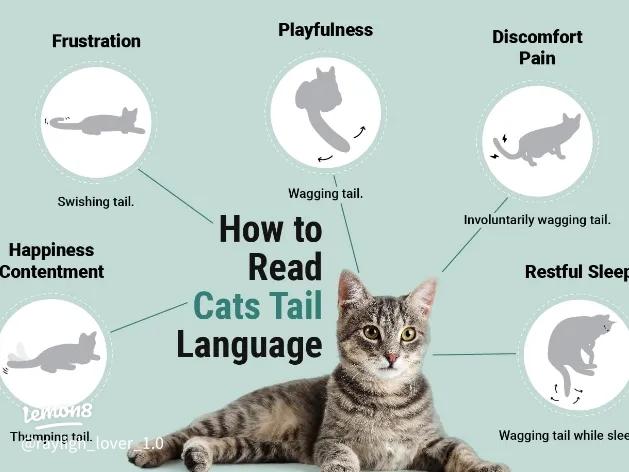
Cats may not speak human language—but they communicate constantly.
The problem is that many people simply don’t realize it.
Every slow blink, ear twitch, body posture, and tail movement reveals something about how a cat feels emotionally in that exact moment. And among all forms of feline body language, the tail may be the most expressive tool of all.
A cat’s tail works almost like an emotional signal system.
Happy.
Curious.
Annoyed.
Relaxed.
Fearful.
Overstimulated.
Cats often communicate these feelings long before they hiss, scratch, or walk away.
For cat owners, learning tail language can completely change the relationship with their pet. Instead of guessing what a cat feels, people begin recognizing emotional cues in real time.
And honestly, once you start paying attention, it becomes impossible not to notice how much cats “talk” through movement.
Why Cat Tail Language Matters
Unlike dogs, cats tend to communicate in more subtle ways.
They rarely overreact emotionally unless they feel extremely stressed or threatened. Because of this, their body language becomes incredibly important for understanding comfort levels and mood changes.
The tail plays a huge role in that communication system.
A cat’s tail helps reveal:
- Emotional state
- Confidence levels
- Stress responses
- Trust
- Curiosity
- Irritation
- Fear
Understanding these signals helps owners:
- Avoid overstimulating cats
- Recognize stress earlier
- Improve bonding
- Prevent scratches or bites
- Create safer interactions
Many people misunderstand cats because they expect them to communicate like dogs. But cats are different animals with different social behaviors.
Their communication is quieter—but not less emotional.

A Tail Held High Usually Means Confidence
One of the easiest cat signals to recognize is the upright tail.
When a cat walks toward someone with its tail standing tall, it usually signals:
- Confidence
- Comfort
- Happiness
- Friendly intentions
This posture often appears when cats greet trusted humans or familiar animals.
In many cases, the tail may even curve slightly at the tip, creating a shape similar to a question mark. That tiny curve often signals excitement or affectionate curiosity.
Cats rarely expose themselves confidently unless they feel safe.
So when a cat approaches with a relaxed upright tail, it’s generally a very positive sign.

The Famous “Question Mark” Tail
A gently curved upright tail is one of the friendliest signals cats display.
This posture usually means:
“I’m comfortable, curious, and open to interaction.”
Owners often notice this behavior when:
- Returning home
- Offering food
- Initiating playtime
- Talking softly to the cat
Kittens especially display this tail shape frequently because they tend to approach the world with playful curiosity.
Adult cats continue using it around people and environments they trust.
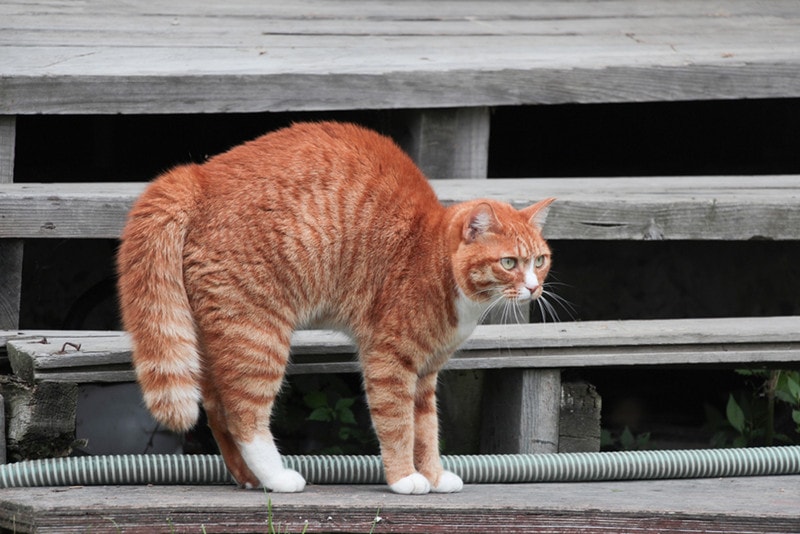
A Puffing Tail Signals Fear or Alarm
When a cat’s tail suddenly becomes large and puffed up, the cat is trying to appear bigger.
This reaction is typically caused by:
- Fear
- Surprise
- Defensive aggression
- Sudden threats
The puffed tail often appears alongside:
- Arched backs
- Sideways posture
- Flattened ears
- Wide eyes
This behavior is rooted in survival instinct.
By making themselves appear larger, cats attempt to intimidate potential threats and avoid physical conflict.
Owners should never try forcing interaction during this moment. A frightened cat may react unpredictably if cornered or overstimulated.
Instead, giving the cat space usually helps them calm down safely.
Tail Flicking Can Mean Irritation
Many cat owners misunderstand tail flicking completely.
People often assume a moving tail automatically means happiness because dogs wag their tails when excited. Cats work differently.
Fast, sharp tail flicking often signals:
- Irritation
- Frustration
- Overstimulation
- Focused attention
For example, a cat lying beside someone while aggressively flicking its tail may not want additional petting.
This is especially common during overstimulation.
Cats can enjoy affection initially, then suddenly become irritated after too much physical contact. The tail usually warns owners before scratching or biting happens.
Paying attention to those early signals helps avoid negative interactions entirely.
Slow Tail Swishing Usually Means Focus
Not all tail movement is negative.
A slow, controlled swish often means the cat is:
- Concentrating
- Hunting
- Observing carefully
- Focused on movement
Owners frequently see this when cats watch birds through windows or stalk toys during playtime.
The body usually remains still while the tail moves rhythmically.
This movement reflects mental engagement rather than emotional distress.
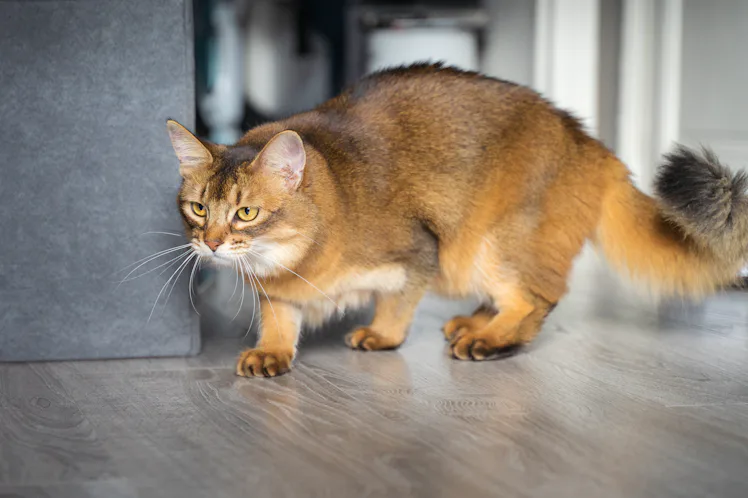
A Tucked Tail Signals Anxiety
Cats sometimes tuck their tails close to their bodies when feeling nervous or insecure.
This posture often appears during:
- Vet visits
- Loud environments
- Unfamiliar situations
- Encounters with strangers
- Stressful changes at home
A tucked tail indicates the cat is trying to protect itself emotionally and physically.
Unlike confident upright posture, tucked positioning makes the cat appear smaller and less exposed.
Owners should approach gently and avoid overwhelming anxious cats during these moments.
Tail Wrapping Is Often Affectionate
Cats occasionally wrap their tails around humans or other animals.
This behavior is usually affectionate and social.
In multi-cat households, bonded cats may:
- Sit together
- Groom each other
- Wrap tails together
When cats wrap their tails around people’s legs, it often functions similarly to a social greeting.
Many experts compare it loosely to a feline version of a hug.
Cats reserve this type of relaxed physical closeness for individuals they trust deeply.
Sleeping Tail Positions Reveal Comfort Levels
Even sleeping tail positions communicate emotional information.
A relaxed tail stretched naturally behind the body usually means the cat feels safe in its environment.
Meanwhile, tightly curled sleeping positions often help cats:
- Preserve warmth
- Protect vulnerable organs
- Feel secure
Cats instinctively prioritize safety while resting because sleep leaves them vulnerable in nature.
A deeply relaxed sleeping posture is often a strong sign the cat trusts its surroundings.
Cats Use Their Entire Bodies Together
While tail language matters enormously, it should never be interpreted completely alone.
Cats communicate through combinations of:
- Ear position
- Eye shape
- Vocalizations
- Body posture
- Fur position
- Movement speed
For example:
A flicking tail combined with flattened ears signals something very different than a flicking tail paired with playful body language.
Understanding cats becomes easier when owners observe the entire emotional picture rather than focusing on one movement only.
Every Cat Has Individual Personality Traits
Not every cat communicates identically.
Breed differences, personality, socialization history, and past experiences all influence body language.
Some cats:
- Express emotions dramatically
- Flick tails constantly
- Enjoy physical affection
- Prefer minimal contact
Others communicate far more subtly.
That’s why long-term observation matters so much. Owners gradually learn their specific cat’s habits and emotional patterns over time.
Understanding feline behavior is less about memorizing rules and more about recognizing emotional consistency.
Why Cats Communicate So Subtly
Cats evolved as both predators and prey animals.
Because of this, they naturally avoid displaying vulnerability openly unless necessary. In the wild, obvious weakness could attract danger.
This survival instinct explains why feline communication often feels quieter than canine behavior.
Cats tend to:
- Signal discomfort subtly first
- Avoid conflict when possible
- Withdraw before escalating aggression
Tail language becomes part of that subtle warning system.
The better humans understand those signals, the easier it becomes to build trust with cats.
Misreading Tail Language Causes Many Problems
Many scratches and bites happen because humans miss early warning signs.
For example:
- Continuing to pet an overstimulated cat
- Cornering a fearful cat
- Ignoring defensive posture
- Misreading playful excitement as aggression
Cats usually communicate discomfort before reacting physically.
The challenge is that many people never learned how to recognize those signals properly.
Once owners understand feline body language better, interactions often become calmer and safer for both sides.
Building Trust Through Observation
One of the best ways to strengthen relationships with cats is simply observing them carefully.
Watching tail movement helps owners recognize:
- Favorite interactions
- Stress triggers
- Comfort zones
- Social preferences
- Emotional routines
Over time, communication becomes easier.
Cats begin trusting humans who respect their boundaries and respond appropriately to emotional signals.
That trust creates stronger companionship naturally.
Final Thoughts
Cats may seem mysterious, but they communicate far more openly than many people realize.
Their tails act like emotional indicators constantly revealing:
- Confidence
- Stress
- Curiosity
- Fear
- Trust
- Affection
- Irritation
Learning feline tail language does more than improve pet ownership—it changes how people understand cats entirely.
What once looked like random movement suddenly becomes meaningful conversation.
And once owners begin recognizing those silent signals, they often discover something surprising:
Cats have been communicating with them all along.
Leave a Reply