
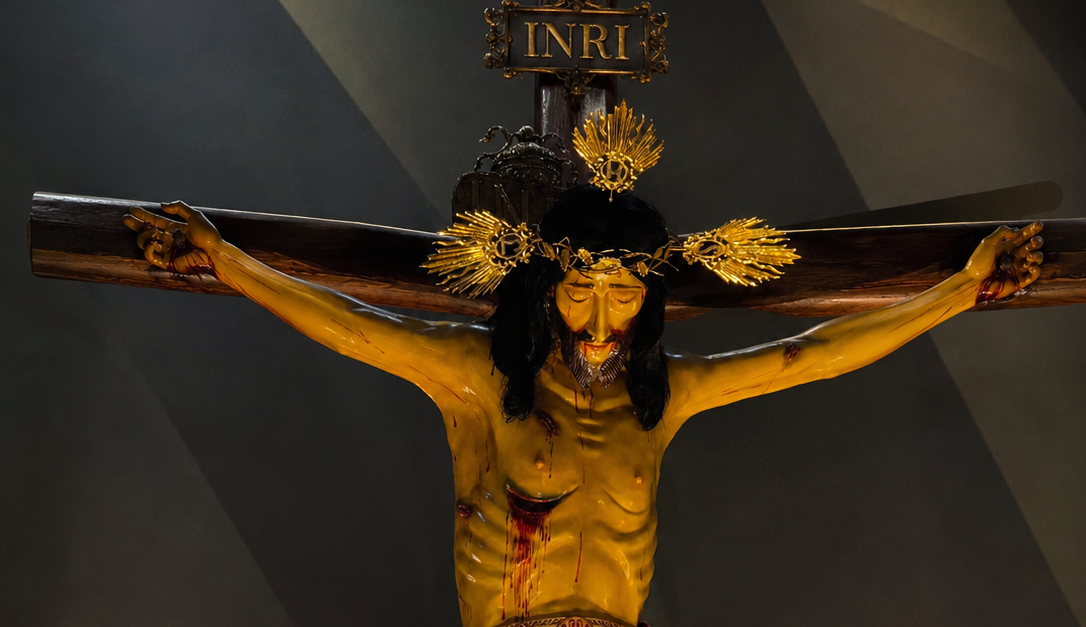
The Gospels describe the crucifixion of Jesus with surprisingly few physical details. They tell us that He was scourged, mocked, forced toward the place of execution and crucified, but they do not dwell on every wound. For the first readers, perhaps they did not need to. Roman crucifixion was already understood as one of the most humiliating and agonizing forms of execution in the ancient world.
So how much pain did Jesus actually endure? No modern doctor can measure the suffering of one particular man who died nearly 2,000 years ago, and some popular medical reconstructions go beyond what the historical evidence can prove. Yet Roman history, archaeology and the Gospel accounts allow us to understand several major sources of suffering: the scourging before the crucifixion, the journey to Golgotha, the wounds involved in crucifixion, the progressive physical stress of suspension and the psychological anguish surrounding His final hours. For Christians, however, the deepest meaning of the story is not simply how much Jesus suffered, but why He willingly continued toward the cross.
Jesus Was Already Physically Exhausted Before He Reached the Cross
The suffering did not begin when Jesus was placed on the cross. According to the Gospel accounts, His final night included the emotional anguish of Gethsemane, arrest, interrogation and movement between authorities before His execution.
Jesus appears to have had little opportunity for meaningful rest. By the time Pontius Pilate ordered Him scourged, He had already endured an exhausting and emotionally intense night.
The Gospels also describe soldiers mocking Jesus. They placed a crown of thorns on His head, struck Him and dressed Him mockingly as a king. The exact medical severity of each injury cannot be reconstructed, but the narrative clearly portrays deliberate physical and psychological humiliation.
Before Jesus even began the journey toward Golgotha, His body had already been placed under severe stress.
Roman Scourging Could Cause Severe Trauma Before Crucifixion
One of the most physically devastating events described before the crucifixion was scourging.
Roman flogging could be extremely brutal. Ancient sources indicate that victims could suffer serious wounds before execution, although the Gospels do not tell us the exact number of blows Jesus received or allow us to reconstruct every detail of the instrument used in His particular case.
This distinction matters because modern retellings sometimes present highly specific medical details as though the Gospels recorded them. They did not.
What we can say confidently is that Jesus was scourged on Pilate’s orders before being crucified. Such punishment could produce intense pain, bleeding, weakness and physical shock.
Then He was expected to proceed toward the execution site.
The Gospel accounts eventually describe Simon of Cyrene being compelled to carry Jesus’ cross. They do not explicitly state that Jesus collapsed three times, despite that image becoming famous through later Christian tradition.
Still, Simon’s involvement suggests that the journey itself had become physically demanding.
The Crucifixion Produced Prolonged Suffering Rather Than a Quick Death
Crucifixion was designed to do more than kill.
It publicly humiliated the condemned person while prolonging suffering.
The exact method could vary, which means we should be cautious about claiming every crucifixion happened identically. Archaeological evidence confirms that nails were sometimes used, while literary evidence shows that Roman execution practices were not completely standardized.
The Gospel of John later refers to marks from nails in Jesus’ hands, strongly supporting the Christian tradition that He was nailed to the cross.
Once suspended, the body’s position would place enormous strain on already injured muscles and joints. Every attempt to reposition the body could aggravate existing wounds. Exposure, dehydration, exhaustion and progressive cardiovascular and respiratory stress could contribute to death.
There is continuing medical debate over the precise physiological mechanism by which crucifixion killed. Suffocation is frequently mentioned, but modern scholars have proposed a combination of factors rather than one universal mechanism.
What requires little debate is the central reality:
Jesus’ death was neither immediate nor painless.
Thirst Became Part of His Final Suffering
One of the shortest statements attributed to Jesus from the cross is also one of the most human:
“I thirst.”
Those words appear in John 19:28.
After the events of the previous night, scourging, blood loss, physical exertion and hours on the cross, intense thirst would be unsurprising.
It is a tiny detail compared with the enormous theological meaning Christians attach to the crucifixion, yet perhaps that is precisely why it is so powerful.
Jesus is remembered not merely speaking profound theological words from the cross.
He was thirsty.
He was physically exhausted.
He was experiencing the limitations of a human body approaching death.
For Christians who believe Jesus was both fully divine and fully human, those two words carry extraordinary significance.
The suffering of the cross was not symbolic. The Gospel portrays Jesus experiencing it as a human being.
His Emotional Suffering Was Different but No Less Important
Physical pain tells only part of the story.
The Gospels portray Jesus entering His final hours knowing that betrayal was coming. Judas, one of the Twelve, handed Him over. Peter denied knowing Him. Many followers scattered when He was arrested.
In Gethsemane, Jesus is portrayed in profound anguish. Mark describes Him as deeply distressed and troubled, while Matthew records Him saying that His soul was overwhelmed with sorrow.
Then came public humiliation.
People mocked Him.
Soldiers ridiculed Him.
Religious opponents challenged Him.
And while hanging on the cross, Mark and Matthew record one of the most haunting statements attributed to Jesus:
“My God, my God, why have you forsaken me?”
The words echo Psalm 22 and have generated centuries of theological interpretation. Whatever interpretation one adopts, the Gospel scene communicates extraordinary anguish.
Jesus’ final suffering therefore cannot be understood only through wounds.
There was also betrayal, abandonment, humiliation and the approach of death.
Jesus Could Have Responded With Hatred, but the Gospels Remember Something Else
This is where the crucifixion story becomes more than an account of Roman punishment.
According to Luke, while being crucified Jesus prayed:
“Father, forgive them, for they do not know what they are doing.”
Rather than portraying Jesus consumed by revenge, the Gospel places forgiveness at the center of His suffering.
Later, He speaks compassionately to the criminal beside Him. He also remains concerned for others during His final hours.
For Christians, these moments explain why calculating the physical pain of crucifixion can never fully capture the meaning of the cross.
The remarkable question is not only:
How badly did Jesus hurt?
It is also:
How could someone experiencing such suffering continue speaking about forgiveness?
How Long Did Jesus Suffer on the Cross?
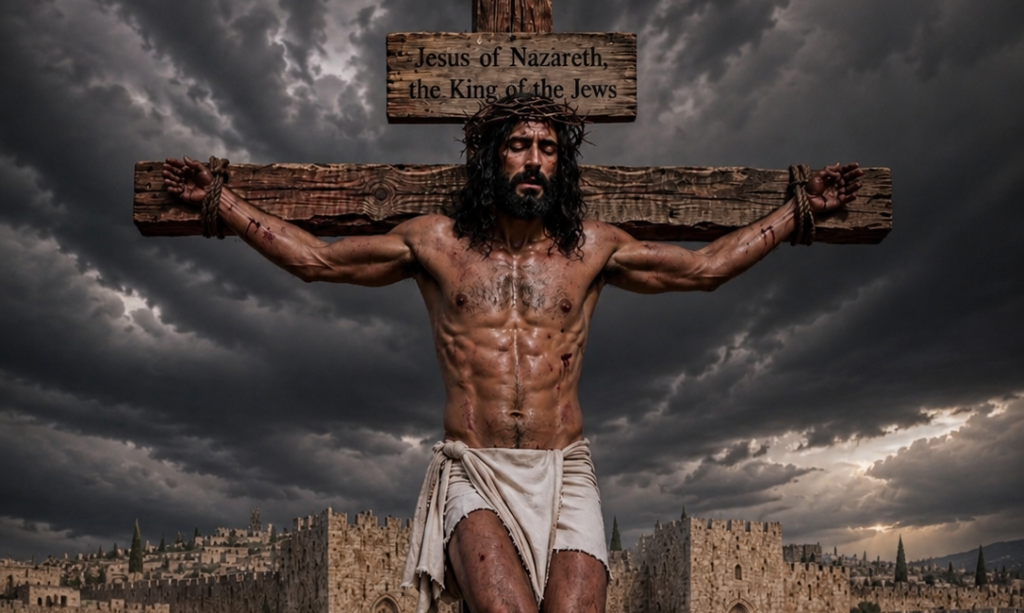
Mark’s Gospel provides a basic chronology suggesting that Jesus was crucified in the morning and died later that afternoon. The Synoptic accounts therefore portray several hours between crucifixion and death.
The Gospel traditions differ in some chronological details surrounding Jesus’ final day, so attempts to reconstruct an exact minute-by-minute medical timeline should be treated cautiously.
What is clear is that crucifixion was not intended to provide a quick or dignified death.
When the soldiers later came to the crucified men, John’s Gospel says they broke the legs of the two men beside Jesus to hasten their deaths. When they reached Jesus, however, He was already dead, so His legs were not broken. A soldier then pierced His side.
Jesus’ suffering had ended.
According to Christian belief, however, His story had not.
So, How Much Pain Did Jesus Endure During the Crucifixion?
There is no honest medical scale that can tell us exactly how much pain Jesus experienced nearly two thousand years ago.
But the historical and biblical evidence makes one conclusion unavoidable: His final hours involved extreme physical and emotional suffering.
He endured scourging before reaching the execution site. He experienced physical trauma and exhaustion. Crucifixion subjected His injured body to prolonged strain, thirst and progressive physiological failure. At the same time, the Gospel narratives surround those physical events with betrayal, abandonment, humiliation and emotional anguish.
Yet Christianity has never remembered Jesus simply because He suffered more than other people. Thousands of people were crucified by Rome.
The Christian message centers on something different:
Jesus knew suffering was coming and still continued toward Jerusalem.
In Gethsemane, He prayed while facing what lay ahead.
During His execution, He spoke of forgiveness.
And according to John, near the end He said:
“It is finished.”
For those standing beneath the cross, it must have appeared that everything was over.
But Christians believe that three days later, the tomb was empty.
That is why nearly two thousand years later, people still look at the cross not simply as an instrument of suffering, but as a symbol of something much greater:
a love that, according to Christian faith, was willing to endure suffering without allowing suffering to have the final word.
Leave a Reply