

Everyone in the family believed Max would never get along with a cat.
He was a large, energetic dog with a deep bark and a habit of becoming overly excited whenever a cat appeared outside the window. If one crossed the backyard, Max would rush toward the glass, barking until the animal disappeared.
His family had accepted one simple rule: Max and cats didn’t belong together.
Then, on a rainy afternoon, a tiny abandoned kitten entered their lives.
She was small enough to fit in two hands, frightened of almost everything, and desperate for somewhere warm to sleep.
Nobody expected her to change Max.
But sometimes, the most unexpected friendships begin with two animals who seem completely wrong for each other.
This is a fictional, illustrative story inspired by the real possibility of friendships between dogs and cats.
A dog who never seemed to like cats
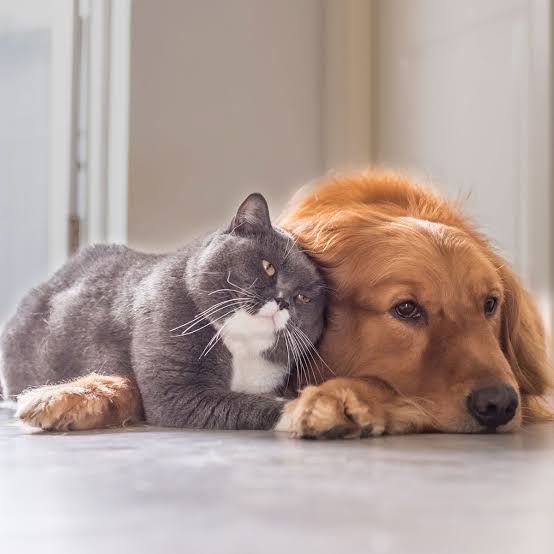
Max had lived with his family for six years.
He loved long walks, squeaky toys, and sleeping beside the living room sofa. He was affectionate with people and gentle around familiar dogs.
Cats, however, were a different story.
Whenever Max spotted one, his entire body became alert. His ears lifted, his attention sharpened, and he sometimes barked or tried to chase.
His owners assumed he hated cats.
Yet canine behavior is rarely that simple.
A dog may chase a cat because of excitement, fear, frustration, territorial behavior, or prey drive. Barking alone doesn’t prove hatred.
Still, Max’s reactions were strong enough that his family had never considered bringing a cat into their home.
They thought they understood him.
Until the day they found Lily.
A tiny kitten was crying in the rain
It had been raining for hours when Max’s owner heard a faint sound near the back porch.
At first, she thought it was a bird.
Then she heard it again.
A small, desperate meow.
Beneath a wooden bench sat a tiny gray-and-white kitten. Her fur was wet, her paws were muddy, and she trembled whenever someone approached.
The woman searched for signs of a mother cat, but none appeared.
After checking the area and contacting a local rescue for guidance, she brought the kitten inside to keep her safe.
She named her Lily.
Lily was placed in a quiet room with food, water, bedding, and a litter box while the family arranged veterinary care.
There was just one problem.
Max knew something new had entered the house.
He stood outside the closed door, sniffing.
For the first time, his family wondered whether the dog they believed hated cats might eventually learn to accept one.
Their first meeting was nothing like anyone expected
The family didn’t allow Max and Lily to meet face-to-face immediately.
Instead, they introduced their scents gradually, exchanged bedding, and rewarded Max whenever he remained calm near the kitten’s room.
Several days passed.
Max still showed interest, but his behavior began to change.
He stopped barking at the closed door.
Sometimes, he simply lay nearby.
Eventually, the family arranged a carefully supervised introduction with Max on a leash and Lily protected behind a secure barrier.
Lily peered out cautiously.
Max looked toward her, sniffed the air, and then turned back toward his owner.
He received a treat for remaining relaxed.
Nothing dramatic happened.
There was no sudden embrace or magical moment of understanding.
But for a family that had always expected chaos whenever Max encountered a cat, that quiet meeting felt like progress.
The kitten slowly began to trust him
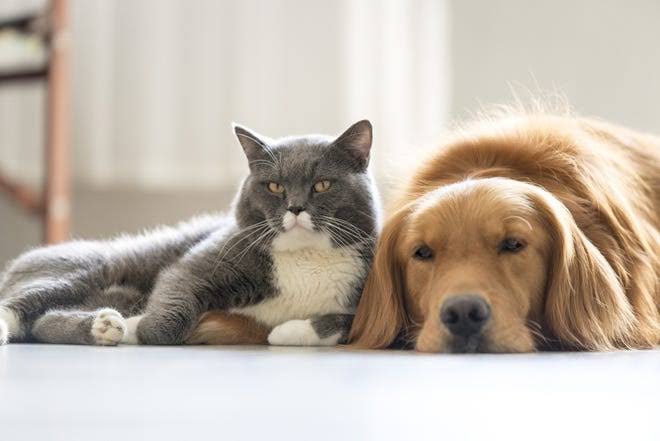
Over the following weeks, Lily grew stronger and more confident.
She explored her room, chased soft toys, and discovered that warm blankets were wonderful places to sleep.
Max continued learning that Lily’s presence meant calm interactions and positive rewards.
Their meetings remained short and supervised.
At first, Lily preferred to watch from a distance.
Then she began approaching the barrier on her own.
One afternoon, while Max rested quietly nearby, Lily settled onto a blanket a few feet away.
Max barely reacted.
He simply closed his eyes.
His family smiled.
The dog who once became excited at the sight of every neighborhood cat was learning to share his space with one.
And Lily, who had arrived frightened and alone, was beginning to feel safe.
One small moment changed how the family saw Max
The most memorable moment happened on an ordinary evening.
Max was lying on his favorite rug while his owner watched television.
Lily, now comfortable in the shared living space during supervised sessions, wandered toward him.
She paused.
Max lifted his head.
For a few seconds, neither animal moved.
Then Lily curled up on a separate corner of the rug, leaving a comfortable distance between them.
Max lowered his head again.
He didn’t chase her.
He didn’t bark.
He simply let her stay.
For his family, that peaceful scene meant more than any dramatic display of affection.
Max had learned that Lily wasn’t something he needed to pursue.
And Lily had learned that she could relax in the same room as him.
Their friendship wasn’t built in a single moment.
It was built through patience, gentle experiences, and the freedom to trust each other at their own pace.
Can dogs and cats really become best friends?
Yes. Many dogs and cats can develop peaceful, affectionate relationships.
Some eventually sleep together, groom each other, or seek each other’s company.
Others remain comfortable housemates without becoming particularly close.
Both outcomes can be successful.
However, not every dog is safe around cats, and not every cat enjoys living with dogs.
A dog’s prey drive, past experiences, socialization, and individual temperament all influence how it responds to smaller animals.
Similarly, a cat’s personality, age, and previous experiences affect how comfortable it feels around dogs.
The key is to avoid forcing a relationship.
A peaceful friendship develops when both animals feel safe.
For more insight into canine behavior, explore 7 Interesting Facts About Dogs That May Change the Way You See Your Best Friend.
Understanding how dogs communicate can help owners recognize the difference between curiosity, excitement, stress, and potentially dangerous behavior.
Why do some dogs chase cats?
Many owners assume that a dog chasing a cat means the dog dislikes cats.
However, several motivations can produce similar behavior.
Prey drive
Some dogs have a strong instinct to pursue fast-moving animals.
A running cat may trigger this instinct even when the dog isn’t acting out of anger.
This can be dangerous, particularly for small kittens.
Excitement
A dog may become overly excited when encountering an unfamiliar animal.
Barking, pulling, or jumping may reflect poor impulse control rather than hostility.
However, excitement can still frighten or injure a cat.
Fear or uncertainty
Dogs sometimes bark at unfamiliar animals because they feel uncomfortable.
Keeping a safe distance and using positive reinforcement may help some dogs become more relaxed.
Lack of socialization
Dogs that haven’t spent time around cats may not understand feline body language.
They may respond inappropriately to hissing, running, or defensive postures.
For example, a cat that suddenly runs away may trigger chasing.
A dog that becomes intensely focused on a cat may also ignore its owner’s commands.
In these situations, management and professional guidance are important.
How to introduce a kitten to a dog safely

Max and Lily’s fictional friendship illustrates an important principle: successful introductions should happen gradually.
Here are practical steps that can help.
1. Give the kitten a separate safe room
Before introductions, provide the kitten with its own space.
Include food, water, bedding, hiding places, scratching surfaces, and a litter box.
The dog should not have unrestricted access to this room.
2. Introduce their scents first
Exchange blankets or other familiar items so each animal can investigate the other’s scent.
Keep these interactions calm.
Never force an animal to approach an unfamiliar scent.
Cats rely heavily on familiar environments and scent cues.
If you want to understand more about feline comfort and security, read Why Does Your Cat Sleep on Your Clothes?.
The article explores why familiar belongings can be especially appealing to cats.
3. Use a secure barrier
Allow the animals to observe each other through a suitable gate or barrier.
Keep the dog leashed when necessary.
Reward calm behavior and maintain enough distance that neither animal becomes distressed.
4. Watch their body language
A relaxed dog may have loose muscles, soft facial expressions, and the ability to look away from the cat.
Warning signs include intense staring, stiff posture, lunging, or repeated attempts to chase.
A frightened cat may flatten its ears, hiss, hide, or try to escape.
If either animal becomes uncomfortable, increase the distance and end the session.
5. Never force physical contact
Do not hold a kitten in front of a dog’s face.
Do not force them to share a bed, food bowl, or resting area.
Allow both animals to choose whether they want to approach.
6. Continue supervision
Even after successful introductions, supervise interactions until you are confident they are safe.
Some dogs should never be left unsupervised with cats, especially if they have a strong prey drive or a history of chasing small animals.
For dogs that show predatory fixation or repeated chasing, consult a qualified veterinary behaviorist or reward-based behavior professional.
Not every dog-cat pairing is appropriate.
How can you tell if your dog likes your kitten?
A dog that feels comfortable around a kitten may display several positive behaviors.
These can include:
- Relaxing or sleeping while the kitten is nearby
- Showing curiosity without chasing
- Responding to commands despite the kitten’s presence
- Moving away when the kitten needs space
- Choosing to rest near the kitten
- Displaying loose, relaxed body language
However, closeness alone doesn’t prove friendship.
A dog may remain still because it feels tense, while a cat may freeze because it is frightened.
Always consider the animal’s complete body language.
The goal isn’t to create a picture-perfect friendship.
It’s to ensure both pets feel safe and comfortable.
Can a kitten change an older dog’s behavior?
A kitten cannot magically erase a dog’s instincts.
However, dogs can learn new associations and behaviors at many ages.
With gradual introductions, consistent management, and positive reinforcement, some adult dogs can become more comfortable around cats.
The outcome depends on the individual animals.
For some dogs, peaceful coexistence is achievable.
For others, the risk of chasing or injury remains too high.
Owners should never assume that affection toward people means a dog will automatically be gentle with kittens.
Still, positive experiences can make a meaningful difference.
And for dogs that are suitable companions for cats, a new household member may eventually become part of their familiar daily routine.
Why do cats sometimes choose to sleep beside dogs?
Cats often seek warm, comfortable, and secure resting places.
When a cat feels relaxed around a dog, it may choose to sleep nearby.
Shared resting can be a sign of familiarity and comfort, although it doesn’t necessarily mean the animals have the same emotional relationship humans call friendship.
Some cats prefer physical closeness.
Others enjoy companionship while maintaining their personal space.
If your cat has recently changed its sleeping habits, explore Why Does Your Cat Suddenly Sleep Next to You?.
Many of the factors that influence a cat’s preferred resting place, including warmth, familiarity, and security, can also shape how it behaves around other household pets.
What if your dog and kitten never become friends?
Not every animal relationship ends with cuddling.
And that’s okay.
Some dogs and cats learn to share a home without interacting very much.
They may prefer separate sleeping spaces, different play areas, and independent routines.
A successful introduction doesn’t require them to sleep together.
Instead, look for signs that both animals can move through the home without fear, chasing, or conflict.
Provide separate feeding areas, multiple resting places, and escape routes for the cat.
If tension continues, seek professional guidance.
Sometimes, permanent separation is the safest and kindest option.
The well-being of both animals must always come first.
Frequently asked questions
Can a dog that hates cats learn to like a kitten?
Some dogs can become more comfortable around cats through gradual introductions and positive reinforcement. However, dogs with strong predatory behavior may remain unsafe around kittens.
How long does it take for a dog to accept a kitten?
It varies widely. Some animals adjust over days or weeks, while others need months. Some never become safe companions.
Should I let my kitten sleep with my dog?
Only consider shared resting once both animals have demonstrated consistently relaxed behavior and the relationship is safe. Do not force them to sleep together, and maintain supervision when appropriate.
Why does my dog stare at my kitten?
Staring may indicate curiosity, excitement, uncertainty, or predatory interest. A stiff body and intense, unbroken fixation are warning signs that require immediate management.
Can an older dog become attached to a kitten?
Yes, some older dogs develop affectionate relationships with kittens. Age alone doesn’t determine compatibility, although health, temperament, and past experiences matter.
The tiny kitten who changed everything
Months after Lily arrived, Max’s family began noticing a new routine.
Every evening, Max settled onto his favorite rug.
And whenever Lily felt like joining him, she wandered over and found a comfortable place nearby.
Sometimes, they slept several feet apart.
Sometimes, Lily stretched out close enough that her tiny paws nearly touched his.
Max no longer reacted to her presence with the excitement he once showed toward unfamiliar cats outside.
He had learned to relax.
Lily had learned to trust.
And the family had learned something too.
They had spent years believing Max hated cats, when the truth was that they had never given him a safe opportunity to build a relationship with one.
Their progress didn’t happen overnight.
It required patience, supervision, and a willingness to respect both animals’ boundaries.
But in the end, the greatest change wasn’t that Max suddenly became a different dog.
It was that he discovered how to share his world with someone new.
And Lily, the tiny kitten who once trembled alone in the rain, had finally found a home where she could feel safe.
Sometimes, friendship doesn’t begin with an instant connection.
Sometimes, it begins with a little distance, a little patience, and one quiet moment when two very different animals realize they no longer need to be afraid of each other.
Leave a Reply