
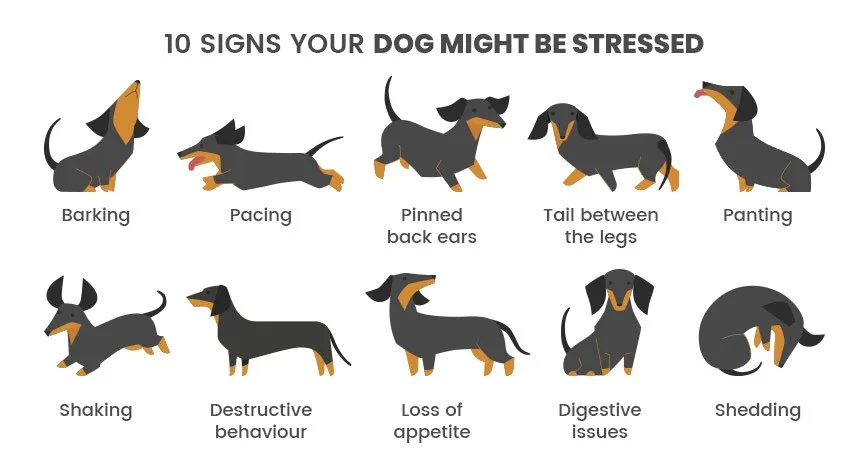
Your dog still greets you at the door. It still follows you around the house and curls up beside you at night. From the outside, everything seems perfectly normal.
But lately, you’ve noticed a few changes.
Your dog pants even when the room is cool. It walks back and forth for no obvious reason. Sometimes, it turns away when you reach out to pet it.
You might assume these are just harmless habits. After all, dogs have their moods, just like people.
But what if your dog is trying to communicate something important?
Recognizing the signs your dog is stressed can help you identify fear, anxiety, and discomfort before these problems become more difficult to manage.
Dogs cannot explain their emotions in words. Instead, they communicate through body language, movement, vocalization, and changes in everyday behavior.
Here are eight warning signs that deserve your attention.
Can Dogs Really Experience Stress?

Yes. Dogs can experience stress in response to unfamiliar environments, frightening situations, changes in routine, and other challenges.
Stress itself is not always harmful. A temporary stress response can help an animal react to a potential threat.
However, frequent or prolonged distress can interfere with a dog’s well-being.
A dog that becomes frightened during a thunderstorm may recover once the noise stops. Another dog may remain anxious for hours or become increasingly fearful of similar sounds.
The important distinction is whether your dog can return to a relaxed state.
Veterinary behavior specialists recognize several common signs of canine stress, including pacing, trembling, panting, lip licking, and avoidance.
Still, no single behavior proves that a dog is anxious.
You must consider the situation, your dog’s normal personality, and any accompanying symptoms.
1. Your Dog Pants Even When It Isn’t Hot
Panting is one of the most familiar behaviors in dogs.
After running through the yard or enjoying a long walk, dogs often pant to help regulate their body temperature.
But what happens when your dog begins panting while resting in a cool room?
Unexplained panting can sometimes indicate stress or anxiety.
For example, a dog frightened by fireworks may begin breathing rapidly before attempting to hide.
A dog that dislikes car rides may start panting as soon as it enters the vehicle.
What should you look for?
Watch for panting accompanied by:
- Restlessness
- Trembling
- Pinned-back ears
- A tucked tail
- Repeated attempts to hide
- Difficulty settling down
However, panting can also result from pain, overheating, respiratory problems, or other medical conditions.
Never assume unusual panting is caused by stress alone.
If your dog has difficulty breathing, collapses, or shows signs of heatstroke, seek emergency veterinary care.
For more information about temperature-related risks, read How Hot Is Too Hot for Dogs to Walk Outside?.
2. Your Dog Keeps Pacing Around the House
Imagine your dog walking from the living room to the hallway.
It turns around, walks back, and repeats the same movement.
You offer a toy, but it shows little interest.
You encourage it to lie down, yet it gets up again moments later.
Repeated pacing can be a sign that your dog is struggling to relax.
Why do stressed dogs pace?
When dogs feel threatened or uncertain, their bodies prepare to respond.
Some become restless and move repeatedly through their environment.
Others pace near doors or windows because they are trying to escape an uncomfortable situation.
For example, a dog experiencing separation-related distress may pace when its owner begins preparing to leave.
However, pacing can also indicate pain, cognitive changes, or other medical problems.
If your dog suddenly starts pacing, especially at night, contact your veterinarian.
Older dogs may require additional assessment for age-related conditions.
3. Your Dog Yawns or Licks Its Lips Repeatedly

A yawn doesn’t always mean your dog is tired.
And licking its lips doesn’t always mean it’s hungry.
These ordinary behaviors can sometimes become subtle signals of discomfort.
Picture a dog sitting in a crowded waiting room at a veterinary clinic.
It repeatedly yawns, briefly flicks its tongue across its nose, and turns its head away.
Those small movements may indicate that the dog feels uneasy.
How can you recognize stress-related signals?
Consider when the behavior occurs.
A dog that yawns after waking up is probably sleepy.
A dog that repeatedly yawns while being approached by an unfamiliar person may be expressing discomfort.
Other signs can include:
- Turning the head away
- Avoiding eye contact
- Holding the ears back
- Lowering the body
- Becoming unusually still
Look at the whole situation rather than interpreting one movement in isolation.
If your dog repeatedly shows discomfort during petting or handling, stop and give it space.
Respecting these early signals can help prevent fear from escalating.
4. Your Dog Suddenly Starts Hiding or Avoiding You
Your dog used to spend every evening beside you.
Now, it disappears into another room whenever visitors arrive.
Perhaps it hides behind furniture during thunderstorms or retreats when someone approaches.
Avoidance can be an important sign of fear or stress.
Dogs sometimes move away from situations they find overwhelming.
A quiet bedroom or sheltered corner may help them feel more secure.
What should you do?
Allow your dog to retreat to a safe location.
Avoid pulling it out of hiding or forcing it to greet people.
Provide a comfortable resting area where family members and other pets won’t disturb it.
If your dog is frightened by visitors, ask guests to ignore it until it chooses to approach.
However, sudden withdrawal may also indicate pain or illness.
If your dog begins hiding without an obvious trigger, consider whether other symptoms are present.
Our guide to 7 warning signs your dog is in pain explains how physical discomfort can cause changes that resemble anxiety.
A veterinary examination is especially important when avoidance begins suddenly.
5. Your Dog Becomes More Clingy Than Usual
Some dogs naturally enjoy following their owners everywhere.
They rest beside their favorite people, seek affection, and become excited whenever someone enters the room.
This behavior isn’t necessarily a problem.
However, a sudden increase in clinginess may indicate that your dog feels insecure or distressed.
For example, a dog that previously rested comfortably alone may begin following you from room to room after a frightening experience.
Another may become unsettled whenever you pick up your keys.
When should clinginess concern you?
Pay attention if your dog:
- Cannot settle when you leave the room
- Whines when separated from you
- Follows you constantly while appearing tense
- Scratches at closed doors
- Becomes distressed during departures
- Refuses food when left alone
These behaviors may be associated with separation-related problems, although they are not enough to diagnose separation anxiety.
If your dog struggles whenever you leave, review our guide on how long dogs can safely stay home alone.
It explains why different dogs have different needs and how to plan appropriate care during absences.
6. Your Dog Suddenly Barks, Whines, or Growls More Often
Dogs use sounds to communicate.
A bark may signal excitement, alertness, frustration, or fear.
A whine may occur when a dog wants attention or feels uncomfortable.
Growling can be a warning that a dog wants more distance from something it finds threatening.
The important clue is a change from your dog’s normal behavior.
What might stress-related vocalization look like?
A dog may:
- Bark repeatedly at unfamiliar noises
- Whine during car rides
- Howl when left alone
- Growl when approached by strangers
- Vocalize while pacing or trembling
These sounds don’t necessarily mean your dog is misbehaving.
They may be communicating that a situation feels overwhelming.
Should you punish a dog for growling?
No.
Growling is an important warning signal.
Punishing it may suppress the warning without reducing the dog’s fear.
Instead, identify what caused the reaction and create more distance from the trigger.
If your dog begins growling unexpectedly, particularly when touched, ask your veterinarian to investigate possible pain.
For persistent fear or aggression, seek help from a qualified, reward-based behavior professional.
7. Your Dog Stops Eating or Shows Changes in Digestion
You place your dog’s favorite meal on the floor.
Usually, the bowl is empty within minutes.
But today, your dog sniffs the food and walks away.
Stress can affect appetite and digestive function.
Some dogs eat less when frightened or anxious. Others may develop loose stools during stressful situations.
For example, a dog staying in an unfamiliar boarding facility may temporarily lose interest in food.
Signs to watch for
These may include:
- Reduced appetite
- Refusing treats
- Diarrhea
- Vomiting
- Excessive drooling
- Changes in bathroom habits
However, these symptoms are not specific to stress.
Dental disease, gastrointestinal illness, poisoning, and other medical conditions can produce similar signs.
Do not assume a dog that refuses food is simply anxious.
Contact your veterinarian promptly if appetite changes persist or occur with other symptoms.
Repeated vomiting, severe weakness, abdominal swelling, or bloody diarrhea requires urgent veterinary assessment.
8. Your Dog Shows a Stiff Body, Tucked Tail, or Wide Eyes

Sometimes, the clearest signs of stress are visible in your dog’s posture.
A relaxed dog typically moves with relatively loose muscles and comfortable body language.
A frightened dog may look very different.
Its body may become stiff. Its ears may move backward. Its tail may drop or tuck between its legs.
You might also notice unusually wide eyes or more visible white around the eyes.
Common body-language warning signs
Look for:
- A rigid or frozen posture
- A tucked tail
- Ears pinned backward
- A lowered head
- Crouching
- Wide eyes
- Avoiding direct eye contact
- Attempting to move away
A dog that suddenly freezes may be highly uncomfortable.
Don’t assume stillness means the dog has accepted an interaction.
For example, if your dog becomes rigid when a child hugs it, gently end the interaction and provide space.
A dog doesn’t have to bark or growl to communicate that it wants to be left alone.
Learning to recognize subtle body language can protect both your dog and the people around it.
Quick Guide: 8 Warning Signs Your Dog Is Stressed
| Warning sign | Possible explanation |
|---|---|
| Panting without heat or exercise | Anxiety, fear, pain, or illness |
| Repeated pacing | Restlessness, stress, or discomfort |
| Frequent yawning or lip licking | Possible uneasiness in context |
| Hiding or avoiding interaction | Fear, stress, pain, or illness |
| Sudden clinginess | Insecurity or separation-related distress |
| Increased barking or whining | Fear, frustration, or other needs |
| Reduced appetite or digestive changes | Stress or an underlying medical problem |
| Stiff posture or tucked tail | Fear, tension, or discomfort |
These behaviors are warning signs, not definitive diagnoses.
A veterinarian can help determine whether a medical condition or behavioral problem is responsible.
What Causes Stress in Dogs?
Stress can develop for many reasons.
Some triggers are obvious, while others are easy for owners to overlook.
Changes in daily routine
Dogs often become familiar with predictable patterns.
Moving house, changing work schedules, or introducing a new family member can disrupt those patterns.
Even a change in when you return home may affect a dog that relies heavily on routine.
Our article on how dogs know when you’re late explores how dogs respond to familiar schedules and changes in their owners’ arrival times.
Loud or unfamiliar sounds
Fireworks, thunderstorms, construction noise, and household appliances may frighten sensitive dogs.
Uncomfortable social interactions
Unfamiliar people, crowded environments, or unwanted contact with other animals can cause stress.
Lack of appropriate enrichment
Dogs need opportunities for physical activity, exploration, and mental stimulation.
Insufficient enrichment can contribute to boredom and frustration.
Pain or illness
Physical discomfort can make a dog more sensitive to handling, noise, and other everyday experiences.
That’s why sudden behavioral changes should never be dismissed without considering health problems.
How to Calm a Stressed Dog
When your dog appears anxious, your first goal should be to help it feel safe.
The right response depends on what is causing the stress.
1. Remove or reduce the trigger
If your dog becomes frightened around unfamiliar dogs, increase the distance between them.
If loud noises are the problem, provide access to a quiet room.
Avoid forcing your dog to remain in situations that cause significant distress.
2. Create a predictable routine
Consistent feeding, walking, resting, and play schedules can help your dog know what to expect.
A predictable environment may reduce uncertainty.
3. Provide a safe resting place
Offer a comfortable bed or quiet space where your dog can relax without interruption.
Allow your dog to choose whether it wants company.
4. Use positive reinforcement
Reward calm behavior and voluntary engagement with treats, praise, or activities your dog enjoys.
Never force a frightened dog to approach something it fears.
Gradual desensitization and counterconditioning can help some dogs, but significant fears are best addressed with professional guidance.
5. Offer appropriate exercise and enrichment
Walks, scent games, food puzzles, and gentle play can support your dog’s well-being.
Choose activities suited to your dog’s age, health, and preferences.
Exercise is helpful, but it isn’t a substitute for treating severe anxiety.
6. Avoid punishment
Do not punish your dog for trembling, hiding, barking from fear, or having anxiety-related accidents.
Punishment may increase distress.
Focus on identifying the underlying cause and helping your dog feel secure.
7. Ask for professional help
If your dog experiences frequent or severe stress, consult your veterinarian.
A veterinarian may recommend behavior modification, environmental changes, or referral to a veterinary behaviorist.
In some cases, prescription medication can be an appropriate part of treatment.
When Should You Worry About Dog Stress?
Occasional stress is a normal part of life.
A dog may become startled by a loud noise and return to normal shortly afterward.
However, ongoing distress deserves attention.
Contact your veterinarian if your dog:
- Appears anxious most days
- Cannot settle or rest normally
- Stops eating or loses weight
- Becomes increasingly fearful
- Attempts to escape and risks injury
- Shows sudden aggression
- Develops persistent digestive problems
- Experiences major changes in sleep or activity
Seek emergency veterinary care for difficulty breathing, collapse, seizures, suspected poisoning, severe abdominal pain, or other signs of serious illness.
These symptoms should never be attributed to anxiety without medical assessment.
Frequently Asked Questions

What are the first signs of stress in dogs?
Early signs may include lip licking, yawning, looking away, panting, pacing, or changes in posture. Their meaning depends on the situation and your dog’s usual behavior.
Can dogs become stressed when left alone?
Yes. Some dogs experience separation-related distress when their owners leave. Symptoms may include vocalization, pacing, drooling, escape attempts, and destructive behavior.
Does a stressed dog always bark?
No. Some stressed dogs become unusually quiet, hide, freeze, or avoid interaction.
Can stress make a dog sick?
Stress can affect appetite, digestion, sleep, and behavior. However, these symptoms may also indicate illness and should be assessed when persistent or concerning.
How long does it take a stressed dog to calm down?
There is no universal timeline. Some dogs relax quickly after a stressful event ends, while others need more time or professional support.
Should I comfort my dog when it is scared?
You can offer calm reassurance and a safe place to rest. Let your dog choose whether it wants physical contact, and avoid forcing interaction.
Can a dog be stressed even if it wags its tail?
Yes. Tail wagging can occur during excitement, uncertainty, and other emotional states. Consider the entire body and the surrounding situation.
What should I do if my dog suddenly acts anxious?
Look for possible environmental triggers and other symptoms. If the change is sudden, unexplained, or persistent, contact your veterinarian to rule out pain or illness.
Final Thoughts: Your Dog May Be Asking for Help in Quiet Ways
Your dog doesn’t need words to become an important part of your life.
It recognizes familiar routines, notices when you come home, and often finds comfort in being near you.
But when something feels frightening or overwhelming, it cannot simply explain what is wrong.
Instead, you may notice a trembling body, an unusual yawn, a tucked tail, or a dog that suddenly wants to be alone.
These small changes can be easy to overlook, especially when your dog continues eating, walking, and greeting you as usual.
Yet learning to recognize them can make a meaningful difference.
Sometimes, helping your dog means providing a quieter place to rest. Sometimes, it means changing a stressful routine or giving it more space.
And sometimes, the kindest thing you can do is recognize that its behavior may be connected to pain or illness and seek veterinary care.
Your dog spends its life learning to understand you.
Taking the time to understand its body language is one of the most important ways you can return that devotion.
Leave a Reply