
Introduction
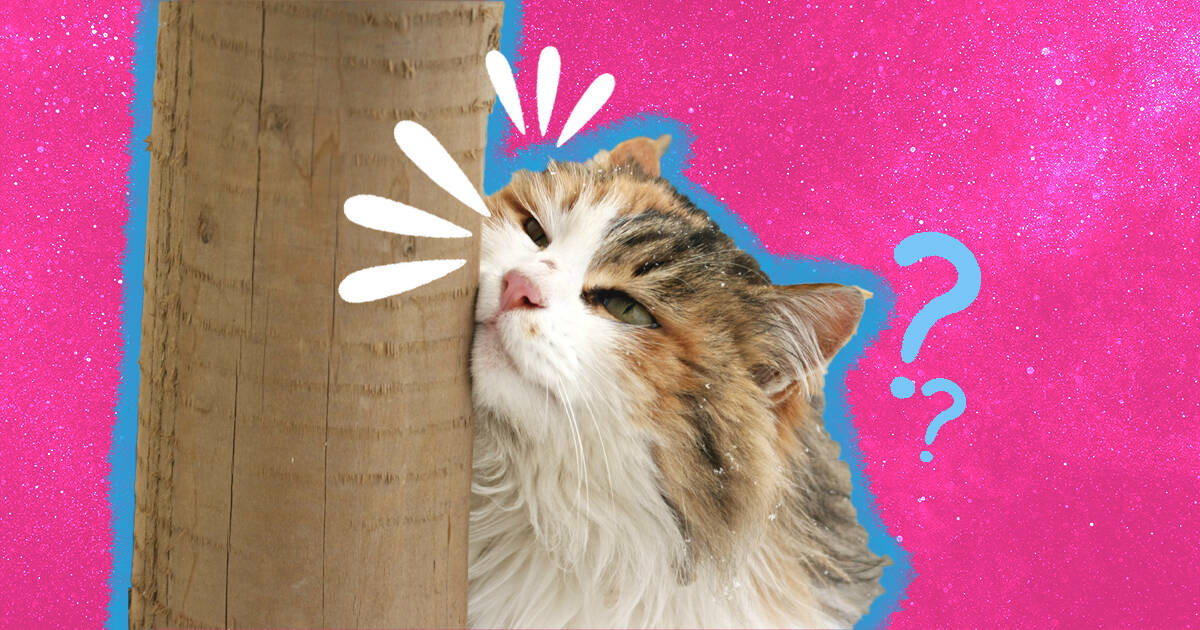
If you’ve ever watched your cat glide across the room only to stop and rub their face against a corner of your couch, table, or wall, you’re not alone. This quirky little behavior is incredibly common—but also surprisingly meaningful.
At first glance, it might seem random or even a bit odd. But in reality, this action is packed with communication, instinct, and emotion. Cats don’t just rub their faces on corners for fun—they’re actually “talking” in their own silent, scent-based language.
In this guide, we’ll break down exactly why cats do this, what it means, and when (if ever) you should be concerned.
What Does It Mean When a Cat Rubs Its Face on Corners?
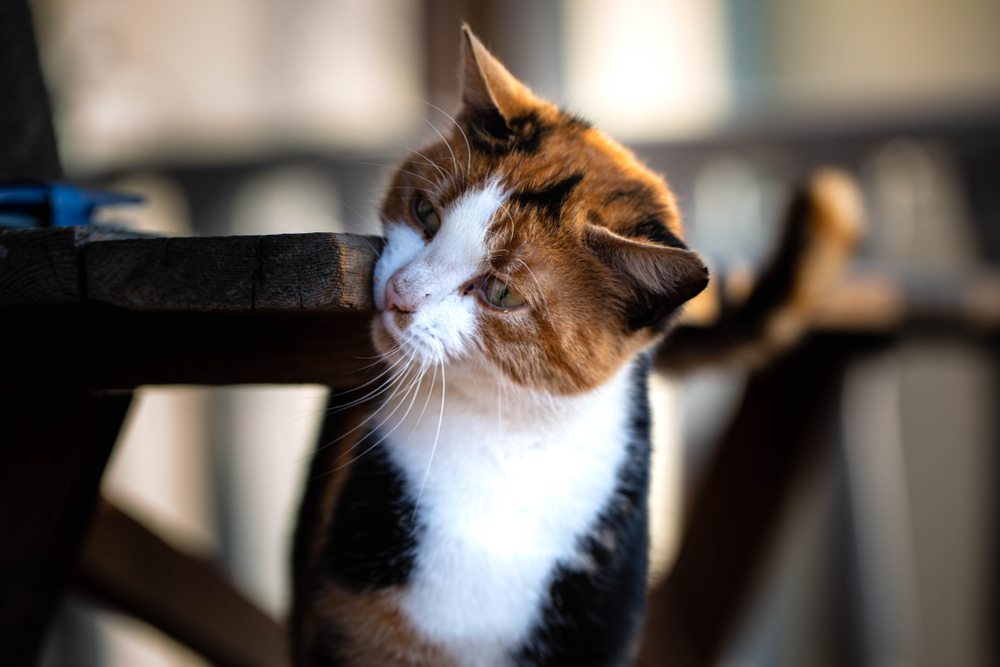
The behavior of rubbing their face against objects is often called “bunting.” It’s a natural instinct deeply rooted in feline biology and communication.
Cats have scent glands located around their cheeks, chin, and forehead. When they rub against surfaces, they release pheromones—chemical signals that carry important messages.
But that’s just the beginning. Let’s explore the main reasons behind this behavior.
1. Marking Their Territory
The most common explanation? Your cat is claiming ownership.
Cats are territorial animals, and scent is their primary way of defining space. When your cat rubs their face on corners, they’re leaving behind their unique scent signature.
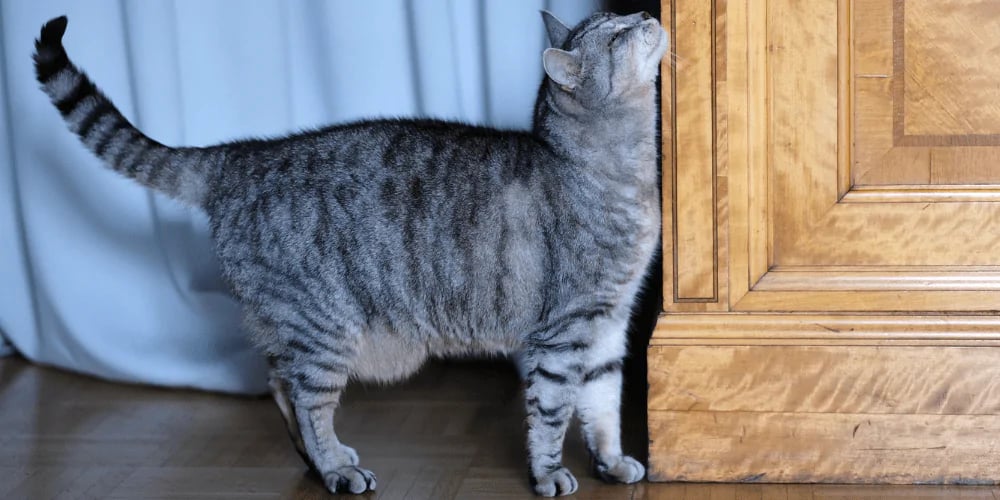
Corners are especially appealing because they provide resistance, making it easier for cats to press their scent glands firmly against the surface.
Why This Matters
- It tells other animals: “This is mine.”
- It helps your cat feel secure in their environment
- It creates a familiar scent map inside your home
In other words, your cat isn’t just being cute—they’re organizing their world.
2. A Friendly Greeting
If your cat rubs their face on corners right after seeing you—or even alternates between you and nearby furniture—it may be part of a greeting ritual.
Cats often greet each other by rubbing faces to exchange scents and gather information.
So when your cat does this around you, it’s their version of:
“Hey, you’re back. Let me check in.”
3. Showing Affection and Trust
Here’s the part every cat owner loves: this behavior can be a sign of affection.
When your cat rubs their face on something (or someone), they’re mixing their scent with it. That’s a big deal in cat language—it means they trust you enough to include you in their “inner circle.”
Think of It Like This
- Dogs wag their tails
- Humans hug
- Cats rub their faces
It’s their way of bonding.
4. Seeking Attention
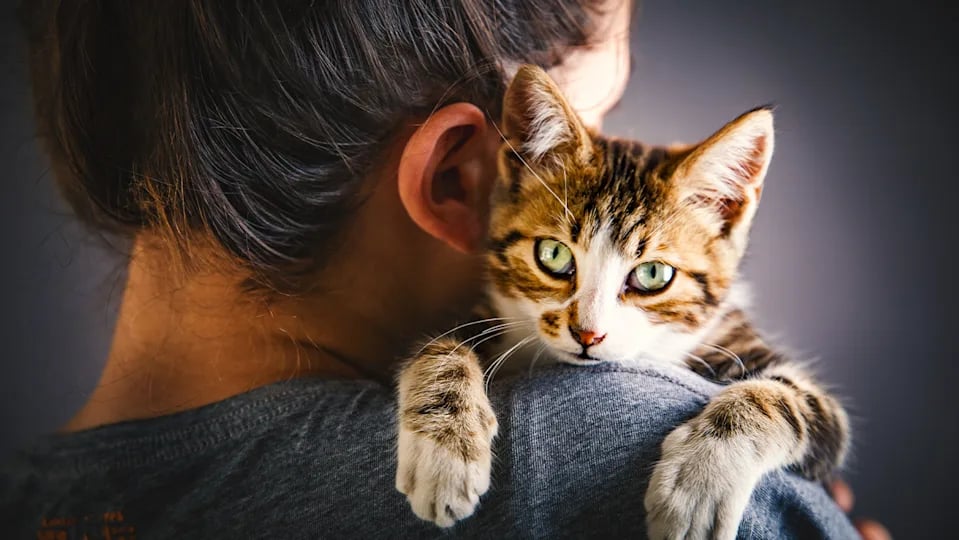
Cats are smarter than they often get credit for. If rubbing their face gets your attention—even once—they’ll remember.
Over time, this behavior can become a learned habit. Your cat may rub against corners (and then you) when they:
- Want food
- Feel bored
- Are asking for pets
- Need companionship
According to experts, cats quickly associate actions with rewards, reinforcing behaviors that get a response. Face rubbing is just one of the many ways cats may seek interaction with their owners. Some cats also follow their favorite humans from room to room, meow for attention, or rub against their legs. Explore our guide on why your cat follows you everywhere to understand how feline behavior can reflect attention-seeking, curiosity, and companionship.
5. Self-Soothing and Comfort
Sometimes, it’s simply about feeling good.
Rubbing their face can be calming for cats, especially when they’re stressed or adjusting to a new environment. The physical sensation combined with scent-marking helps them relax.
You might notice this behavior more when:
- Your cat is settling into a new home
- There are changes in the household
- They’re winding down for rest
It’s like a built-in stress relief mechanism.
Why Do Cats Prefer Corners Specifically?
You might wonder—why corners and not flat surfaces?
The answer is simple: efficiency and comfort.
Corners provide:
- Better grip for their cheeks
- More pressure on scent glands
- A satisfying physical sensation
Flat walls don’t offer the same tactile feedback, so cats naturally gravitate toward edges and corners.
Is This Behavior Ever a Problem?
Most of the time, face rubbing is completely normal and healthy. But there are rare cases where it could signal something more serious.
Watch for Warning Signs:
- Excessive or obsessive rubbing
- Head pressing against walls
- Disorientation or lack of coordination
- Sudden behavioral changes
These could indicate neurological issues, stress disorders, or other health problems.
If you notice these symptoms, it’s best to consult a veterinarian promptly.
How You Should Respond as a Cat Owner
Good news—you don’t need to stop this behavior. In fact, you should encourage it (within reason).
What You Can Do:
- Let your cat rub against you—it builds trust
- Provide safe surfaces like cat trees or scratching posts
- Keep their environment stable and stress-free
- Give attention when appropriate (but don’t over-reward demanding behavior)
Understanding your cat’s signals helps you build a stronger bond.
Fun Fact: Cats Are “Scent Communicators”
Unlike humans, cats rely far more on smell than sight or sound to interpret their world.
When your cat rubs their face on something, they’re not just marking it—they’re reading it too. They can pick up scents left by others and gather information about their surroundings.
It’s basically their version of social media updates—just way more subtle.
FAQ
Why does my cat rub its face on me but not others?
Because they trust you. Cats only share scent with individuals they feel safe around.
Why does my cat rub corners more than people?
Corners are easier for scent marking and provide better physical contact than human skin.
Should I stop my cat from doing this?
No—this is natural and healthy behavior unless it becomes excessive or obsessive.
Why does my cat rub more at night?
Cats are more active in the evening, so you may notice their behaviors more during that time.
Conclusion
So, why do cats rub their face on corners?
It comes down to a mix of instinct, communication, and emotion. Whether they’re marking territory, greeting you, showing affection, or simply relaxing, this behavior is a completely normal part of being a cat.
Instead of wondering why your cat does it, take it as a compliment. Every time they rub their face on something near you—or on you—they’re saying:
“This place is mine… and you’re part of it too.”
And honestly, that’s about as loving as it gets in the feline world.
Leave a Reply