
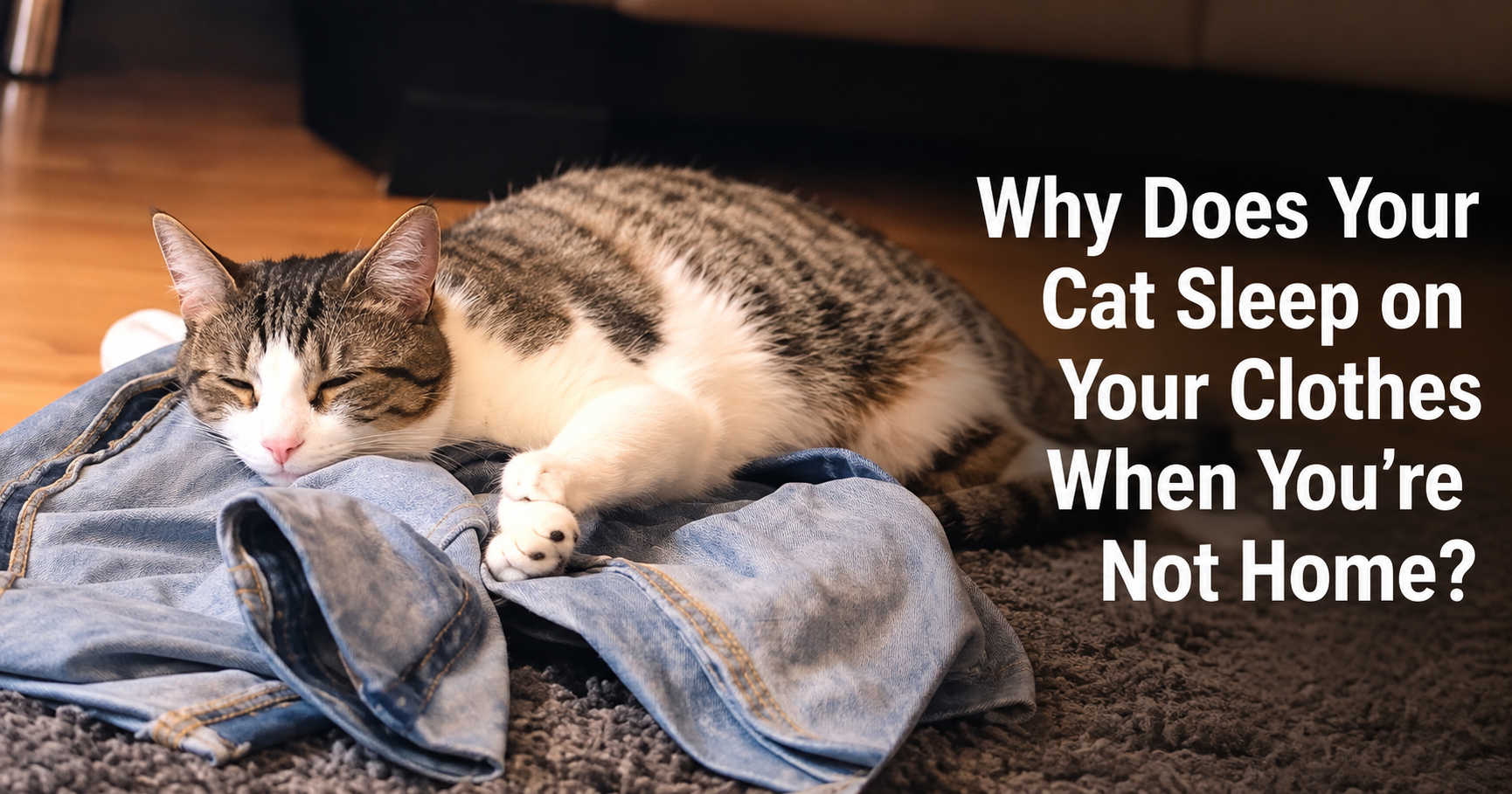
You leave a shirt on the bed before going to work.
Your cat has an entire house to choose from. There is a soft blanket on the couch, a comfortable cat bed by the window, and probably at least one expensive sleeping spot you bought specifically for it.
But when you come home, where is your cat?
Curled up directly on your shirt.
Maybe it is your sweater. Maybe it is the clothes you wore yesterday. Sometimes it is even the pile of laundry you haven’t put away yet.
It is tempting to think your cat simply likes soft fabric. And sometimes that may be part of it.
But there is another detail that makes those clothes different from almost everything else in the house:
They smell like you.
Your clothes carry something your cat recognizes
Humans tend to think about clothing visually.
Cats experience it differently.
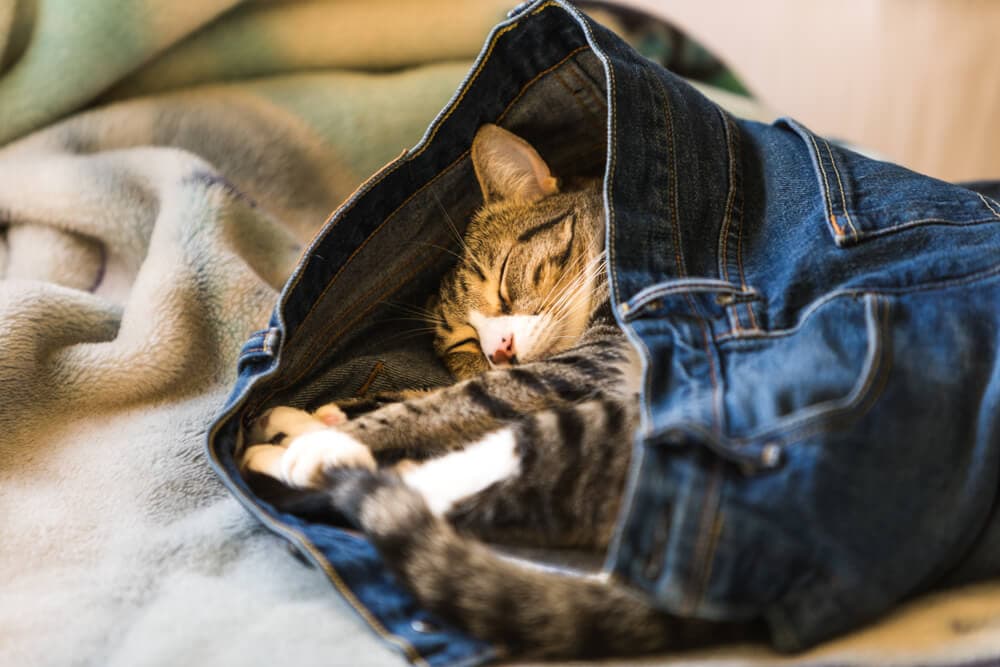
A shirt you wore for several hours carries a complex collection of odors from your skin, hair, environment and household. While you may barely notice those scents, your cat has a much more sensitive sense of smell.
That makes your clothes more than pieces of fabric.
They can be familiar-smelling objects inside your cat’s territory.
Cats rely heavily on scent when navigating their environment. Familiar odors can help make places and objects recognizable, which is one reason scent plays such an important role in feline behavior.
So when your cat curls up on your sweater after you leave, it doesn’t necessarily see “your sweater” the way you do.
It may encounter something more like:
a soft place saturated with the scent of a familiar person.
Does that mean your cat misses you?
This is where the story becomes more interesting.
We cannot ask a cat whether it is lying on a shirt because it “misses” its owner, and we should be careful not to translate every feline behavior directly into human emotion.
But research does suggest that cats can form meaningful social bonds with their caregivers.
A 2019 study published in Current Biology, for example, found evidence that cats display distinct attachment styles toward human caregivers. The findings challenged the old stereotype that cats are entirely detached from people.
That doesn’t prove every cat sleeping on clothing is experiencing longing.
But it does make one thing clear:
The relationship between cats and their humans can matter more than their famously independent behavior suggests.
Your scent may simply be one familiar component of that relationship.
Why your worn clothes may win over the cat bed
Now consider the competition.
The beautiful cat bed you bought may be soft, warm and expensive.
But it may smell like fabric, detergent, the store or simply… nothing particularly important.
Your worn sweatshirt is different.
It is soft.
It may still retain some warmth.
It probably conforms easily around your cat’s body.
And most importantly, it carries familiar odors.
From your cat’s perspective, that old hoodie lying in an untidy pile may actually be one of the most attractive sleeping places in the room.
The expensive cat bed never stood a chance.
Your scent may help make the environment familiar
Cats are territorial animals, and scent is deeply involved in how they interact with their surroundings.
You may have noticed your cat rubbing its cheeks against furniture, doorways or even your legs.
That behavior can deposit chemical signals from scent glands around the face. Cats also encounter the scents of humans and other animals throughout the home, creating what could be thought of as a familiar household scent environment.
Your clothes fit naturally into that environment.
This doesn’t mean your cat is deliberately thinking:
“My human is gone, so I’ll sleep here to feel emotionally better.”
Science cannot establish that thought.
A safer interpretation is that your clothing provides a familiar scent in a familiar territory, and familiarity may make the sleeping location appealing.
That distinction keeps the explanation grounded without making the behavior any less sweet.
But why does your cat do it mostly when you’re gone?
Here’s the part many owners notice.
Their cat rarely sleeps on their clothes while they’re home.
Then they leave for work, and suddenly the laundry pile becomes prime real estate.
There are several possible reasons.
When you’re home, you are the stronger source of your own scent. You’re moving through the house, sitting on furniture and interacting with your cat.
When you leave, your clothing remains behind.
Your routine also changes.
The house becomes quieter. Certain rooms stop being used. Your cat may move to places where it normally wouldn’t sleep while you’re active.
And if your clothing is lying on your bed, chair or another comfortable location, the explanation may involve several factors at once.
Scent.
Softness.
Location.
Routine.
And possibly social familiarity.
Cat behavior rarely needs one single explanation.
Your cat may be paying attention to you even when it seems indifferent
This is one of the most fascinating things about living with cats.
They can appear completely uninterested in us.
You call your cat.
Nothing happens.
You walk past it.
No reaction.
Then you leave the house and discover later that it spent the afternoon sleeping on the sweater you left behind.
That apparent contradiction may not be as strange as it looks.
Research suggests cats can discriminate their own names from other spoken words. We explored that question in Does Your Cat Actually Know Its Name, or Just Your Voice?.
A cat doesn’t have to respond dramatically to be paying attention.
Sometimes the ears move.
Sometimes the eyes follow you.
And sometimes the evidence appears only after you’ve left the room.
The same cat that ignores you may follow you everywhere
There is another familiar contradiction.
Your cat ignores you for an hour.
Then you walk into the bathroom, close the door and suddenly it desperately needs to know what you’re doing.
Why?
Cats can respond to routines, closed doors, changes in access, attention opportunities and social proximity. That’s why cats following their owners into the bathroom can be more complicated than simple clinginess.
Sleeping on your clothes may work the same way.
What looks like one adorable behavior may actually be several motivations overlapping.
Why does your cat choose dirty clothes?
This is where cat logic can be slightly insulting.
You wash everything.
Fold it neatly.
Place it on the bed.
Your cat walks straight past it.
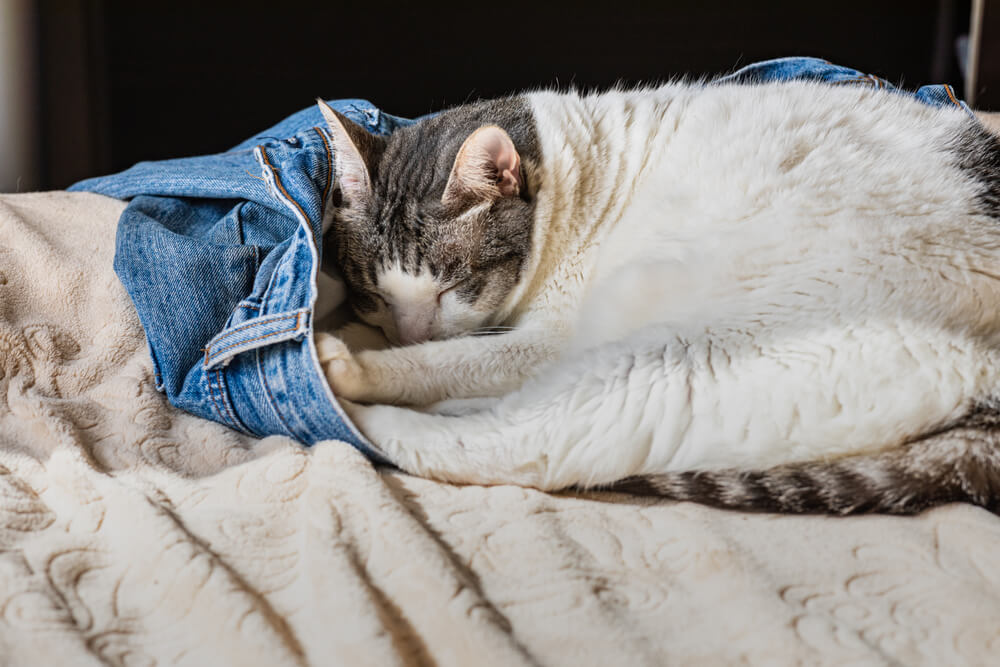
Then it finds the shirt you wore yesterday and lies directly on top of it.
From a human perspective, the clean shirt is more appealing.
From a scent-oriented animal’s perspective, the worn shirt contains far more information.
Washing removes or changes many familiar odors and replaces them with the scent of detergent or fabric products.
A worn item is more strongly associated with you.
So if your cat consistently chooses worn clothing over freshly washed laundry, the preference may partly involve familiar scent rather than cleanliness.
Your cat isn’t criticizing your laundry habits.
Probably.
Does your cat know when you’re coming home?
The relationship between cats, routines and their owners raises another interesting question.
Some cats seem to become active around the time a person normally returns home.
They may move toward a window, door or familiar waiting place.
That doesn’t necessarily mean cats understand clock time as humans do. Daily routines contain enormous numbers of cues: changes in daylight, household sounds, feeding schedules and recurring activity patterns.
Dogs show similarly fascinating responses to human routines. For example, we’ve looked at how dogs seem to know when you’re late coming home.
Pets don’t need watches to learn patterns.
Sometimes the household itself becomes the clock.
What if your cat suddenly starts sleeping on your clothes?
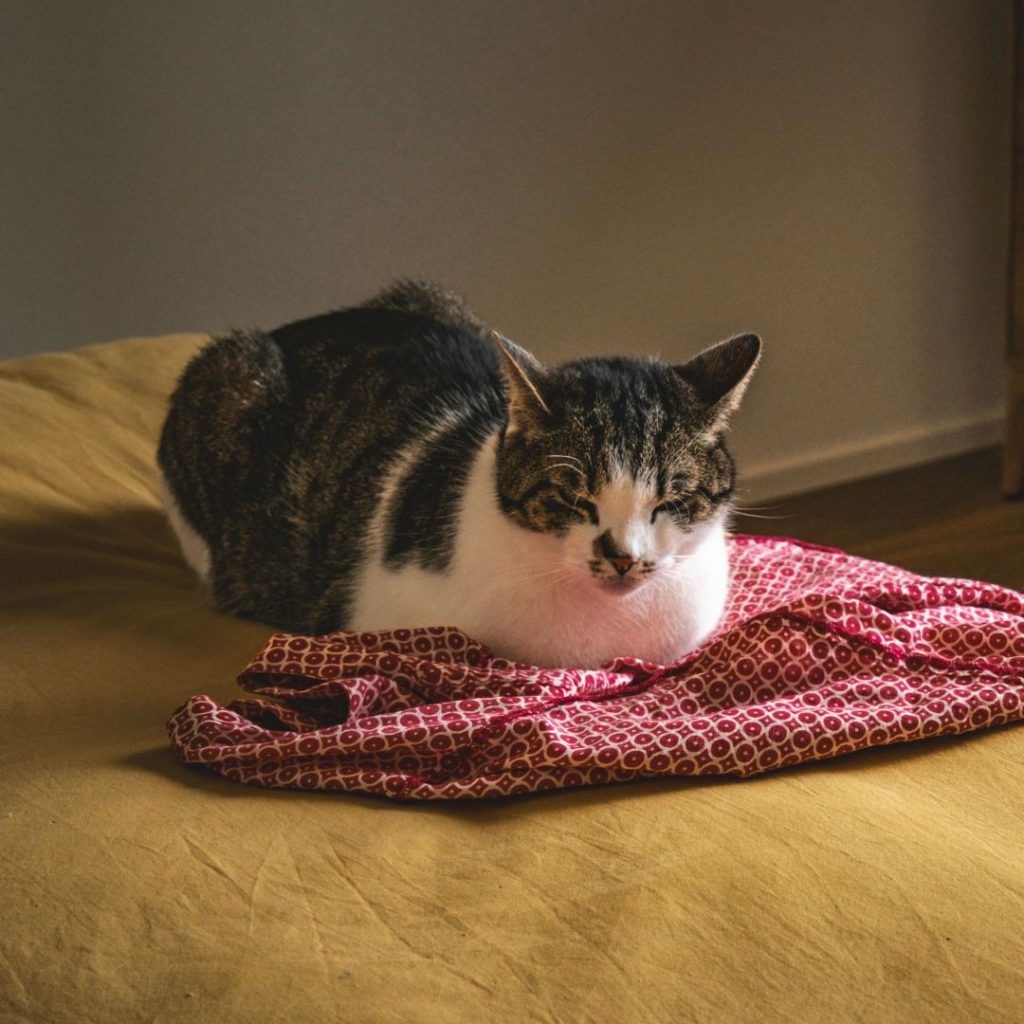
If your cat has always done this, it is usually just another part of its sleeping preferences.
A sudden behavioral change deserves a little more attention.
If your cat suddenly becomes unusually clingy or starts seeking your belongings much more frequently, look at the bigger picture.
Has anything changed in the household?
A new pet?
A visitor?
Different working hours?
Construction noise?
A move?
Cats can respond to environmental changes and disruptions in routine.
And if new clinginess or unusual sleeping behavior occurs alongside appetite changes, hiding, excessive vocalization, litter-box problems, confusion, reduced activity or other physical or behavioral changes, talk with your veterinarian.
The important clue isn’t simply that your cat slept on your shirt.
It is whether your cat’s normal behavior has noticeably changed.
Should you leave clothing for your cat when you’re away?
If your cat enjoys sleeping on a particular old shirt or blanket, leaving a safe familiar item available may be reasonable.
Just think about safety.
Avoid clothing with loose strings, cords, buttons or decorations that could be chewed or swallowed. Laundry containing substances that could be irritating or toxic should obviously be kept away.
And don’t intentionally create a large unstable pile that a small cat could become trapped underneath.
A simple old T-shirt placed on a safe sleeping surface is enough.
You don’t need to donate your entire wardrobe.
Your cat may already believe it owns that anyway.
So why does your cat sleep on your clothes?
There probably isn’t one universal explanation.
Your clothes are soft.
They’re often located in comfortable places.
They carry familiar smells.
They may be part of your cat’s established routine and home environment.
And because cats can form social relationships with their caregivers, your scent may carry significance beyond being just another household odor.
We should be careful about turning that into a human story the science cannot prove.
Your cat may not be lying there thinking:
“I miss you so much.”
But there is something quietly meaningful about what we can say.
Out of all the beds, blankets, chairs and corners in the house, your cat sometimes chooses an object carrying the scent of you.
So the next time you come home and discover your favorite black shirt completely covered in cat hair, perhaps don’t be too annoyed.
Your cat had an entire house to sleep in. Somehow, it ended up choosing something that smelled like you.
Leave a Reply