

You pick up your keys.
Your cat doesn’t move.
You put on your shoes and walk toward the door. Still nothing. Maybe you get one lazy glance before your cat goes right back to sleep.
Hours later, you come home expecting some sign that you were missed.
Your cat looks at you for two seconds and walks away.
Dogs often make reunions obvious. Cats can make you wonder whether they even noticed you were gone.
But that raises a fascinating question:
Does your cat actually miss you when you leave, even if it acts like it doesn’t care?
The answer is more complicated, and perhaps more touching, than your cat’s expression suggests.
Cats may care more than they show
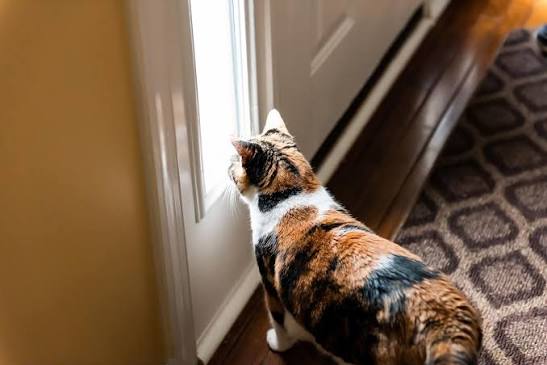
Cats have long been stereotyped as solitary animals that simply tolerate humans because we provide food and shelter.
Research into cat-human relationships has complicated that picture.
Domestic cats can form social relationships with people, and research has found evidence of attachment-related behavior toward human caregivers.
That doesn’t mean every cat experiences separation in the same way.
Some cats are extremely social. Others prefer more independence. Personality, early socialization, household environment, age and previous experiences can all influence how a cat interacts with people.
Most importantly, feline affection doesn’t always resemble canine affection.
A cat doesn’t have to race toward the door to have noticed that you disappeared.
Sometimes the signs are much quieter.
Your cat knows when something in its routine changes
Imagine your cat’s normal morning.
You wake up.
You walk into the kitchen.
You make coffee.
You feed the cat.
You shower.
You put on certain clothes.
You pick up your keys.
Then you disappear through the same door.
Repeat that sequence hundreds of times and it becomes predictable.
Your cat doesn’t need to understand that you’re “going to work” to learn what happens next.
Cats are excellent at recognizing routines and environmental cues.
Your shoes, keys, bag, alarm, clothing and even the order in which you move through the house can become signals.
So when you think your cat isn’t paying attention as you prepare to leave, it may already know exactly where the morning is heading.
That apparently indifferent cat on the couch may be observing much more than you realize.
But does your cat actually miss you?
This depends on what we mean by “miss.”
Humans can think about absent people abstractly. We can remember yesterday, imagine tomorrow and consciously wish someone were beside us.
We cannot demonstrate that cats experience absence in exactly that way.
But we do know cats can form social bonds, recognize familiar people and respond to changes involving their caregivers.
Research has also documented separation-related behaviors in some cats.
So rather than saying every cat sits at home consciously thinking, “I miss my human,” a more scientifically cautious interpretation is this:
Your absence can matter to your cat.
The familiar person who normally talks, feeds, plays, touches and moves around the home is suddenly missing.
For some cats, that change may be significant.
Your scent stays behind after you leave
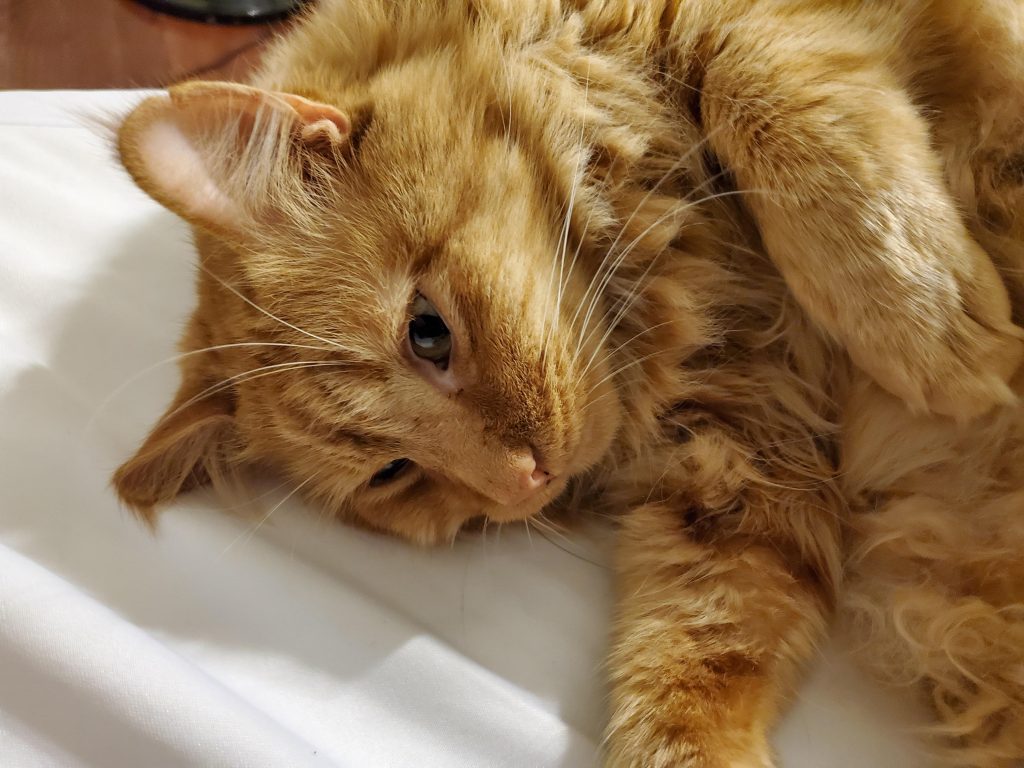
Here’s where the story becomes especially interesting.
When you walk out the door, you don’t completely disappear from your cat’s environment.
Your scent remains everywhere.
On the bed.
On the couch.
On your pillow.
On the blanket.
And especially on clothing you’ve recently worn.
Cats rely heavily on smell to gather information about their surroundings. Familiar scents are part of the sensory landscape of their home.
That may help explain a behavior many owners notice:
Their cat curls up on their clothes when they’re away.
We’ve explored why cats sleep on their owner’s clothes when they’re not home. Softness and location can matter, but familiar human scent may also help make those clothes particularly attractive.
Your cat may not understand a T-shirt as a sentimental object.
But it certainly has a smell.
And that smell is associated with you.
Your cat may behave differently while you’re gone
Not every cat responds to an owner’s absence by sitting beside the front door.
Some simply sleep.
Others patrol the house, look out windows, play, eat or move between their usual resting places.
Some may become more vocal or show changes in activity.
And certain cats can show more concerning separation-related behaviors, such as inappropriate elimination, excessive vocalization, destructive behavior or overgrooming.
Those behaviors shouldn’t automatically be interpreted as proof that a cat “misses” someone in the human emotional sense. Stress, environmental changes and medical issues can produce similar signs.
If the behavior is new, persistent or severe, particularly if accompanied by physical symptoms or litter-box changes, a veterinarian should help rule out medical causes.
But the larger point remains:
Cats can respond to our absence, even when the response isn’t obvious to us.
Why doesn’t your cat greet you at the door?
This is where many cat owners become suspicious.
“If my cat missed me, why doesn’t it come running when I get home?”
Because cats are cats.
Individual responses to reunion vary enormously.
One cat may run toward you with its tail raised.
Another may meow repeatedly.
Another may rub against your legs.
Another may wait five minutes before entering the room.
And another may simply look up from the couch.
A dramatic greeting isn’t the only evidence that your presence matters.
Your cat’s relationship with you is better understood by looking at its behavior over time, rather than judging one moment at the front door.
Does it choose to stay near you?
Follow you between rooms?
Rub against you?
Sleep near you?
Approach you for interaction?
Relax around you?
Those patterns tell you more than whether your cat stages a Hollywood reunion every evening.
Sometimes your cat follows you everywhere
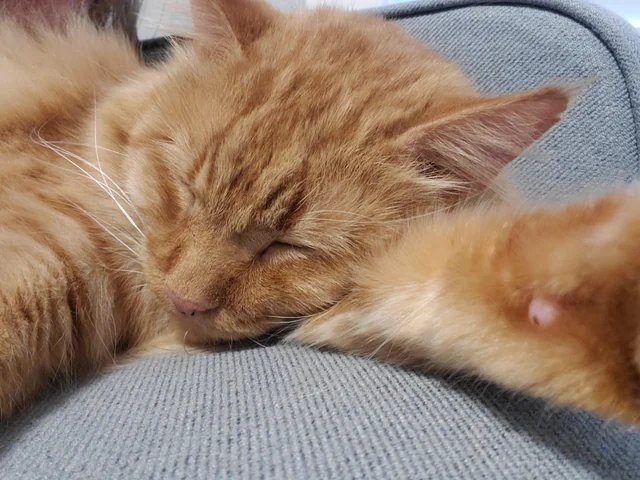
There’s a funny contradiction familiar to many cat owners.
Your cat appears completely uninterested in you.
Then you stand up.
Suddenly it follows you.
You go to the kitchen.
Cat follows.
Bedroom.
Cat follows.
Bathroom.
Apparently, this private human activity now requires feline supervision.
We’ve looked at why cats follow their owners into the bathroom, where routine, curiosity, access, attention and social proximity may all contribute.
That behavior reveals something important about cats.
Independence and social interest aren’t opposites.
A cat can enjoy being alone and still care where you are.
Your cat may know more about you than it lets on
Consider another experiment every cat owner has accidentally performed.
You call your cat.
Nothing.
You call again.
Nothing.
You begin wondering whether your cat even recognizes the sound.
But scientific research suggests cats can distinguish their own names from other words under experimental conditions.
That doesn’t guarantee they’ll obey.
Recognition and response are different things.
We explored this in Does Your Cat Actually Know Its Name, or Just Your Voice?.
That distinction is important when thinking about whether cats miss us.
Humans naturally judge affection by visible reactions.
Cats aren’t obligated to communicate attachment using human expectations.
Sometimes they know.
They simply don’t perform.
What happens when you finally come home?
This may be the most interesting moment.
Pay attention to what your cat does during the first half hour after you return, not just the first five seconds.
Does it suddenly appear in the same room?
Rub against your legs?
Raise its tail when approaching?
Become more vocal?
Follow you?
Sit near you?
Ask for play?
Settle beside you?
Some cats may reconnect quietly rather than dramatically.
And sometimes that reconnection happens hours later.
You climb into bed.
The cat that barely acknowledged your arrival jumps up and curls beside you.
That sudden desire to sleep close can have several explanations, including warmth, routine and familiarity. We explored those possibilities in Why Does Your Cat Suddenly Sleep Next to You When It Usually Sleeps Alone?.
A cat’s relationship with you isn’t defined by one behavior.
It’s the pattern that matters.
What about long trips?
Leaving for eight hours is different from disappearing for several days.
Your cat may still have food, water and familiar surroundings, but that doesn’t mean it should simply be left alone indefinitely.
Cats need regular care, monitoring, clean litter, fresh water, appropriate feeding and social interaction according to their individual needs.
If you’re traveling, arrange for a responsible person to check on and care for your cat appropriately.
This is especially important for kittens, senior cats, cats taking medication and cats with health conditions.
And when you return?
Don’t force an emotional reunion.
Let your cat approach at its own pace.
Some cats reconnect immediately.
Others need time to adjust to another change in routine: you coming back.
Does your cat understand that you’re coming back?
Probably not in the same abstract way a human does.
Your cat doesn’t need to understand your calendar to learn patterns, however.
If you leave every morning and return around a broadly predictable part of the day, repeated experience creates an association.
Certain environmental changes may occur before you return.
Sounds outside change.
Household activity changes.
Light levels change.
Feeding time approaches.
Other family members behave differently.
Cats can use recurring cues to anticipate events.
That doesn’t mean your cat is reading the clock.
It means your cat lives inside a world of patterns.
And you are one of those patterns.
What if your cat becomes distressed whenever you leave?
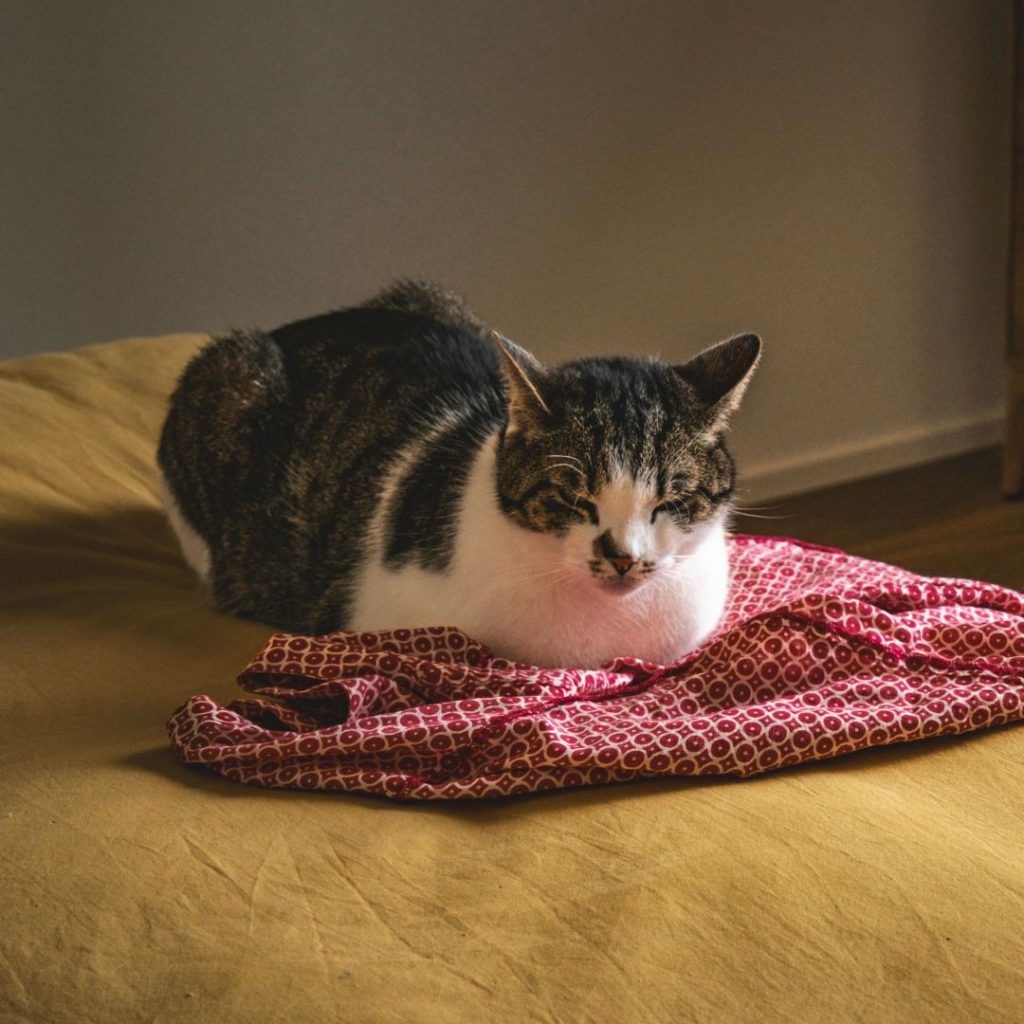
There is an important difference between a cat noticing your absence and a cat struggling with it.
Watch for significant behavioral changes such as persistent excessive vocalization, inappropriate urination or defecation, destructive behavior, overgrooming, appetite changes, vomiting or unusual agitation associated with periods of separation.
Don’t immediately diagnose separation anxiety yourself.
Medical problems and other environmental stressors can cause overlapping symptoms.
Start with a veterinarian, particularly when behavior changes suddenly.
Video from a safe home camera can also provide useful information about what actually happens while you’re away.
You may discover that your supposedly heartbroken cat sleeps peacefully for six hours.
Or you may identify a real pattern worth discussing with your veterinarian.
Either result is more useful than guessing.
So, does your cat miss you?
We can’t climb inside a cat’s mind and translate its experience directly into human language.
Your cat may not sit beside the window composing tragic thoughts about your absence.
But that doesn’t mean you are irrelevant the moment the door closes.
Your cat can recognize familiar people.
It can learn your routines.
It can form social bonds.
Your scent remains part of its environment.
And your departure changes a familiar pattern.
Perhaps that’s the most accurate way to think about it.
Your cat doesn’t need to miss you exactly the way you miss another person for your absence to matter.
And sometimes the evidence appears in the smallest moments.
The shirt you find covered in fur.
The cat waiting in the hallway.
The tail rising when you enter.
The quiet figure following you into the next room.
Or the supposedly independent little animal that waits until bedtime, climbs onto your bed and finally settles beside you.
Your cat may never give you the dramatic reunion you imagined.
But don’t mistake quiet affection for no affection at all.
Leave a Reply