
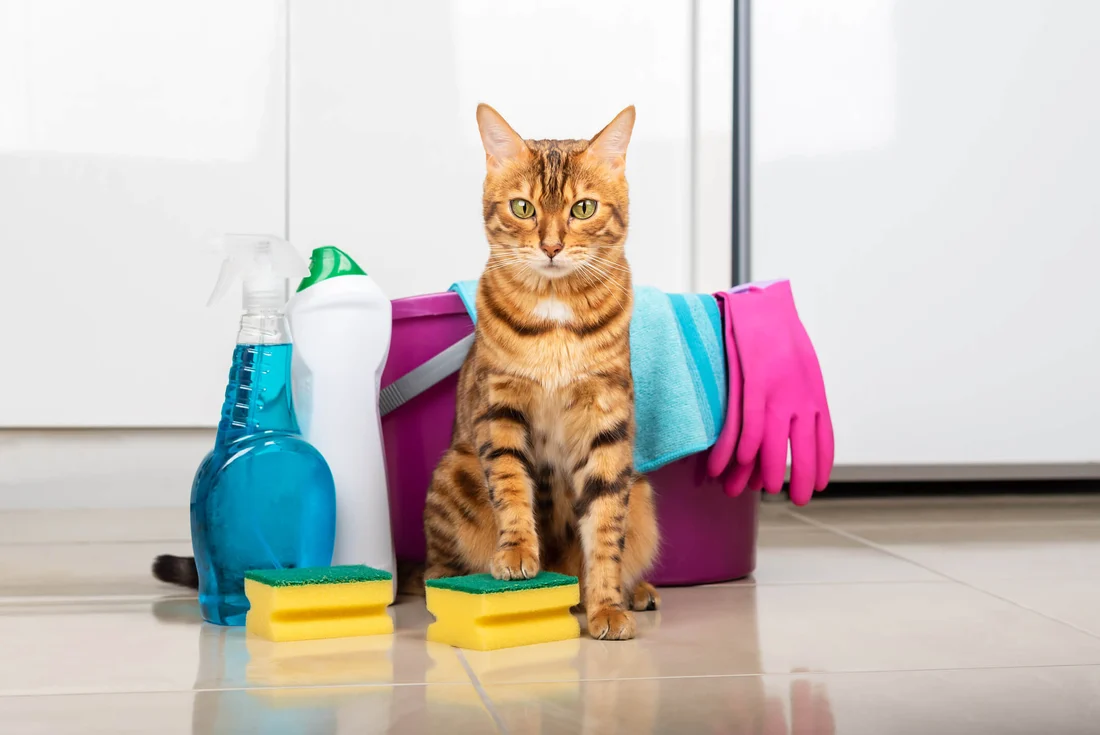
Your home feels like the safest place in the world for your cat.
However, look at it from your cat’s point of view.
A pill dropped beside the bed looks like a tiny toy. A bouquet on the table is something to sniff or chew. A freshly cleaned floor becomes a surface to walk across. Even the water inside a flower vase may look like a new drinking bowl.
That curiosity can sometimes become dangerous.
Many household items toxic to cats are products we use every day. Medicines, flowers, food, cleaning products, essential oils, and even flea treatments can cause serious problems.
The danger is not always obvious either. Cats frequently groom their paws and coats. Therefore, they don’t always need to eat something directly to be exposed to it.
Here are some of the most important household hazards every cat owner should know.
1. Human painkillers can be extremely dangerous to cats
Start with one of the most common objects in almost every home: human medication.
Cats process many drugs differently from humans. As a result, medications that are safe for us can be extremely dangerous for them.
Acetaminophen, also known as paracetamol and sold under brands such as Tylenol, is particularly dangerous to cats. Cats have a very limited ability to metabolize it safely.
Exposure can damage red blood cells and the liver. A poisoned cat may develop weakness, vomiting, difficulty breathing, facial or paw swelling, or unusual discoloration of the gums.
Other human painkillers can also cause serious problems.
For example, ibuprofen and naproxen can damage the gastrointestinal tract and kidneys.
Therefore, never give your cat human pain medication unless your veterinarian specifically tells you to do so.
Also, remember that cats don’t need access to the medicine cabinet to become exposed.
A single pill dropped onto the floor can create a risk.
How to make medications safer around cats
Keep medicines in closed containers and secure cabinets. In addition, avoid leaving tablets on bedside tables or counters.
If you drop a pill, find it immediately.
Most importantly, don’t assume that a medication is safe because your cat only swallowed a small amount. Contact your veterinarian if you suspect accidental exposure.
2. Lilies can cause life-threatening poisoning
Flowers seem harmless.
For cats, however, some flowers are among the most dangerous objects you can bring into the house.
True lilies and daylilies are especially dangerous to cats.
Several species in the Lilium and Hemerocallis genera can cause severe acute kidney injury.
The frightening part is how easily exposure can happen.
A cat may chew a leaf or petal. It may brush against the flower and get pollen on its fur. Later, it may swallow that pollen while grooming.
Even water from a vase containing dangerous lilies can potentially expose a cat.
Therefore, if you have cats, identifying flowers before bringing a bouquet into your home is important.
Tulips are another plant worth knowing about. They contain compounds that can cause poisoning, with the highest concentration generally found in the bulb.
You can learn more in Are Tulips Toxic to Cats? What Every Cat Owner Should Know.
The simple rule is this:
Never assume a plant is safe for your cat simply because it is safe for you to touch.
3. Onions and garlic can damage a cat’s red blood cells
A cat doesn’t need to eat something that looks poisonous to become sick.
Sometimes the danger is sitting on your dinner plate.
Onions, garlic, chives, and related plants belong to the Allium family. These foods contain compounds that can damage red blood cells in cats.
Enough exposure can contribute to anemia.
Moreover, the problem isn’t limited to raw onions or whole garlic cloves.
These ingredients can appear in many everyday foods, including:
- Soups
- Sauces
- Gravies
- Seasoning mixes
- Meat dishes
- Leftovers
For example, plain cooked chicken can be an acceptable occasional treat for many healthy cats.
However, chicken covered in garlic sauce is not the same thing.
This is why you should consider every ingredient before sharing food from your plate.
For a more complete guide, read What Human Foods Can Cats Eat Safely?.
4. Chocolate and caffeine can poison cats
Most cats aren’t particularly interested in chocolate. Nevertheless, chocolate should always be kept away from them.
Chocolate contains compounds called methylxanthines, including theobromine and caffeine.
These substances can affect the heart and nervous system.
Depending on the amount consumed, signs of poisoning can include vomiting, restlessness, increased heart rate, tremors, and seizures.
Caffeine itself is also dangerous.
Therefore, don’t leave coffee grounds, caffeine tablets, energy products, tea bags, or caffeinated drinks where your cat can investigate them.
Again, your cat doesn’t have to consume an entire cup of coffee for the situation to deserve attention.
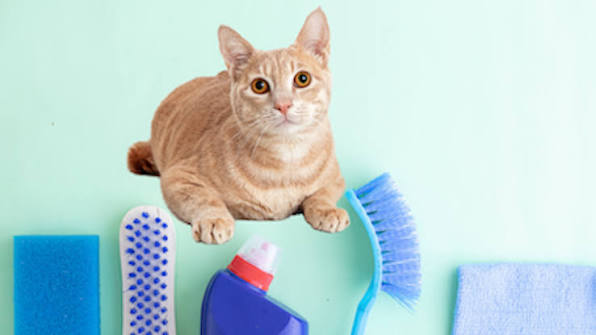
5. Household cleaners can end up on your cat’s paws
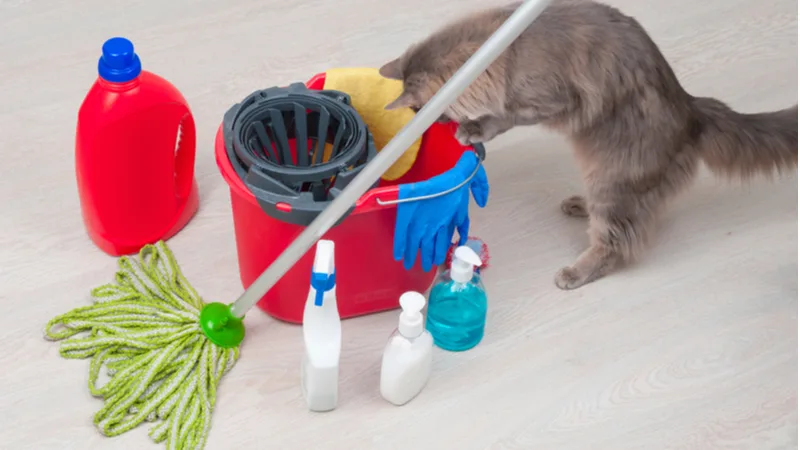
Imagine that you have just cleaned the kitchen floor.
Before it dries, your cat walks across it.
Nothing happens immediately, so you don’t think much about it.
Twenty minutes later, your cat begins licking its paws.
This illustrates an important point about household chemicals.
Cats can ingest substances while grooming themselves.
Certain concentrated cleaning products, disinfectants, and other chemicals can irritate the skin, mouth, digestive tract, or other tissues. The exact risk depends on the ingredients and concentration.
Therefore, follow the product’s instructions carefully.
Keep your cat away while using potentially irritating products. In addition, don’t allow the cat back onto treated surfaces until those surfaces are safe according to the label.
Store concentrated cleaners inside secure cabinets.
If a cleaning product gets onto your cat’s fur or paws, check the product label and contact a veterinarian or animal poison-control service for appropriate advice.
Don’t automatically use another chemical to remove it.
6. Essential oils can be dangerous to cats
Many people associate essential oils with relaxation and natural wellness.
However, natural doesn’t automatically mean safe for cats.
Cats metabolize certain chemical compounds differently from humans. Consequently, some concentrated essential oils can cause poisoning when swallowed, applied to the skin, or encountered at unsafe concentrations.
Tea tree oil is one well-known example of concern.
Other oils may also pose risks depending on their composition, concentration, dose, and route of exposure.
Be especially careful with concentrated oils.
Don’t apply an essential oil directly to your cat unless your veterinarian has specifically recommended an appropriate product.
Also, keep oil bottles somewhere your cat cannot knock them over.
A spill creates another problem because the oil may coat the paws or fur. Your cat may then swallow it during grooming.
7. Antifreeze can cause severe kidney damage
The garage can contain hazards that are easy to forget.
One of the most serious is antifreeze containing ethylene glycol.
Ethylene glycol poisoning can progress rapidly. Early signs may include vomiting, weakness, poor coordination, or behavior resembling intoxication.
Later, severe kidney injury can develop.
Therefore, any suspected exposure should be treated as an emergency.
Check garages and driveways for leaks. Clean automotive fluid spills promptly, and keep containers securely closed.
Don’t wait for your cat to look seriously ill before seeking veterinary help.
With some toxins, the best opportunity for treatment may come before severe symptoms develop.
8. Dog flea treatments can poison cats
A flea treatment that is safe for your dog may be dangerous for your cat.
This is one of the most important product-label mistakes pet owners can make.
Some flea and tick products designed for dogs contain permethrin. Cats are particularly sensitive to this insecticide.
Exposure can cause serious neurological symptoms, including muscle twitching, tremors, difficulty walking, and seizures.
A cat may be exposed when a dog product is accidentally applied directly to it.
However, depending on the product, exposure may also happen through close contact with a recently treated dog.
Therefore, always check the species listed on the package.
Never use a flea treatment labeled only for dogs on a cat.
If a dog flea product is accidentally applied to your cat, contact a veterinarian immediately.
9. Rat and mouse poisons are dangerous to cats
Rodent poisons deserve special attention because different products contain different active ingredients.
That means “rat poison” isn’t one single toxin.
Some rodenticides interfere with blood clotting and can cause internal bleeding.
Others affect the nervous system.
Certain products can cause kidney damage or other serious complications.
Because treatment depends on the specific poison, identifying the product is extremely important.
If your cat may have eaten rodenticide, keep the packaging.
If possible, take a clear photo of the ingredient label and bring it with you to the veterinary clinic.
Don’t try to treat the poisoning yourself.
10. Laundry detergent pods can look like toys
Laundry pods are small, colorful, and easy to move around.
To a curious cat, that can make them surprisingly interesting.
However, these products contain concentrated cleaning agents.
If a cat bites or punctures a pod, detergent can enter the mouth or splash onto the eyes, skin, and fur.
Exposure can cause irritation, vomiting, drooling, and other problems. More serious complications may occur depending on the amount and type of exposure.
Keep laundry pods in a closed container that your cat cannot access.
The same principle applies to concentrated dishwasher products and other cleaning capsules.
11. Alcohol should never be given to cats
Most owners would never deliberately pour alcohol into a cat’s bowl.
However, alcohol exposure can occur in less obvious ways.
Cats may investigate unattended drinks, spilled beverages, desserts, or foods containing alcohol.
Alcohol can affect the nervous system and may cause vomiting, weakness, poor coordination, breathing problems, coma, or other serious effects depending on the amount consumed.
Therefore, clean spills quickly and keep alcoholic drinks out of reach.
A curious paw knocking over a glass is all it takes to create an unexpected exposure.
12. Some human foods become dangerous because of hidden ingredients
Sharing food with your cat becomes complicated when several ingredients are combined.
Consider a piece of cooked meat.
The meat itself may be safe.
However, the sauce could contain garlic or onion. The dish may also contain excessive salt, alcohol, spices, or other ingredients your cat doesn’t need.
That’s why plain food is generally easier to evaluate than prepared dishes.
Even familiar cat favorites need limits.
Tuna is a perfect example. Many cats become extremely excited when they smell it. However, human canned tuna shouldn’t replace a complete and balanced feline diet.
Read Why Do Cats Go Crazy for Tuna, and Is Too Much Bad for Them? for a closer look at why cats love tuna and why moderation matters.
13. Strings, ribbons, and dental floss are dangerous in a different way
Not every household danger is a poison.
Some ordinary objects can cause serious physical injuries when swallowed.
Cats often love playing with long, thin objects such as:
- String
- Yarn
- Ribbon
- Thread
- Dental floss
- Hair ties
String-like objects are particularly dangerous because they can become trapped in the gastrointestinal tract.
In veterinary medicine, these are known as linear foreign bodies.
Part of the object may become anchored while the intestines continue trying to move the rest through the digestive system. This can cause severe intestinal damage.
If you see string hanging from your cat’s mouth or anus, don’t pull it.
Contact a veterinarian.
14. Batteries can cause serious injury
Small batteries can also become accessible around the house.
Remote controls, toys, watches, hearing devices, and other electronics may contain batteries that a curious cat could potentially chew or swallow.
Damaged batteries can release corrosive material.
Button batteries are especially concerning because they are small enough to be swallowed.
Keep loose batteries in secure storage and don’t leave damaged electronic devices where your cat can chew them.
15. Nicotine products should be kept completely inaccessible
Cigarettes and other nicotine-containing products can be dangerous to pets if ingested.
The same concern applies to liquid nicotine products, which may contain concentrated nicotine.
Because these products can be small, they may be easy for a pet to investigate.
Store them securely and clean up spills immediately.
If you suspect nicotine exposure, contact a veterinarian promptly rather than waiting for symptoms.
Allergy and poisoning are not the same thing
This distinction is important.
Owners sometimes describe every negative reaction as an allergy.
However, toxicity, allergy, and intolerance are different problems.
A toxin directly harms the body through its chemical effects.
An allergy involves an inappropriate immune response to a particular substance.
An intolerance can cause symptoms without involving the same immune process.
For example, a cat can develop an allergy to a particular food protein. That doesn’t mean the ingredient is poisonous to every cat.
If your cat frequently scratches, overgrooms, develops skin problems, or seems sensitive to something in its environment, read What Are Cats Allergic To? The Triggers Hiding in Your Home.
Knowing the difference can help you decide what to discuss with your veterinarian.
What are the signs of poisoning in cats?
There isn’t one universal sign of poisoning.
Different toxins affect different organs. In addition, symptoms depend on the amount involved and how the cat was exposed.
Possible warning signs include:
- Excessive drooling
- Vomiting
- Diarrhea
- Loss of appetite
- Weakness or extreme tiredness
- Tremors or muscle twitching
- Difficulty walking
- Seizures
- Abnormal breathing
- Changes in thirst or urination
- Unusual gum color
- Collapse
However, don’t wait for these signs if you already know your cat was exposed to a dangerous substance.
Some toxins cause internal damage before obvious symptoms appear.
What should you do if your cat eats something toxic?
Act quickly, but don’t panic.
First, prevent further exposure if you can do so safely.
Next, identify the substance.
Find the packaging, ingredient list, medicine bottle, plant label, or product container. If possible, take a photograph.
Try to determine three things:
What did your cat encounter? How much might it have consumed? When did it happen?
Then contact your veterinarian, an emergency veterinary hospital, or an animal poison-control service.
Don’t wait until the next morning if the substance is known to be dangerous.
Most importantly, don’t automatically try to make your cat vomit at home.
Vomiting isn’t appropriate for every type of poisoning. In some cases, it can cause additional injury.
Likewise, don’t give milk, oil, salt, hydrogen peroxide, human medication, or another homemade remedy unless a veterinary professional specifically tells you to do so.
How can you make your home safer for your cat?
You don’t need to turn your home into an empty room.
Instead, think about access.
Store human medications inside closed cabinets. Keep toxic plants out of the home rather than simply placing them on a high shelf. Lock away concentrated cleaners, automotive fluids, pesticides, and rodenticides.
Check labels before using flea products.
Keep string, thread, ribbon, batteries, and other small objects somewhere your cat cannot reach them.
Also, pay attention to surfaces.
Cats walk across countertops, sinks, floors, and furniture. Then they lick their paws.
That behavior creates exposure routes humans often overlook.
The most dangerous item may look completely ordinary
Your cat doesn’t understand warning labels.
It doesn’t know that one flower is safe while another can damage its kidneys.
It doesn’t know that a tablet on the floor is medicine.
It doesn’t know that the liquid on its paw came from a cleaning product.
And it doesn’t know that a flea treatment made for the dog could be dangerous to a cat.
That’s our responsibility.
The safest question isn’t simply:
“Would my cat eat this?”
Ask instead:
“Could my cat lick it, chew it, walk through it, drink it, knock it over, or get it onto its fur?”
That small change in thinking can reveal hazards you’ve walked past hundreds of times.
Because sometimes the biggest danger to a curious cat isn’t something obviously poisonous.
It’s something completely ordinary sitting in the wrong place.
Leave a Reply