
Your dog stands by the door, tail wagging, ready for its daily walk. The sun is shining, and the weather looks beautiful. However, there’s one thing you may not realize.
The pavement outside could already be hot enough to burn your dog’s paws.
A temperature of 85°F (29°C) might feel manageable to you. Yet the ground beneath your feet can become much hotter than the surrounding air. Meanwhile, your dog has no shoes to protect its sensitive paw pads.
So, how hot is too hot for dogs to walk outside? And how can you tell when an ordinary walk has become dangerous?
The answer depends on more than the temperature displayed on your phone.
What temperature is too hot for dogs to walk?
There is no single outdoor temperature that is safe for every dog. However, temperatures around 80–85°F (27–29°C) should make owners more cautious, especially in direct sunlight.
According to the American Kennel Club (AKC), pavement may become unsafe when the air temperature reaches approximately 85°F (29°C), particularly after prolonged heating.
Still, temperature alone doesn’t tell the whole story. Humidity, sunlight, wind, exercise intensity, and your dog’s health all affect the risk.
A healthy dog walking slowly through shaded grass may tolerate conditions that would be dangerous for an older Bulldog walking on sun-exposed asphalt.
Therefore, treat the temperature as a warning sign, not a guarantee of safety.
Dog walking temperature guide
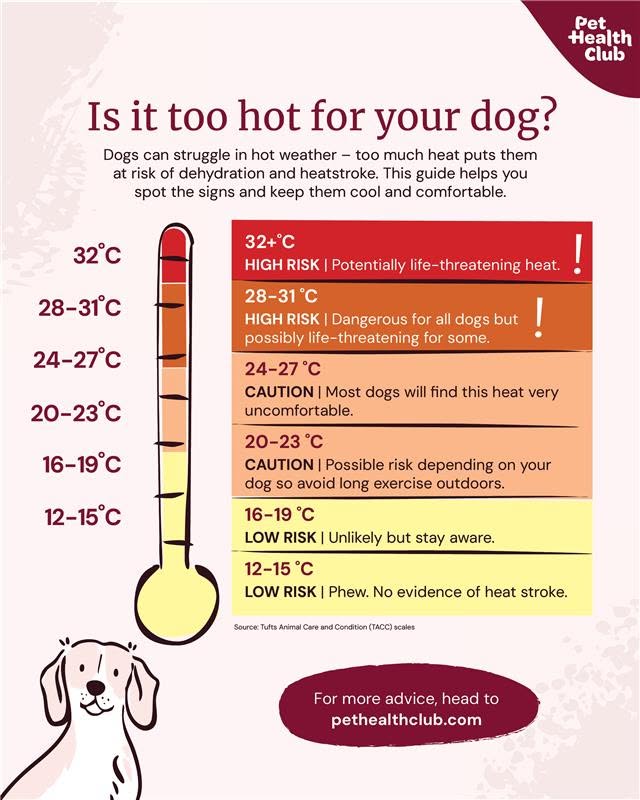
The following table offers general planning guidance. These are not medically established safe temperature cutoffs for every dog.
| Air temperature | General guidance |
|---|---|
| Below 70°F (21°C) | Often comfortable for healthy dogs, depending on conditions |
| 70–79°F (21–26°C) | Check humidity, sun exposure, and your dog’s tolerance |
| 80–84°F (27–28°C) | Use extra caution and favor short, shaded walks |
| 85–89°F (29–32°C) | Avoid hot pavement and postpone unnecessary exercise |
| 90°F (32°C) or higher | Skip routine outdoor exercise and prioritize cooling |
Importantly, some dogs can overheat at temperatures below these ranges.
If your dog has breathing difficulties, is overweight, or belongs to a high-risk breed, use stricter precautions.
Why pavement can be much hotter than the air
This is one of the biggest summer dangers for dogs.
The weather forecast measures air temperature. However, asphalt, concrete, and other surfaces absorb heat from sunlight.
As a result, pavement can become dramatically hotter than the surrounding air.
The AKC reports that when the air temperature reaches 86°F (30°C), asphalt can reach approximately 135°F (57°C).
That’s a difference of nearly 50°F.
Imagine walking barefoot across that surface.
Your dog experiences something similar, except it may not immediately understand why the ground is hurting.
Hot pavement can cause redness, painful blisters, and damage to paw pads. Moreover, heat rising from the ground can add to your dog’s overall heat exposure.
This is why even a short afternoon walk deserves careful planning.
The five-second pavement test
Before walking your dog on asphalt or concrete, check the surface.
The RSPCA recommends a simple method:
- Place the back of your hand against the pavement.
- Keep it there for five seconds.
- If the surface feels too hot to tolerate, don’t walk your dog on it.
This test is a useful warning, although it cannot guarantee that a surface is safe.
Ground temperature can vary between sunny and shaded areas. In addition, your dog’s paw sensitivity may differ from yours.
When in doubt, choose grass or postpone the walk.
Why dogs overheat faster than people expect
Humans cool themselves mainly through sweating.
Dogs rely heavily on panting to release excess heat. They also lose some heat through their paw pads and other body surfaces.
However, panting becomes less effective when the surrounding air is hot and humid.
During exercise, a dog’s muscles produce additional heat. If the dog cannot release that heat quickly enough, its body temperature may rise dangerously.
This can lead to heat-related illness, including heatstroke.
According to the American Veterinary Medical Association (AVMA), excessive panting, drooling, unsteadiness, and collapse are important warning signs.
Therefore, a dog doesn’t need to spend hours outside to become dangerously overheated.
A demanding walk on a hot, humid day may be enough.
Which dogs are most at risk in hot weather?
Some dogs are more vulnerable to heat than others.
Flat-faced dog breeds
Pugs, French Bulldogs, English Bulldogs, and other brachycephalic breeds often struggle to cool themselves efficiently.
Their shortened facial structure can make breathing more difficult. Consequently, they may face a higher risk of overheating during warm-weather exercise.
Older dogs and puppies
Senior dogs may have underlying health problems that affect their heat tolerance.
Puppies also require extra care because they may become exhausted more easily and have sensitive paw pads.
Overweight dogs
Excess body weight can make exercise more demanding and reduce heat tolerance.
Therefore, overweight dogs may need shorter walks and more frequent rest periods.
Dogs with thick coats
Dogs with dense coats may struggle more in certain hot conditions.
However, shaving a double-coated dog isn’t automatically the right solution. Coat management depends on the breed and individual circumstances.
Ask your veterinarian or a qualified groomer before making major coat changes.
Dogs with medical conditions
Heart disease, respiratory problems, and other illnesses can increase heat-related risks.
If your dog has a medical condition, ask your veterinarian about safe summer exercise.
Seven warning signs your dog is getting too hot
Dogs can’t tell us when they’re becoming dangerously overheated. However, their behavior may provide important clues.
Watch for these signs:
- Excessive panting: Your dog pants heavily and struggles to settle.
- Unusual drooling: Saliva becomes more noticeable than normal.
- Slowing down: Your dog stops frequently or refuses to continue.
- Seeking shade: Your dog repeatedly moves toward cooler areas.
- Weakness or unsteadiness: Walking becomes difficult or poorly coordinated.
- Vomiting or unusual lethargy: Your dog appears distressed or unusually tired.
- Collapse or seizures: These are emergency signs requiring immediate veterinary attention.
Don’t wait for every symptom to appear.
If your dog seems unusually hot, stop exercising immediately and move to a cooler location.
What should you do if your dog shows signs of heatstroke?
Heatstroke is a veterinary emergency.
If you suspect your dog is overheating, act quickly.
First, stop the activity and move your dog away from direct sunlight. Choose a cool, well-ventilated area.
Next, begin cooling your dog with cool tap water. Avoid covering the dog with wet towels that could trap heat. Use a fan or air movement if available.
Offer drinking water if your dog is alert and able to swallow normally. Don’t force water into its mouth.
Most importantly, contact an emergency veterinarian immediately and arrange transport.
Continue safe cooling measures while preparing to travel, following veterinary instructions.
Even if your dog appears to improve, veterinary assessment remains important because serious complications can develop after heat exposure.
How can you tell if your dog’s paws are burned?
Sometimes a dog continues walking despite painful paw injuries.
Therefore, check the paws after exposure to hot pavement.
Possible signs include limping, reluctance to walk, repeated paw licking, redness, blisters, or damaged paw pads.
If you notice these symptoms, move your dog away from the hot surface.
Cool the affected paws gently with cool water. Avoid ice directly against injured skin.
Don’t peel loose tissue or apply human burn creams without veterinary guidance.
Contact your veterinarian for assessment, especially if you notice blisters, broken skin, or significant pain.
What is the best time to walk your dog in summer?
Early morning is often the safest choice.
The sun is less intense, and pavement may have cooled overnight.
Late evening can also work. However, asphalt may remain hot long after sunset, especially following a very hot day.
Therefore, always check the ground rather than assuming darkness means safety.
The AVMA recommends scheduling walks during cooler hours and avoiding strenuous activity during the hottest part of the day.
If temperatures remain uncomfortable, replace a long walk with a brief toilet break and indoor activities.
Missing one afternoon walk is much safer than risking heatstroke.
Can dogs walk safely on grass when pavement is hot?
Grass often stays cooler than asphalt exposed to direct sunlight.
As a result, shaded grassy areas can be a better choice for short outdoor breaks.
However, grass doesn’t eliminate the risk of overheating.
A dog can still develop heat-related illness while running on grass in hot, humid conditions.
Also, artificial turf can become extremely hot in direct sunlight.
Therefore, evaluate both the ground surface and the surrounding weather.
Do dog boots protect paws from hot pavement?
Properly fitted dog boots can help protect paw pads from direct contact with hot surfaces.
However, boots don’t prevent heatstroke.
Your dog can still overheat even when its paws are protected.
Choose breathable, appropriately sized footwear. Introduce boots gradually so your dog can become comfortable wearing them.
Avoid using boots as an excuse to take long walks in extreme heat.
Sometimes the safest solution is simply waiting until the weather cools down.
A simple act of kindness during an Arizona heatwave
In Bullhead City, Arizona, a man attracted attention for an unusual way of protecting his dog from scorching pavement.
Instead of making the animal walk across the hot ground, he transported it in a rolling cooler.
The unusual sight carried a simple message: protecting a dog’s paws sometimes means changing the plan entirely.
Read the story in Man Uses Rolling Cooler to Protect His Dog From Hot Pavement.
It’s a reminder that responsible pet care often involves noticing dangers our animals cannot explain.
Is leaving a dog in a car more dangerous than walking outside?
Both situations can become life-threatening.
A parked car can heat up rapidly, even when the windows are slightly open.
Meanwhile, outdoor exercise can also cause heatstroke, especially during hot and humid weather.
The AVMA advises never leaving pets unattended in parked vehicles during warm weather.
If you’re concerned about a dog trapped inside a vehicle, read Can You Break a Car Window to Save a Dog?.
Editorial note: Replace the link above with the correct Pete’s Pet Supply hot-car rescue article URL before publishing. The displayed destination currently points to a different article.
You can also explore the site’s article, The Dangers of Leaving Dogs in Cars Every Owner Should Know, for additional information about vehicle-related heat risks.
How to keep your dog active without walking in extreme heat
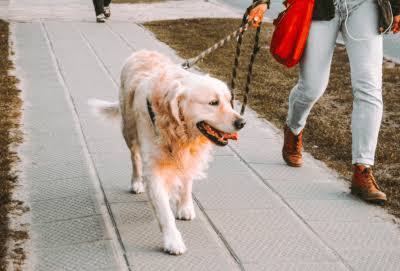
Dogs still need physical activity and mental stimulation during summer.
Fortunately, outdoor walks aren’t the only option.
Try indoor games that encourage your dog to think and move safely.
For example, hide small treats around a room and let your dog find them. You can also practice basic commands, introduce puzzle feeders, or play gentle indoor games.
Scent-based activities are especially useful because they engage a dog’s natural abilities.
Dogs experience the world through smell in ways humans cannot fully appreciate. Learn more in 7 Interesting Facts About Dogs That May Change the Way You See Your Best Friend.
Even a few short enrichment sessions can help keep your dog occupied until outdoor conditions improve.
Does your dog know when it’s too hot outside?
Dogs may seek shade, slow down, or refuse to continue walking when uncomfortable.
However, don’t assume your dog will always stop before becoming dangerously overheated.
Some dogs remain excited about exercise even when their bodies are struggling with the heat.
Others may follow their owners despite discomfort.
Therefore, the responsibility for deciding whether conditions are safe belongs to the owner.
Your dog trusts you to make that decision.
The walk can wait, but your dog’s safety can’t
Your dog doesn’t understand weather forecasts.
It doesn’t know that asphalt can become much hotter than the surrounding air. It may not recognize the early stages of heat exhaustion either.
All it knows is that you picked up the leash.
And that usually means something wonderful is about to happen.
But sometimes, the kindest decision is putting the leash back down.
Check the temperature. Touch the pavement. Consider your dog’s age, breed, and health. Choose shade, water, and cooler hours whenever possible.
Because your dog doesn’t need a long walk on the hottest day of the year.
It needs you to make sure there are many more walks ahead.
Leave a Reply