

Imagine walking through a door and seeing a dog you haven’t touched, spoken to, or played with in ten years.
The dog is older now. So are you.
Your face has changed. Your hair may be different. Your voice may sound older. A decade of life has passed between you.
For a moment, the dog simply stares.
Then the nose begins working.
And suddenly, the tail moves.
Could a dog really recognize someone after ten years apart?
The answer is more fascinating than a simple yes or no, because dogs may remember the people they love very differently from the way humans remember one another.
How Long Can a Dog Remember a Person?
There isn’t a scientific stopwatch that tells us exactly how many years a dog can remember a particular human.
Dog memory is also more complicated than simply remembering a face.
Researchers distinguish between different forms of memory, and dogs appear capable of forming long-lasting associations involving people, places, smells, experiences and emotions.
This means a person who played an important role in a dog’s life may leave behind a collection of powerful cues.
And perhaps the strongest of all is something humans cannot fully appreciate.
Scent.
A Dog May Remember Your Smell Before Your Face
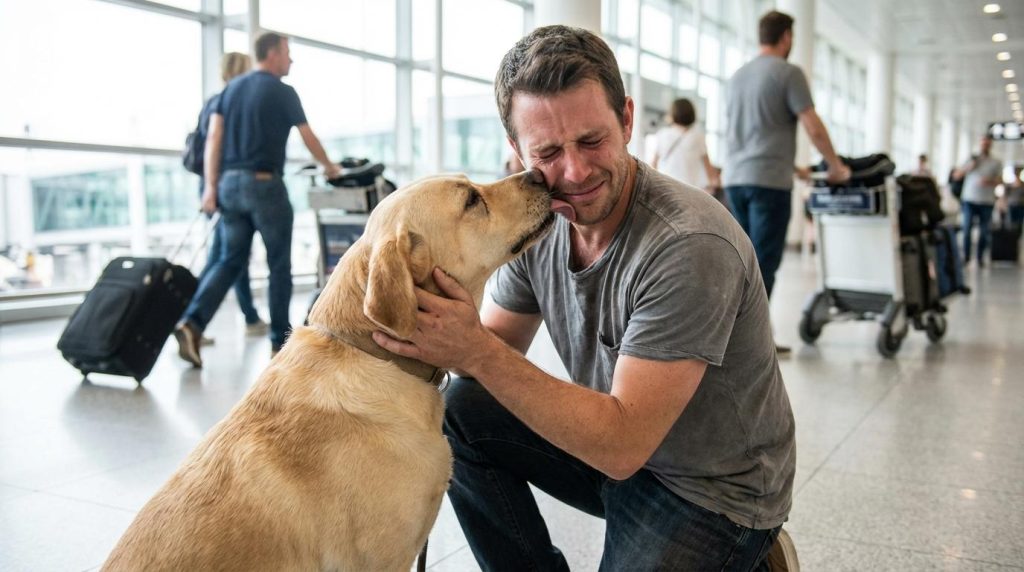
Humans tend to recognize one another primarily through appearance and voice. Dogs experience the world much more through their noses.
Their sense of smell is extraordinarily sophisticated. A dog’s brain dedicates substantial processing power to olfactory information, allowing it to distinguish and interpret odors at a level far beyond human ability.
Your scent isn’t simply “a smell” to your dog.
It can become part of your identity.
Research using brain imaging has found that familiar human scents can activate areas of a dog’s brain associated with positive expectations and reward.
That helps explain why scent could play such an important role when dogs encounter someone they once knew.
After years apart, your appearance may have changed dramatically.
But enough of your individual odor profile may remain familiar.
One sniff could potentially unlock an association formed years earlier.
Dogs Can Also Recognize Familiar Voices and Faces
Smell isn’t the only clue.
Studies suggest dogs can distinguish familiar human voices and can process information from human faces. They are remarkably attentive to the people around them, especially those with whom they have developed close relationships.
Think about everything your dog learns without you deliberately teaching it.
Your footsteps.
The sound of your car.
How you say its name.
Your morning routine.
Where you sit.
The way your hand reaches down to touch its head.
Individually, these details may seem insignificant. Together, they create something resembling a sensory signature of a person.
Years later, encountering several of those signals again could potentially trigger recognition.
But Does a Dog Remember You the Way You Remember Them?
Probably not in exactly the same way.
You might remember the afternoon you first brought your dog home, a particular Christmas together or the exact park where you used to walk.
We should be cautious about assuming a dog mentally revisits those events as a human would.
Instead, canine memory appears strongly connected to associations.
Your smell may be associated with safety.
Your voice may be associated with affection.
Your arrival may be associated with excitement.
Your presence may simply have meant home.
That distinction makes a reunion no less meaningful.
In some ways, it makes it even more remarkable.
Why Are Some Dog Reunions So Emotional?
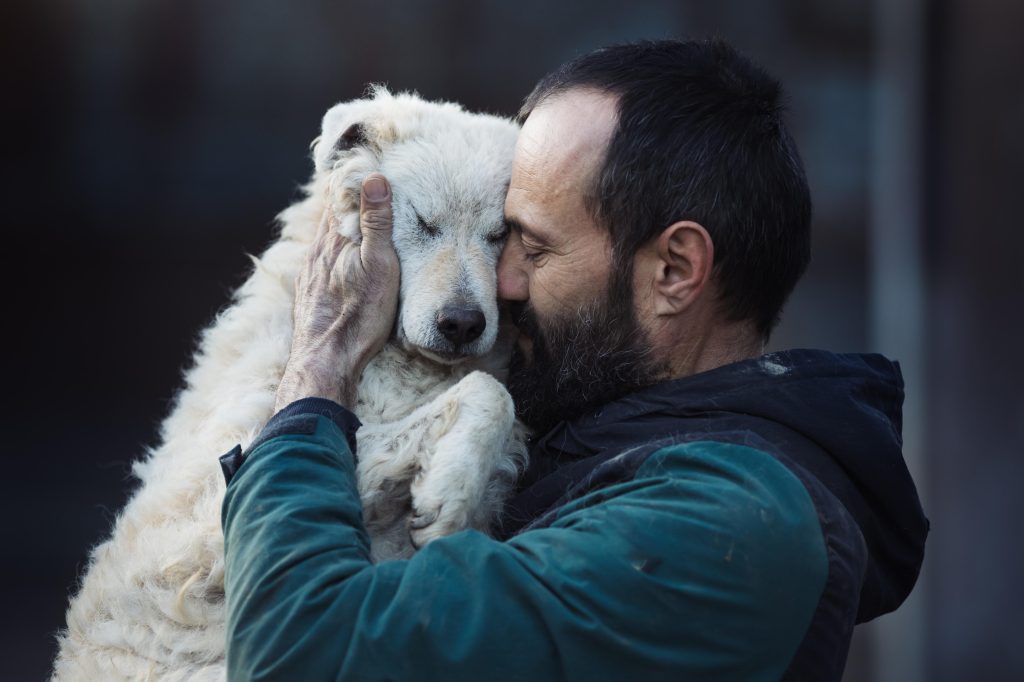
Videos of dogs reuniting with people after long separations have fascinated millions online.
Some dogs appear hesitant at first. They approach carefully and sniff. Then their behavior suddenly changes.
Excitement takes over.
These moments are powerful, but we should avoid interpreting every jump, whine or tail movement exactly as we would a human emotional reaction. Each dog behaves differently, and viral videos don’t constitute scientific proof of decade-long autobiographical memory.
What they do demonstrate beautifully is how powerful familiar sensory cues can be.
A dog doesn’t need a calendar to know that someone matters.
What If It Has Really Been 10 Years?
Ten years is an enormous portion of a dog’s life.
There is no guarantee that every dog will recognize every former owner or friend after such a long separation. Age, health, cognitive decline, the strength of the original relationship and the dog’s experiences during the years apart can all influence its response.
But there is also no simple rule saying a dog must forget you because enough time has passed.
If the original bond was strong, familiar scent, voice and other cues may remain meaningful long after the daily routine has disappeared.
And that leads to perhaps the most beautiful part of the question.
Maybe Dogs Don’t Count the Years
To you, it has been 3,650 mornings.
Ten birthdays.
An entire chapter of your life.
To the dog standing in front of you, none of those numbers may matter.
Perhaps there is only a familiar scent entering the room.
A voice once heard every day.
A feeling once associated with safety.
Then the tail begins to move.
We may never know exactly what happens inside a dog’s mind during a reunion after many years. Science can explain scent processing, recognition and memory, but it cannot translate that moment into words for us.
Maybe it doesn’t need to.
Because sometimes the most extraordinary thing about loving a dog is realizing that long after you have disappeared from its daily life, some part of you may still feel familiar.
Leave a Reply