
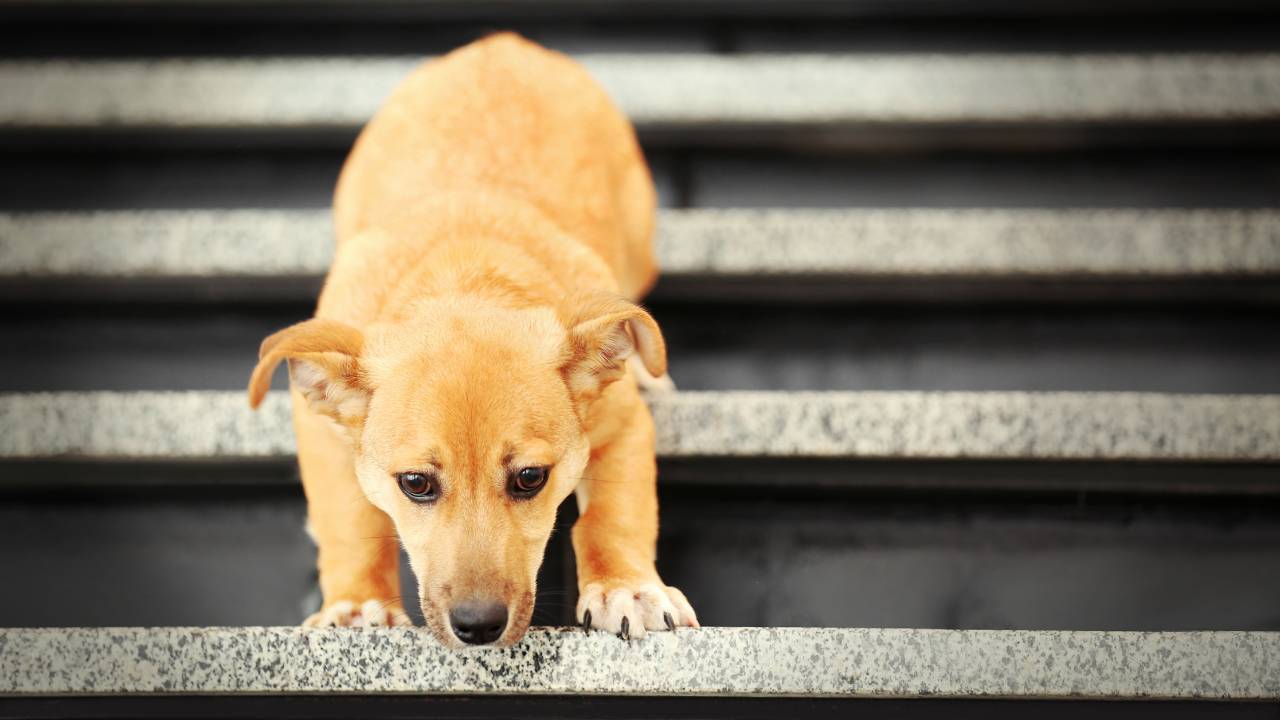
Yesterday, your dog raced up the stairs without a second thought. Today, something is different.
They stop at the bottom, stare at the steps, and refuse to move. You call their name, encourage them, and maybe even offer their favorite treat. But instead of following you, they back away.
It’s confusing, especially when climbing the stairs has been part of their daily routine for years.
You might assume your dog is being stubborn or simply having an unusual day. However, a dog suddenly afraid of stairs may be experiencing pain, vision problems, physical weakness, or fear caused by a previous frightening experience.
Sometimes, the reason is relatively simple. Other times, this sudden change is one of the earliest signs that something is wrong.
Understanding why your dog has become afraid of the stairs can help you protect their safety and restore their confidence.
Is It Normal for a Dog to Suddenly Become Afraid of Stairs?
Dogs can develop new fears at different stages of life.
A puppy may hesitate because stairs are unfamiliar. An older dog may become cautious because climbing has become physically uncomfortable.
However, when a dog that previously used stairs confidently suddenly refuses to climb or descend them, the change deserves attention.
Stairs require balance, coordination, muscle strength, and healthy joints. They also depend on a dog’s ability to judge distances and feel secure under their paws.
If any of these abilities change, a familiar staircase may suddenly become difficult or frightening.
The most important rule is to consider physical discomfort before assuming the problem is purely behavioral.
Let’s examine seven possible explanations.
1. Your Dog May Be Experiencing Joint Pain or Arthritis
One of the most common reasons dogs become reluctant to use stairs is physical discomfort.
Climbing stairs places demands on the hips, knees, and other joints. Going downstairs can be especially challenging because dogs must control their weight while lowering themselves from one step to the next.
If your dog develops arthritis or another painful joint condition, these movements may become uncomfortable.
Signs your dog may have joint pain
Look for changes such as:
- Hesitating before climbing stairs
- Moving more slowly after resting
- Difficulty jumping onto furniture
- Stiffness when standing up
- Limping or favoring one leg
- Reduced interest in walks
- Reluctance to play
Osteoarthritis is more common in older dogs, but joint pain can affect dogs of many ages.
Previous injuries, developmental joint disorders, and other orthopedic conditions may also contribute.
What should you do?
Avoid forcing your dog to climb the stairs.
Arrange a veterinary examination, especially if the behavior appeared suddenly or is accompanied by stiffness or limping.
Your veterinarian may recommend an orthopedic assessment, imaging, weight management, rehabilitation, or appropriate pain treatment.
Never give human painkillers without veterinary instructions. Common medications such as ibuprofen and naproxen can be dangerous for dogs.
2. A Previous Fall May Have Frightened Your Dog
Imagine your dog rushing downstairs as usual.
One paw slips.
They lose their balance, stumble, and manage to reach the bottom without an obvious injury.
To you, it may seem like a minor accident.
To your dog, however, that moment may have been frightening enough to change how they feel about stairs.
Can dogs remember frightening experiences?
Dogs can form associations between places, situations, and unpleasant experiences.
If your dog slipped or fell on a staircase, they may begin associating those steps with danger.
This can happen even when there is no lasting injury.
Some dogs become cautious around the entire staircase. Others hesitate only at a particular step or landing.
Signs of fear after a fall
Your dog may:
- Freeze at the first step
- Lower their body or tuck their tail
- Back away when encouraged
- Tremble or pant
- Approach the stairs but refuse to continue
- Take a few steps before retreating
However, these behaviors can also occur when a dog is in pain.
Therefore, don’t assume a past fall caused only emotional distress.
How can you help?
First, make sure your dog isn’t injured.
Once medical problems have been ruled out, begin rebuilding confidence gradually.
Reward your dog for calmly approaching the staircase without requiring them to climb it.
Keep training sessions short and positive.
Never drag your dog by the collar or leash.
A frightening experience can take time to overcome, and forcing the issue may make the fear worse.
3. Your Dog May Be Developing Vision Problems
Your dog may know the layout of your home perfectly.
But what happens when they can no longer see the edges of the stairs clearly?
Vision changes can make ordinary household environments more difficult to navigate.
Stairs may become particularly challenging because they require accurate depth perception and an awareness of changing surfaces.
How vision problems affect stair climbing
A dog with reduced vision may struggle to judge where one step ends and the next begins.
This can make going downstairs especially intimidating.
Some dogs become more hesitant in dim lighting, while others have difficulty navigating unfamiliar environments.
Warning signs of vision changes
Watch for:
- Bumping into furniture
- Hesitating in dark rooms
- Difficulty finding toys
- Increased caution in unfamiliar places
- Cloudy-looking eyes
- Startling when approached unexpectedly
- Reluctance to use stairs
Cloudiness does not always mean blindness, and some eye conditions are painful or urgent.
What should you do?
Schedule a veterinary eye examination if you notice changes in your dog’s vision.
Meanwhile, improve lighting around staircases and keep the home layout consistent.
Use barriers to prevent accidental falls when your dog cannot navigate stairs safely.
If vision loss develops gradually, many dogs can adapt well with appropriate environmental support.
However, sudden vision loss requires prompt veterinary attention.
4. Slippery Stairs May Be Making Your Dog Feel Unsafe
Sometimes, the problem isn’t your dog’s health.
It’s the staircase itself.
Smooth wooden steps, polished surfaces, or slippery flooring can make it difficult for dogs to maintain traction.
This is especially true for older dogs, dogs with mobility problems, and breeds with limited stability on narrow steps.
Why traction matters
Dogs rely on their paws and claws to grip surfaces.
When a staircase is slippery, they may struggle to push upward or control their descent.
A dog that has slipped repeatedly may begin avoiding the stairs altogether.
Even a small change in your home can affect their confidence.
For example, removing carpet from a staircase may make the steps more difficult for your dog to navigate.
How to make stairs safer
Consider these improvements:
- Install secure, nonslip stair treads
- Keep the steps dry and clear
- Improve lighting
- Trim excess fur between paw pads when appropriate
- Maintain regular nail care
- Use a stair gate when supervision is unavailable
Make sure any stair coverings are firmly attached.
Loose mats can create additional slipping or tripping hazards.
For dogs with significant mobility problems, your veterinarian may recommend additional support.
5. Your Dog May Have an Injury You Haven’t Noticed
Dogs can injure themselves during ordinary activities.
A sudden twist while playing, an awkward landing, or a minor fall may cause discomfort that becomes obvious only during certain movements.
Stairs can reveal problems that are less noticeable when a dog walks on flat ground.
Injuries that may affect stair climbing
Possible causes include:
- Muscle strains
- Paw injuries
- Knee ligament injuries
- Hip injuries
- Back or neck pain
- Other orthopedic conditions
Some dogs continue walking normally but refuse to jump or climb.
Others may hesitate because particular movements trigger pain.
Signs that suggest an injury
Pay attention to:
- Sudden limping
- Yelping during movement
- Difficulty standing
- Unusual posture
- Sensitivity when touched
- Reduced activity
- Reluctance to turn or bend
If your dog suddenly refuses stairs and also shows weakness, severe pain, or difficulty walking, seek veterinary care promptly.
Dogs with suspected spinal injuries should have their movement restricted while veterinary advice is obtained.
Do not attempt to make your dog climb stairs to test whether they are injured.
6. Aging May Be Affecting Your Dog’s Strength and Balance
Your dog may still have the same enthusiasm for life, but their body can change as they grow older.
Muscle loss, reduced flexibility, arthritis, and changes in balance can make climbing stairs more demanding.
These changes may develop gradually, even if the reluctance to use stairs seems sudden.
Why senior dogs struggle with stairs
Older dogs may experience:
- Reduced muscle strength
- Joint stiffness
- Slower reactions
- Poorer balance
- Vision changes
- Neurological conditions
- Reduced endurance
Some senior dogs become hesitant because they no longer feel stable on the steps.
Others may have underlying medical problems that require treatment.
How to support an older dog
Start by arranging a veterinary assessment.
Depending on your dog’s needs, helpful changes may include:
- Providing a comfortable sleeping area downstairs
- Keeping food and water on the same floor
- Using nonslip flooring
- Maintaining an appropriate body weight
- Providing veterinarian-approved exercise
- Considering rehabilitation or mobility support
A properly fitted support harness may help some dogs, but it should be used with guidance and only when the dog can move safely.
For dogs with severe mobility problems, avoiding stairs entirely may be the safest option.
Getting older doesn’t mean your dog must stop enjoying life.
It may simply mean their environment needs to change with them.
7. Anxiety or Changes in the Home May Be Responsible
Not every dog that avoids stairs is experiencing a physical problem.
Sometimes, the environment has changed in a way that makes the staircase frightening.
Perhaps your home has been renovated.
Maybe the staircase has new flooring, different lighting, or unfamiliar decorations.
A loud noise or unpleasant experience near the stairs can also create a negative association.
Environmental changes that may cause fear
Examples include:
- New or slippery flooring
- Loud household noises
- Poor lighting
- Unfamiliar objects near the stairs
- A frightening fall
- Changes in routine
Some dogs are naturally more sensitive to unfamiliar environments.
However, if the fear appears suddenly without an obvious explanation, a veterinary examination is still important.
How to rebuild confidence
Create a calm environment.
Allow your dog to approach the staircase voluntarily.
Reward relaxed behavior and small signs of progress.
Avoid punishment, shouting, or physical pressure.
If your dog remains fearful despite appropriate medical care and gentle training, a qualified reward-based trainer or veterinary behaviorist may help.
How to Help a Dog That Is Suddenly Afraid of Stairs
Once you’ve considered the possible causes, the next step is making your dog feel safe.
Here is a practical approach.
Step 1: Don’t force your dog
Never drag, push, or pull a frightened dog up or down the stairs.
Forcing movement may increase fear or worsen an existing injury.
Step 2: Check for physical symptoms
Observe your dog walking on level ground.
Look for limping, stiffness, weakness, or unusual posture.
If the fear developed suddenly, contact your veterinarian for advice.
Step 3: Make the staircase safer
Improve lighting and traction.
Remove clutter and secure any loose coverings.
If necessary, block access until your dog can use the stairs safely.
Step 4: Begin gradual positive training
Only begin stair training once physical problems have been ruled out or appropriately managed.
Start at a distance where your dog feels comfortable.
Reward calm behavior near the staircase.
Over time, you may encourage your dog to approach the first step.
Do not rush.
Some dogs may need professional help to regain confidence.
Step 5: Respect your dog’s limitations
Not every dog needs to use stairs.
If your dog has chronic pain, mobility problems, or significant vision loss, adapting the home may be safer than insisting they return to their previous routine.
Your dog’s comfort matters more than completing the staircase.
Is It More Difficult for Dogs to Go Upstairs or Downstairs?
The answer depends on the dog’s physical condition.
Going upstairs requires dogs to push their bodies upward using their limbs.
This may be difficult for dogs with weakness or painful joints.
Going downstairs requires controlled movement, balance, and confidence.
Dogs with certain orthopedic problems, vision changes, or poor traction may find descending particularly challenging.
Therefore, some dogs avoid climbing while others are more reluctant to come down.
Neither pattern is enough to diagnose a specific condition.
However, telling your veterinarian which direction causes difficulty may provide useful information.
When Should You Worry About a Dog Refusing Stairs?
A sudden refusal to use stairs should be taken seriously, especially when it is unusual for your dog.
Contact your veterinarian if your dog:
- Suddenly refuses stairs without an obvious explanation
- Appears stiff or uncomfortable
- Limping develops
- Has difficulty jumping or standing
- Shows signs of pain
- Seems unusually weak
- Has noticeable changes in vision
- Becomes increasingly reluctant to move
Seek urgent veterinary care if your dog cannot stand or walk normally, develops sudden limb weakness, shows severe pain, or loses bladder or bowel control alongside mobility problems.
These symptoms may indicate a serious neurological or orthopedic condition.
Don’t wait for your dog to become completely unable to walk before seeking help.
Common Mistakes Owners Make When Their Dog Fears Stairs
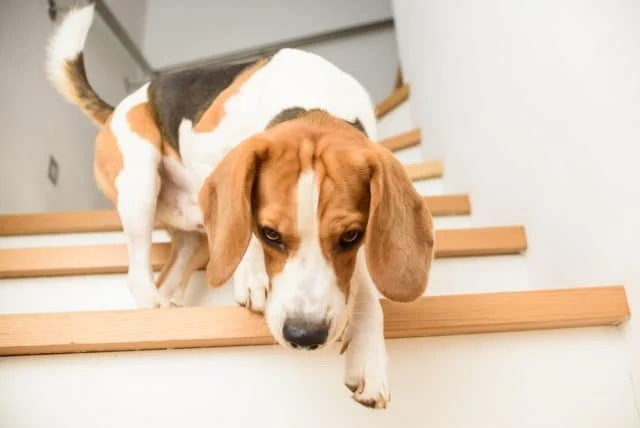
Even loving owners can accidentally make the problem worse.
Assuming the dog is being stubborn
A dog that refuses stairs may be trying to avoid pain or fear.
Punishment won’t address the underlying cause.
Pulling the dog by its leash
This can increase anxiety and may cause injury.
Offering treats to force movement
Treats can be useful for training, but they should not be used to pressure a frightened or painful dog into climbing.
Ignoring sudden changes
A new fear may be an early sign of illness or injury.
Expecting senior dogs to move like puppies
Older dogs may need changes to their routines and environment.
Recognizing these mistakes can help you respond with patience instead of frustration.
Frequently Asked Questions
Why is my dog suddenly scared to go upstairs?
Your dog may be experiencing joint pain, an injury, poor traction, vision changes, or fear following a previous fall. A sudden change should prompt consideration of medical causes.
Why will my dog go upstairs but not downstairs?
Descending stairs requires controlled movement and balance. Dogs with painful joints, reduced vision, or fear of slipping may find going downstairs more difficult.
Can arthritis make dogs afraid of stairs?
Yes. Arthritis can cause joint pain and stiffness, making stair climbing uncomfortable. Dogs may begin avoiding stairs to reduce discomfort.
Can dogs suddenly develop a fear of stairs?
Yes. Dogs may develop fear after a fall, an unpleasant experience, or an environmental change. However, sudden avoidance can also indicate a physical problem.
How can I teach my dog to use stairs again?
First, rule out or address medical problems. Then use gradual, reward-based training on a safe, nonslip staircase. Never force your dog to climb.
Should I carry my dog up the stairs?
Carrying may be appropriate for some small dogs when done safely. However, large dogs, dogs with suspected spinal injuries, or dogs that struggle when lifted may require another solution. Ask your veterinarian about safe handling.
Is it normal for older dogs to stop using stairs?
Stairs often become more challenging with age, but sudden or progressive difficulty should not simply be dismissed as normal aging. A veterinarian can assess for treatable causes.
Can a dog recover from a fear of stairs?
Many dogs can regain confidence when the underlying problem is identified and addressed. Recovery depends on whether the cause involves fear, pain, mobility limitations, or a combination of factors.
Final Thoughts: Your Dog May Be Trying to Tell You Something
There was a time when your dog followed you everywhere.
Up the stairs. Down the hallway. Into the bedroom.
Wherever you went, they were only a few steps behind.
Then one day, you reach the top of the staircase and realize they aren’t following anymore.
You look back and see them standing at the bottom, staring up at you.
It’s easy to call their name and wonder why they won’t come.
But perhaps the more important question is what has changed for them.
Maybe their joints hurt. Maybe the steps feel slippery. Maybe their eyesight isn’t what it used to be. Or perhaps one frightening experience has made a familiar place seem unsafe.
Your dog cannot explain any of those things in words.
They can only hesitate, turn away, or wait for you to notice.
And sometimes, noticing is the most important thing you can do.
If your dog suddenly becomes afraid of the stairs, don’t focus only on getting them to climb again. Focus on understanding why they stopped.
Because the dog who once raced upstairs to be beside you may still want to follow.
They might simply need your help to feel safe again.
Leave a Reply