
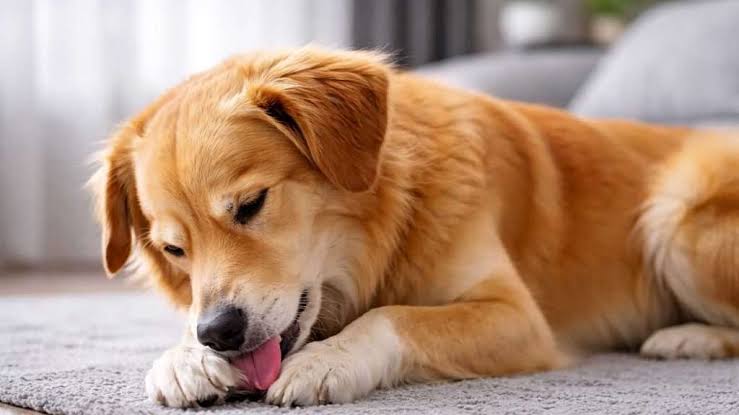
The house is quiet. The lights are off, and you’re finally ready to sleep. Then you hear a familiar sound coming from your dog’s bed.
Lick. Lick. Lick.
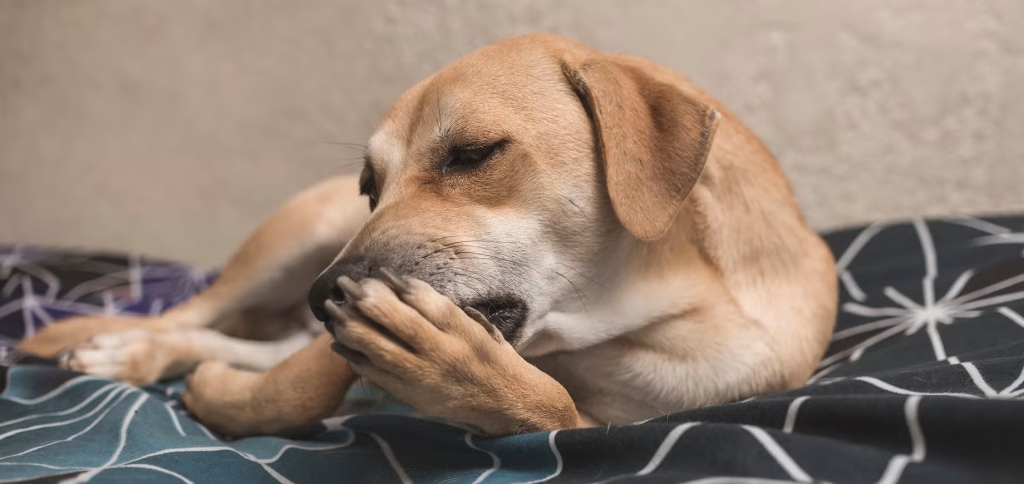
At first, you ignore it. Dogs clean themselves, after all. But several minutes pass, and your dog is still licking the same paw.
You call their name. They stop for a moment, look at you, and then start again.
Suddenly, you begin to wonder whether something is wrong.
A dog licking paws at night may be grooming normally. However, repeated licking can also signal allergies, skin irritation, infection, pain, or stress.
The important difference is how often your dog licks and whether other symptoms appear.
Here are seven possible reasons your dog keeps licking its paws at night.
Is It Normal for Dogs to Lick Their Paws at Night?
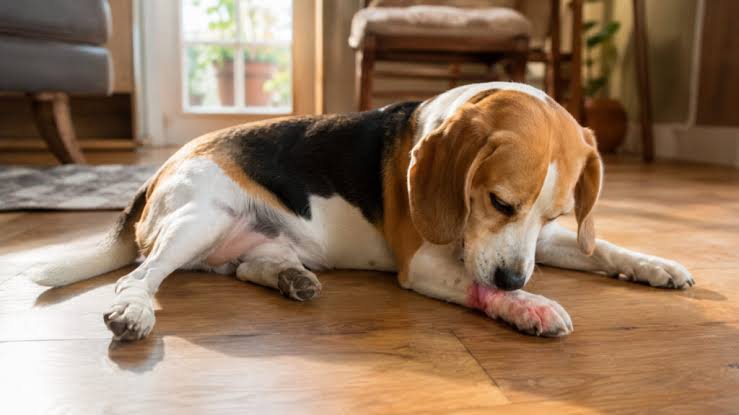
Yes. Occasional paw licking is normal.
Dogs use their tongues to clean dirt and debris from their paws. They may also lick briefly after a walk or before settling down.
However, frequent or intense licking deserves attention.
For example, your dog may repeatedly lick the same paw for several minutes. They might also wake up during the night to continue licking.
Over time, excessive licking can damage the skin and increase the risk of infection.
Therefore, it’s important to recognize when ordinary grooming becomes a problem.
1. Allergies May Be Making Your Dog’s Paws Itchy
Allergies are a common cause of persistent paw licking.
Dogs can react to substances in their environment, including pollen, dust mites, and certain molds.
Some dogs also develop adverse reactions to food.
When allergies affect the skin, dogs may experience itching and inflammation.
Their paws are often among the affected areas.
Signs of allergies in dogs
Watch for these symptoms:
- Frequent paw licking
- Red or irritated skin
- Itching around the ears
- Repeated scratching
- Rubbing the face
- Recurrent ear infections
- Skin irritation between the toes
Some dogs lick several paws. Others focus on particular areas.
Why does the licking seem worse at night?
Your dog may notice the itching more when the house becomes quiet.
During the day, walks and playtime provide distractions. At night, fewer activities compete for their attention.
However, nighttime licking does not prove that allergies are the cause.
What should you do?
Start by checking your dog’s paws for redness or irritation.
Next, think about possible environmental triggers.
For example, does the licking increase after walks through grass?
If symptoms continue, schedule a veterinary examination.
Your veterinarian can evaluate possible allergies and recommend appropriate treatment.
Avoid changing your dog’s diet repeatedly without guidance. Food allergy assessment often requires a carefully controlled elimination diet.
2. Your Dog May Have a Yeast or Bacterial Infection
Sometimes, paw licking begins because the skin is irritated.
However, repeated licking can make the problem worse.
Moisture and inflammation can damage the skin barrier. As a result, bacteria or yeast may contribute to an infection.
These infections often develop between the toes or around the paw pads.
Warning signs of a paw infection
Look for:
- Red or swollen skin
- Unpleasant odor
- Moist or irritated areas
- Brown staining of the fur
- Hair loss
- Tenderness
- Persistent licking
Some dogs also develop bumps, sores, or discharge.
How are paw infections treated?
Treatment depends on the cause.
Your veterinarian may examine skin samples to identify yeast, bacteria, or other problems.
Depending on the findings, treatment may include medicated products or prescription medication.
However, infections often have an underlying cause, such as allergies.
Therefore, treating the infection alone may not prevent it from returning.
Never apply random household disinfectants or human skin creams to your dog’s paws.
Some products can irritate the skin or cause harm when swallowed.
3. Something May Be Stuck Between Your Dog’s Toes
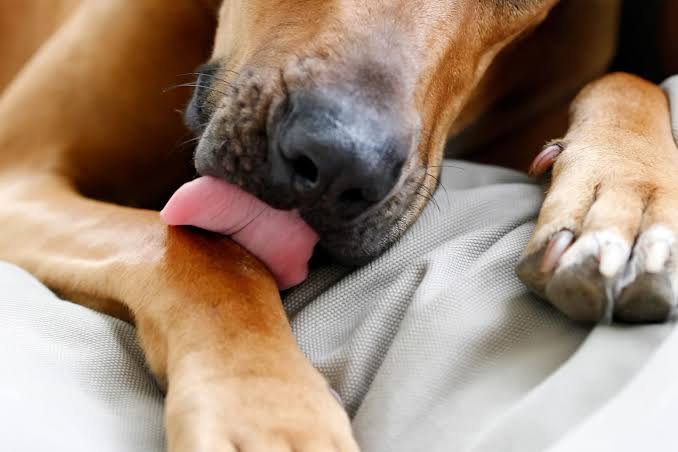
Imagine walking barefoot and getting a tiny stone stuck against your skin.
Even a small object can become uncomfortable.
Dogs experience similar problems.
Grass seeds, small stones, splinters, and other debris can become trapped between their toes.
Sometimes, these objects cause pain without being immediately visible.
Signs of a foreign object
Your dog may:
- Lick one paw repeatedly
- Limp
- Avoid putting weight on a foot
- Chew between the toes
- Pull away when you touch the paw
- Develop swelling around one area
A dog that suddenly begins licking one paw deserves a careful inspection.
What should you do?
Gently examine the paw in good lighting.
Check between the toes and around the paw pads.
If you find loose dirt or surface debris, rinse it away with clean water.
However, don’t dig into the skin or pull out deeply embedded objects.
Grass awns and splinters can become lodged beneath the surface.
If your dog shows pain, swelling, or persistent licking, contact your veterinarian.
4. Dry Skin or Irritating Surfaces May Be Responsible
Your dog’s paws come into contact with many surfaces every day.
These include sidewalks, grass, household floors, and outdoor soil.
Some surfaces or substances can irritate sensitive skin.
For example, cleaning products, lawn treatments, and road de-icing chemicals may cause discomfort.
Dry or cracked paw pads can also become painful.
Signs of irritated paw pads
Watch for:
- Dry or rough skin
- Cracks in the paw pads
- Redness
- Increased licking after walks
- Sensitivity when touched
- Peeling or damaged skin
How to protect your dog’s paws
Rinse your dog’s paws with lukewarm water after possible exposure to irritants.
Then, dry them gently, including between the toes.
Use pet-safe paw products only when appropriate.
Also, avoid walking your dog on extremely hot pavement.
If the skin is cracked, bleeding, or painful, arrange a veterinary examination.
A little extra paw care can prevent minor irritation from becoming a bigger problem.
5. Your Dog May Be Experiencing Pain
Not every dog that licks its paws is itchy.
Sometimes, the behavior is related to pain.
A dog with an injured toe, damaged nail, or painful joint may repeatedly lick the affected area.
Some dogs also lick their paws when discomfort comes from a nearby limb.
Signs your dog may be in pain
Look for:
- Limping
- Difficulty standing
- Reduced interest in walks
- Sensitivity to touch
- Swelling
- Broken nails
- Changes in movement
- Licking one specific paw
Pain may become more noticeable when your dog rests.
However, licking alone cannot identify the source of discomfort.
What should you do?
Observe how your dog walks.
Check for visible injuries without forcing the paw into an uncomfortable position.
If your dog is limping or seems painful, schedule a veterinary examination.
Seek prompt care for severe pain, major swelling, bleeding, or an inability to bear weight.
Never give human pain medication without veterinary instructions.
6. Stress or Anxiety May Be Contributing to Paw Licking
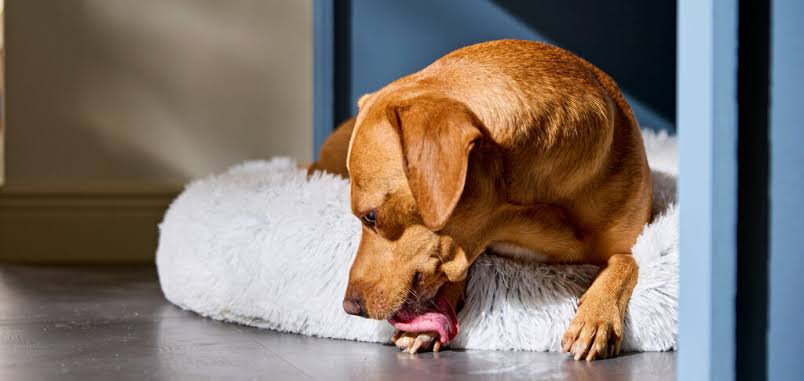
Dogs sometimes use repetitive behaviors when they feel stressed.
For some dogs, licking may become a way to cope with uncomfortable emotions.
However, stress-related licking should not be assumed until medical causes have been considered.
Why might licking happen at bedtime?
Evenings often bring changes in household activity.
Family members go to bed, lights turn off, and the home becomes quiet.
Some dogs find these changes relaxing.
Others may become restless, especially if they struggle with separation-related distress or changes in routine.
Signs of stress in dogs
Possible symptoms include:
- Pacing
- Restlessness
- Excessive panting
- Whining
- Difficulty settling
- Repetitive licking
- Changes in sleep
- Increased clinginess
These signs can also occur with pain or illness.
Therefore, persistent licking should receive veterinary attention before being treated as a behavioral problem.
How to help your dog relax
Maintain a predictable evening routine.
Provide appropriate exercise and mental stimulation during the day.
Offer a comfortable sleeping area.
You can also use gentle, reward-based activities to encourage relaxation.
If anxiety appears severe, consult your veterinarian or a qualified behavior professional.
7. Your Dog May Have Developed a Repetitive Licking Habit
Sometimes, licking continues even after the original trigger has improved.
For example, a dog may begin licking because of allergies or an injury.
Over time, the repeated behavior may become difficult to interrupt.
In some cases, persistent licking contributes to a condition called acral lick dermatitis.
This involves ongoing licking that damages the skin.
Signs of excessive repetitive licking
Watch for:
- Repeated licking of the same area
- Hair loss
- Thickened skin
- Red or raw patches
- Sores that do not heal
- Difficulty stopping the behavior
Acral lick dermatitis often affects the lower legs, although dogs can develop other forms of repetitive licking.
How can you help?
The first step is identifying the underlying cause.
Your veterinarian may investigate allergies, infection, pain, or behavioral factors.
Treatment often requires addressing both the skin damage and the reason the licking began.
Simply distracting your dog may not solve the problem.
Why Does Your Dog Only Lick Its Paws at Night?
This is one of the most common questions dog owners ask.
Your dog may seem completely comfortable during the day. Then, as soon as bedtime arrives, the licking begins.
Several factors may explain this pattern.
Fewer distractions
During the day, your dog spends time walking, playing, eating, and exploring.
At night, these activities stop.
As a result, itching or discomfort may become more noticeable.
Contact with daytime irritants
Your dog may encounter grass, dust, or other irritating substances during walks.
By evening, the paws may feel uncomfortable.
Changes in routine
Some dogs become restless when household activity decreases.
This may contribute to repetitive behaviors.
Underlying discomfort
Pain or inflammation may become more apparent when your dog lies down.
However, nighttime licking alone cannot distinguish between these causes.
If the behavior is frequent or persistent, a veterinary examination is the safest way to identify the problem.
How to Stop Your Dog From Licking Its Paws at Night
The best solution depends on the cause.
Instead of focusing only on stopping the licking, try to understand why it happens.
Step 1: Inspect your dog’s paws
Look for redness, swelling, cracks, damaged nails, or trapped debris.
Compare all four paws.
If one paw looks different, mention this to your veterinarian.
Step 2: Clean and dry the paws
After walks, gently rinse away dirt or possible irritants.
Dry the paws carefully.
Avoid harsh soaps and scented products.
Step 3: Watch for patterns
Notice when the licking begins.
Does it happen after walks?
Does your dog lick one paw or several?
Does the behavior continue during the day?
These details can help your veterinarian identify the cause.
Step 4: Prevent further skin damage
If your dog has developed sores, continued licking can delay healing.
Your veterinarian may recommend a protective collar or another suitable method to prevent access to the affected area.
Do not apply tight bandages or use irritating deterrents without guidance.
Step 5: Seek veterinary treatment when needed
Persistent licking often requires medical evaluation.
Your veterinarian may check for infection, allergies, injuries, or pain.
Once the cause is identified, treatment becomes more effective.
When Should You Worry About Paw Licking?
Occasional grooming is usually harmless.
However, repeated licking can indicate a problem.
Contact your veterinarian if your dog:
- Licks the same paw constantly
- Develops redness or swelling
- Has an unpleasant odor between the toes
- Loses fur around the paws
- Develops sores
- Shows signs of pain
- Starts limping
- Continues licking despite basic paw care
Seek prompt veterinary attention if your dog cannot bear weight, has a deep wound, or develops severe swelling.
Early treatment can help prevent further irritation.
Common Mistakes Owners Make When Dogs Lick Their Paws
Many owners try to stop the licking without understanding the cause.
Unfortunately, some approaches can make the problem worse.
Ignoring persistent licking
Repeated licking may indicate pain, infection, or allergies.
Therefore, don’t dismiss it as a harmless habit.
Using human creams
Some human products contain ingredients that are unsafe for dogs.
Additionally, dogs may swallow the product while licking.
Punishing the behavior
Your dog may be licking because something hurts or itches.
Punishment can increase stress without addressing the problem.
Covering the paws without guidance
Improper bandaging can trap moisture and worsen skin irritation.
Assuming allergies are always responsible
Allergies are common, but they aren’t the only cause.
Injuries, infections, and pain can produce similar symptoms.
Frequently Asked Questions
Why does my dog lick its paws before going to sleep?
Some dogs lick briefly as part of normal grooming. However, repeated licking may indicate itching, irritation, pain, or stress.
Why is my dog licking one paw constantly?
Persistent licking of one paw may suggest a local problem, such as an injury, damaged nail, trapped object, or infection. A veterinary examination can help identify the cause.
Can allergies make dogs lick their paws at night?
Yes. Allergies can cause itchy paws. Your dog may notice the discomfort more when resting at night.
Does paw licking mean my dog has a yeast infection?
Not necessarily. Yeast infections can cause licking, redness, and odor. However, other conditions can produce similar symptoms.
Can anxiety cause dogs to lick their paws?
Yes. Stress may contribute to repetitive licking. However, medical causes should be investigated first.
Should I stop my dog from licking its paws?
Brief grooming is normal. However, excessive licking can damage the skin. If the behavior is persistent, identify the cause and seek veterinary guidance.
Can I use coconut oil on my dog’s paws?
Coconut oil is not a reliable treatment for infections, allergies, or painful paw conditions. It may also encourage additional licking. Ask your veterinarian before applying products to irritated skin.
Why does my dog lick its paws but have no redness?
Some causes of itching or pain may not produce visible redness initially. If the licking is frequent or persistent, arrange a veterinary examination.
Final Thoughts: Your Dog May Be Trying to Tell You Something
Your dog finally settles into bed after a long day.
The house becomes quiet. You turn off the lights and prepare to sleep.
Then, the licking begins again.
It may seem like a small habit. However, your dog could be responding to an itch, an injury, or discomfort you haven’t noticed.
Dogs cannot explain why their paws hurt.
They cannot tell you that something is stuck between their toes or that their skin feels irritated.
Instead, they lick.
Sometimes, that behavior is harmless. Other times, it’s their way of responding to a problem that needs attention.
The good news is that many causes of paw licking can improve with appropriate care.
Start by observing your dog’s behavior. Check their paws, notice any changes, and contact your veterinarian when symptoms continue.
Your dog doesn’t need you to understand every medical condition. They need you to notice when something isn’t right.
And sometimes, that simple act of paying attention can make all the difference.
Leave a Reply