
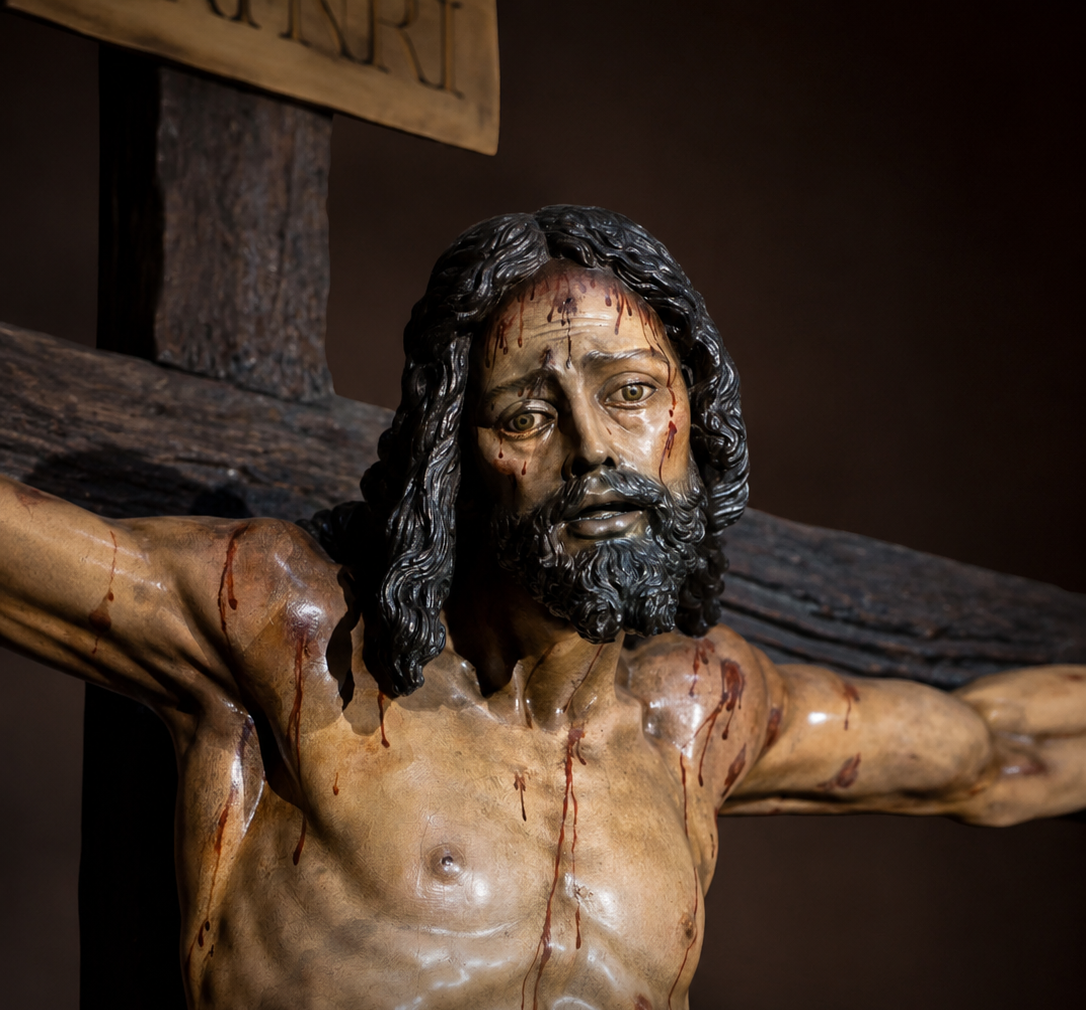
Did Jesus know that His journey to Jerusalem would end in death? According to the New Testament Gospels, the answer is clearly yes. Long before the crucifixion, Jesus repeatedly told His disciples that suffering, rejection and death awaited Him. Yet the Gospels also portray something deeply human in His final hours: in Gethsemane, Jesus experienced profound anguish as the moment He had spoken about finally arrived.
The most powerful part of the story is therefore not simply that Jesus knew He would die. It is that, according to the Gospel accounts, He continued toward Jerusalem despite knowing what awaited Him. His predictions to the disciples, His words at the Last Supper, His prayer in Gethsemane and His behavior during His arrest form a remarkable progression from foreknowledge to acceptance. For Christians, these passages are central to understanding Jesus’ sacrifice; historically, they also show how strongly the earliest Gospel traditions connected His death with His understanding of His mission.
Jesus Repeatedly Told His Disciples That Death Was Coming
The Synoptic Gospels do not portray Jesus’ death as something that completely surprised Him. In Mark, Matthew and Luke, Jesus repeatedly warns His disciples that He will suffer, be rejected, be killed and afterward rise again. One of the clearest examples occurs after Peter identifies Jesus as the Messiah. Mark 8:31 says Jesus began teaching that the Son of Man “must suffer many things,” be rejected and killed, and rise again after three days.
What makes this scene especially revealing is Peter’s reaction. Peter takes Jesus aside and rebukes Him, apparently because the idea of a suffering and dying Messiah clashes with what he expects. Jesus’ response is severe, showing that the path toward suffering is not presented as an accidental interruption of His mission. Similar predictions appear again as Jesus and His disciples continue their journey. Whether approached primarily through Christian faith or as ancient texts, the Gospels clearly want readers to understand that Jesus was anticipating a violent end before He reached Golgotha.
Jesus Chose to Continue Toward Jerusalem Anyway

Knowing that danger existed is one thing. Deliberately continuing toward it is another, and this is one of the most compelling elements of the Gospel narrative. Jerusalem was the religious and political center of Jewish life, and tensions surrounding Jesus had been growing. According to the Gospel accounts, opposition from some religious authorities had become increasingly serious, yet Jesus continued toward the city rather than withdrawing to safety.
Luke gives this journey particular emphasis, describing Jesus as resolutely setting out for Jerusalem. As the story progresses, the sense of approaching danger becomes stronger. Jesus enters the city publicly, teaches at the Temple and confronts powerful interests despite the risks. The Gospels therefore present Him not as someone unknowingly walking into a trap, but as someone who understood that the confrontation surrounding His mission could cost Him His life.
That makes the final journey emotionally powerful. Jesus did not merely predict suffering from a safe distance. He continued walking toward the place where He believed it would happen.
The Last Supper Shows That Jesus Believed the End Was Near

By the Last Supper, Jesus’ awareness of approaching death becomes even more explicit. During His final meal with the disciples, He gives bread and wine a new meaning connected with His body and blood. In the Gospel traditions, He also speaks about betrayal and identifies the meal as one of enormous significance.
The atmosphere is very different from an ordinary gathering between friends. Jesus knows betrayal is approaching, the disciples struggle to understand what is happening, and the events that will lead to His arrest are already moving into place. In John’s Gospel, Jesus spends substantial time preparing His disciples for His departure, comforting them and speaking about what will happen after He is no longer physically with them.
Viewed together, these scenes suggest that Jesus understood the meal as a farewell. His attention was not centered only on what would happen to Him, but also on preparing the people He would leave behind.
Gethsemane Reveals That Knowing Did Not Make Dying Easy
Perhaps the most moving evidence comes after the meal.
Jesus goes with His disciples to Gethsemane, where the Gospel accounts portray Him experiencing extraordinary distress. He asks several of His closest disciples to remain nearby while He prays. According to Mark, Jesus tells Peter, James and John that His soul is overwhelmed with sorrow “to the point of death.”
Then comes one of the most human prayers attributed to Jesus.
He asks whether the “cup” might pass from Him, while ultimately submitting himself to God’s will. Matthew and Mark preserve versions of this prayer, while Luke also portrays Jesus in intense anguish.
This moment is important because it prevents the story from becoming emotionally simplistic. Knowing death was coming did not mean Jesus approached suffering without anguish. The Gospels portray courage not as the absence of distress, but as continuing despite it.
For many readers, that makes Gethsemane one of the most relatable moments in Jesus’ life. The figure Christians believe to be the Son of God is also portrayed confronting the terrible reality of suffering and death.
When Judas Arrived, Jesus Did Not Run
After Jesus finished praying, Judas arrived with the group that would arrest Him. At this point, the danger Jesus had repeatedly spoken about was no longer somewhere in the future. It had reached the garden.
Yet the Gospel narratives do not describe Jesus attempting to escape.
When one of His followers responds violently and strikes the servant of the high priest, Jesus rejects the attempt to defend Him by force. John’s Gospel goes even further in emphasizing Jesus’ awareness and control, stating that He knew what was about to happen before stepping forward to meet those who had come for Him.
From there, the story moves rapidly through arrest, interrogation, Peter’s denial, the appearance before Pilate and finally crucifixion.
The warnings Jesus had given His disciples had become reality.
So, Did Jesus Really Know He Was Going to Die?
According to the four canonical Gospels, Jesus clearly anticipated His death. He warned His disciples about it, continued toward Jerusalem despite mounting danger, interpreted the Last Supper in light of what was coming and entered Gethsemane knowing that His arrest was near.
There is, however, an important distinction between a theological and historical conclusion. Christians traditionally understand these passages as evidence that Jesus knew the divine purpose of His death and willingly accepted the sacrifice ahead of Him. Historians can examine what the Gospel traditions report and debate how individual sayings developed or were remembered, but historical methods cannot independently prove every theological claim attached to them.
What makes the Gospel story so powerful is the combination of knowledge and emotion. Jesus is not portrayed as casually indifferent to death. He knew what was coming, experienced anguish over it, prayed about it and still did not turn away.
Nearly 2,000 years later, perhaps that is why the night in Gethsemane remains one of the most moving scenes in the story of Jesus. The question is no longer simply whether He knew He would die.
It becomes something much deeper:
If Jesus knew what awaited Him, why did He continue walking toward the cross?
Leave a Reply