
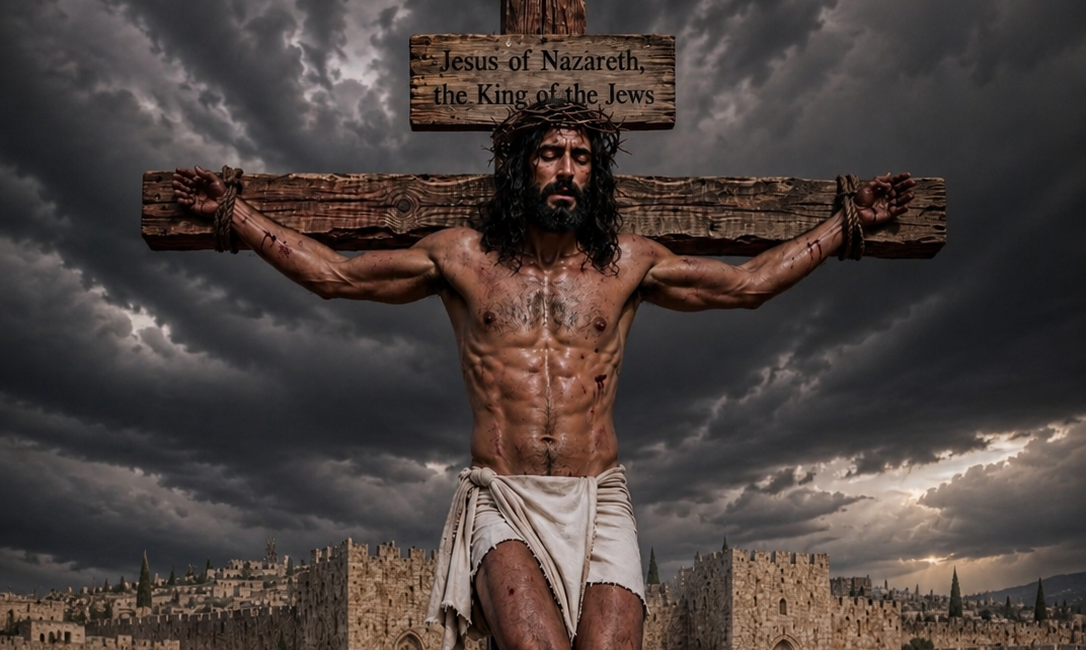
The death of Jesus was not the end of the Gospel story. According to the New Testament accounts, the moments and hours that followed were filled with extraordinary events: the Temple curtain was torn, a Roman centurion reacted to what he had witnessed, Jesus’ followers remained nearby in grief, and Joseph of Arimathea made the courageous decision to ask for His body. Before sunset, Jesus was placed in a tomb, setting the stage for what Christians believe happened on the third day.
Although Matthew, Mark, Luke and John emphasize different details, together they provide a powerful picture of the period immediately following the crucifixion. Some events are theological claims that cannot be independently verified by historical methods, so they should be presented as the Gospels describe them rather than as modern independently confirmed facts. What is striking is how quickly the story moves from a public execution to a quiet burial carried out by people who refused to abandon Jesus after His death.
The Temple Curtain Was Torn
One of the first events described after Jesus’ death concerns the curtain of the Temple in Jerusalem. Mark 15:37–38 says that after Jesus gave a loud cry and died, the Temple curtain was torn in two from top to bottom. Matthew and Luke also include the tearing of the curtain, making it one of the most memorable signs associated with the moment of Jesus’ death.
The Gospels do not give a lengthy explanation of exactly what the torn curtain meant, but Christian interpretation has traditionally understood it symbolically. The Temple represented the sacred center of Jewish worship, and a curtain separated particularly holy space within it. For Christians, its tearing came to symbolize that through Jesus’ death, the barrier between humanity and God had been opened. It is important, however, to distinguish interpretation from historical evidence: the torn curtain is reported in the Gospel tradition, but there is no surviving independent contemporary record that allows historians to verify the event.
Matthew adds even more dramatic imagery, describing an earthquake, rocks splitting and tombs opening. These details make Matthew’s account especially striking, but they are not narrated in the same way by all four Gospels. Rather than combining every detail into one artificially identical story, it is more accurate to recognize that each Gospel writer emphasizes particular aspects of the meaning of Jesus’ death.
A Roman Centurion Reacted to Jesus’ Death
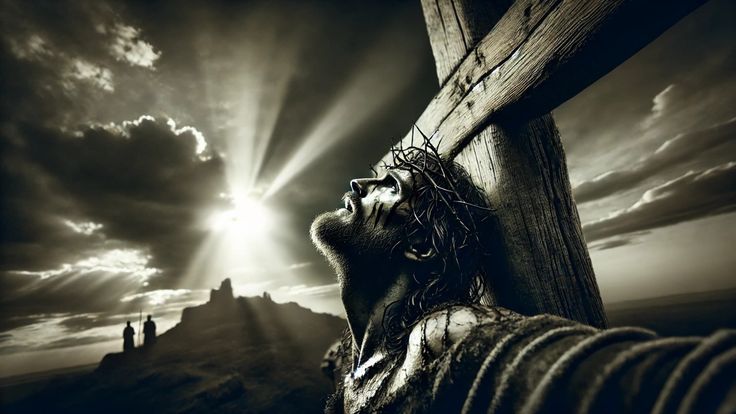
Another remarkable moment involves someone who was not one of Jesus’ disciples at all. The Synoptic Gospels describe a Roman centurion witnessing Jesus’ death and responding to what he had seen. Mark records him declaring, “Surely this man was the Son of God!” Matthew gives a similar confession, while Luke records the centurion praising God and describing Jesus as righteous or innocent, depending on translation.
The identity of this centurion is not given in the canonical Gospels, despite later traditions attaching names to figures surrounding the crucifixion. What matters within the narrative is who he represents. Jesus’ disciples had scattered or were watching from a distance, yet a Roman officer associated with the execution recognizes that something extraordinary has happened.
Luke also describes the crowd returning home beating their breasts after witnessing what had taken place, an ancient gesture associated with grief or remorse. The scene has changed dramatically. Hours earlier Jesus had been mocked and condemned; now His death produces fear, sorrow and reflection among some of the very people who had watched Him die.
Some of Jesus’ Followers Were Still There
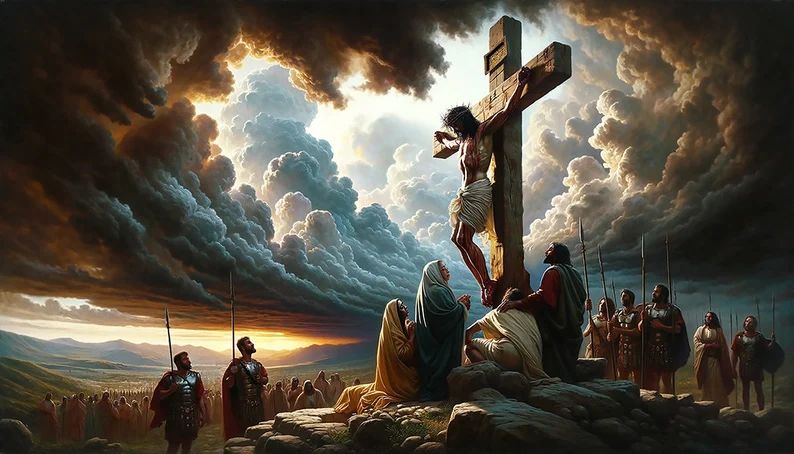
The crucifixion was not witnessed only by soldiers and strangers. The Gospels describe women who had followed Jesus watching what happened, although the accounts differ somewhat regarding exactly who was present and how close they stood. Mary Magdalene appears prominently, while other women are also named. John’s Gospel uniquely places Jesus’ mother near the cross together with other women and the disciple whom Jesus loved.
This produces one of the most painful images in the entire Passion narrative. Jesus’ public ministry had begun with crowds gathering around Him, but at His death the story narrows to a much smaller circle of people who remained connected to Him when following Him had become frightening and dangerous.
For those followers, there was not yet an Easter morning. They had just watched the person they loved and followed die publicly. Whatever hopes they had attached to Jesus must have seemed shattered. The resurrection belongs to the next chapter of the Christian story; the immediate experience described here is one of grief, uncertainty and apparent finality.
A Soldier Confirmed That Jesus Was Already Dead
John’s Gospel preserves another important detail. Because the Sabbath was approaching, the Jewish authorities did not want the bodies remaining on the crosses. The soldiers therefore broke the legs of the other crucified men, a measure associated with hastening death. But when they reached Jesus, John says they saw that He was already dead and did not break His legs.
Instead, one of the soldiers pierced Jesus’ side with a spear, and John reports that blood and water came out. This passage later became important in Christian theology and art, while various medical explanations have also been proposed for the description. The text itself emphasizes the eyewitness character and scriptural significance of what occurred.
Within John’s narrative, however, the immediate point is unmistakable: Jesus was dead before His body was removed from the cross. This becomes significant because the story is about to move from execution to burial and, eventually, to the Christian claim of resurrection.
Joseph of Arimathea Asked Pilate for Jesus’ Body
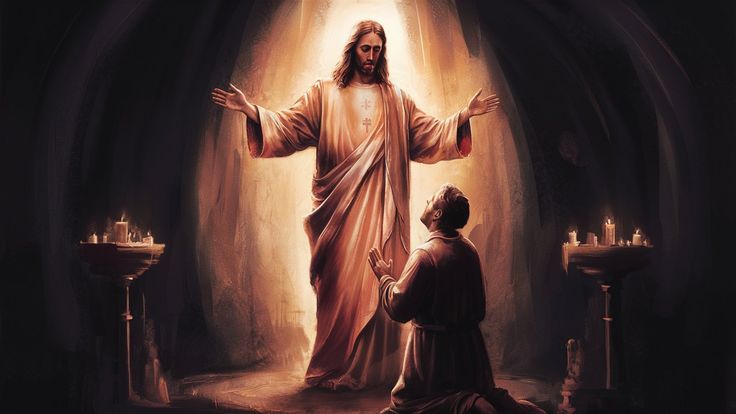
Then someone unexpected stepped forward.
All four canonical Gospels identify Joseph of Arimathea as the man involved in arranging Jesus’ burial. Mark describes Joseph as a respected member of the council who was waiting for the kingdom of God. After Jesus died, Joseph courageously went to Pontius Pilate and requested His body.
Mark includes an interesting detail: Pilate was surprised that Jesus had already died and asked the centurion for confirmation. Only after receiving confirmation did Pilate allow Joseph to take the body.
Joseph’s actions are significant because crucifixion was designed not only to kill but also to humiliate. Yet Jesus was not simply forgotten at the execution site. Someone with sufficient standing approached the Roman governor and took responsibility for His burial.
John adds Nicodemus to the scene, describing him bringing a large quantity of myrrh and aloes. Together, Joseph and Nicodemus prepared Jesus’ body according to Jewish burial customs. Again, the Gospel accounts contain different details, but they agree on the central point: Jesus was taken down and buried after His death.
Jesus Was Placed in a Tomb Before the Sabbath

Time was limited. Jesus died on the day of preparation, and the Sabbath was approaching at sunset. According to the Gospel accounts, His body was wrapped and placed in a tomb. Mark says Joseph laid Jesus in a tomb cut out of rock and rolled a stone against its entrance. Matthew similarly describes Joseph’s own new tomb, while John says the tomb was located in a garden near the place of crucifixion and had never previously been used.
The women remained important witnesses. Mark records Mary Magdalene and Mary the mother of Joses observing where Jesus was laid. Luke likewise says women who had followed Jesus from Galilee saw the tomb and how His body had been placed there before preparing spices and perfumes and resting on the Sabbath.
This small detail becomes crucial to the next part of the story. The women knew where Jesus had been buried. When they returned after the Sabbath, they expected to find a dead body.
According to the Gospels, they found something entirely different.
So, What Happened Immediately After Jesus Died?
According to the four canonical Gospels, Jesus’ death was followed by a rapid sequence of events that carried the story from Golgotha to the tomb. The Synoptic Gospels describe the Temple curtain being torn. A Roman centurion reacted dramatically to Jesus’ death. Followers who had remained nearby witnessed what happened. John describes a soldier piercing Jesus’ side after determining that He was already dead. Joseph of Arimathea then obtained permission from Pilate to take the body, and Jesus was buried before the Sabbath began.
Not every Gospel records every event in exactly the same way, and some miraculous details cannot be independently established through historical evidence. But there is an important point of agreement at the heart of the narratives: Jesus was crucified, died, and was buried.
For His followers standing near the tomb, that evening must have appeared to be the end. The teacher they had followed was dead. Their hopes seemed destroyed, and a stone now stood between them and the person they loved.
But according to Christianity, the most important part of the story was still to come.
Leave a Reply