
Introduction: Your Dog Is Always Talking—Are You Listening?
If you’ve ever wondered what your dog is thinking, you’re not alone. While dogs can’t speak English, they’re constantly communicating through their bodies. From the wag of a tail to the tilt of a head, every movement carries meaning.
Understanding dog body language isn’t just a fun skill—it’s essential for building trust, preventing misunderstandings, and keeping both you and your pet safe. In fact, most canine communication is nonverbal, relying heavily on posture, facial expressions, and subtle movements rather than sound .
Let’s break down the hidden language your dog uses every day—and how you can become fluent in it.
Why Dog Body Language Matters
Dogs evolved to communicate differently from humans. Instead of words, they use a combination of body signals, vocalizations, and even scent to express emotions and intentions.
Misreading these signals can lead to confusion—or worse, dangerous situations. For example, many people assume a wagging tail always means happiness. In reality, it simply indicates emotional arousal, which could mean excitement, stress, or even aggression .
Learning to interpret your dog’s signals correctly helps you:
- Strengthen your bond
- Prevent behavioral issues
- Recognize stress or fear early
- Improve training outcomes

The Basics of Dog Communication
Before diving into specific signals, here’s one key rule: always look at the whole dog.
No single gesture tells the full story. A wagging tail paired with stiff posture means something very different from a wagging tail with a relaxed body .
Dogs communicate using:
- Tail position and movement
- Ear placement
- Eye contact
- Mouth and facial expressions
- Overall posture
Think of it like reading body language in humans—context is everything.
Tail Talk: What That Wag Really Means
1. Happy and Relaxed Wag
- Loose, wide wag
- Tail at mid-height
- Whole body moves
This usually signals a friendly and comfortable dog.

2. Fast, Stiff Wag
- Quick, tight movements
- Tail held high
This can indicate excitement—or tension. Approach with caution.
3. Low or Tucked Tail
- Tail between legs
This signals fear, anxiety, or submission.
Key takeaway: A wagging tail doesn’t automatically mean a happy dog—it means an emotionally stimulated one .
Eyes and Eye Contact: Windows Into Emotion
Dogs use their eyes to communicate powerful messages.
Soft Eyes
- Relaxed gaze
- No tension
Indicates calmness and trust.
Hard Stare
- Intense, fixed gaze
Often a warning sign of aggression or guarding behavior.
“Whale Eye”
- Whites of the eyes visible
This is a clear sign of stress or discomfort .
Avoiding Eye Contact
- Looking away
- Turning head
Contrary to what many think, this isn’t disobedience—it’s a calming signal to reduce tension .

Ears: Small Movements, Big Meanings
A dog’s ears can shift quickly, revealing their emotional state.
- Forward ears: Alert, curious
- Neutral ears: Relaxed
- Pinned back ears: Fearful or submissive
Because ear shapes vary by breed, always consider the natural position of your dog’s ears when interpreting signals.
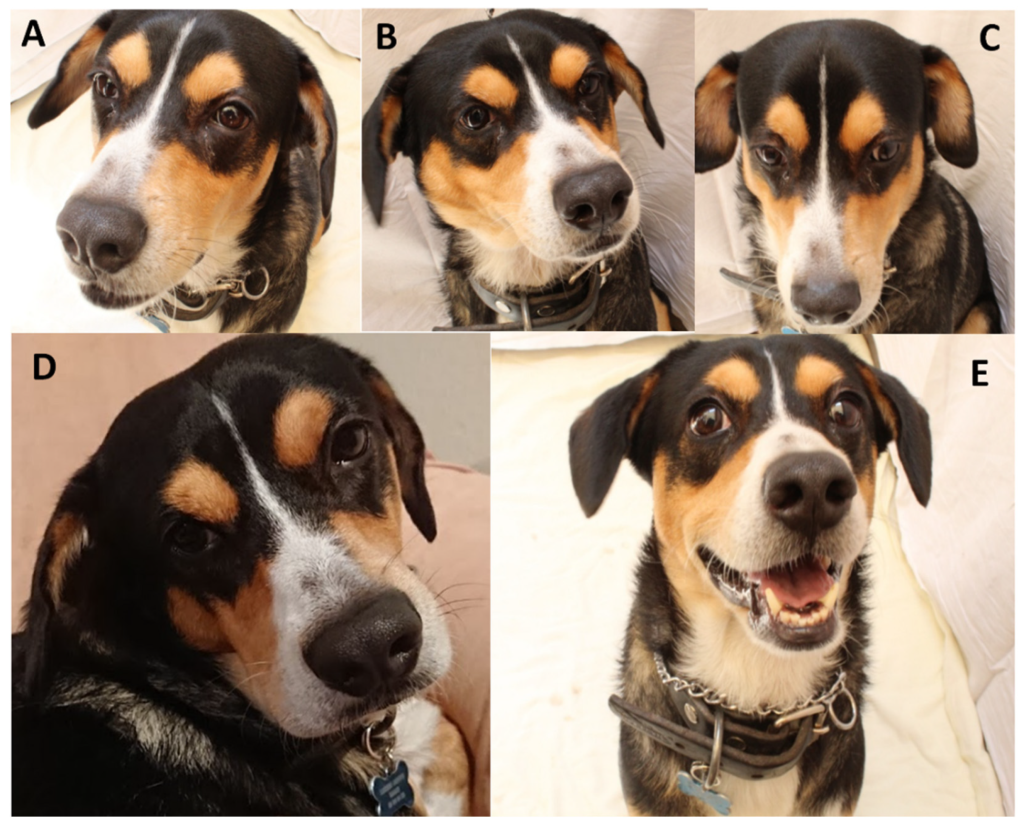
Mouth and Facial Expressions
Your dog’s mouth says more than you might think.
Relaxed Mouth
- Slightly open
- Tongue visible
A sign of comfort and happiness.
Lip Licking
- Repeated licking
Often a sign of stress, not hunger.
Yawning
- Frequent yawns outside sleep
This is a calming signal, indicating anxiety or discomfort .
Showing Teeth
- Can range from a “smile” to a warning
Context is critical—look at the rest of the body.
Posture and Movement: The Full Picture
A dog’s overall body posture is one of the clearest indicators of their emotional state.
Relaxed Dog
- Loose body
- Even weight distribution
- Smooth movements
This indicates a happy, comfortable dog .
Alert Dog
- Stiff stance
- Ears forward
- Focused gaze
The dog is assessing a situation.
Fearful Dog
- Crouched body
- Tail tucked
- Ears back
This dog may feel threatened and could react defensively.
Playful Dog
- “Play bow” (front legs down, rear up)
This is an invitation to play.
Calming Signals: The Dog’s Way of Saying “Let’s Chill”
Dogs use subtle behaviors to avoid conflict and calm themselves or others. These are called calming signals.
Common examples include:
- Looking away
- Sniffing the ground
- Moving slowly
- Turning their body sideways
- Licking lips
- Yawning
These signals are often misunderstood but are crucial for peaceful interactions .
Common Misinterpretations (And Why They Matter)
Myth #1: A Wagging Tail Means Happiness
Reality: It means emotional arousal—positive or negative.
Myth #2: Dogs Ignore You When They Look Away
Reality: They’re trying to calm the situation.
Myth #3: Yawning Means Tiredness
Reality: It often signals stress.
Misreading these signals can lead to situations where a dog feels misunderstood or threatened, potentially escalating to aggressive behavior.
How to Improve Communication With Your Dog
1. Observe Before Reacting
Take a moment to read your dog’s full body language before responding.
2. Respect Their Signals
If your dog shows stress, give them space.
3. Use Consistent Training
Clear communication builds trust and reduces confusion.
4. Learn Your Dog’s Unique Style
Every dog has its own personality and communication quirks.
Real-Life Example: Reading the Situation
Imagine this:
You reach down to pet your dog. They:
- Turn their head away
- Lick their lips
- Show the whites of their eyes
These are all signs of discomfort—not affection. Ignoring them could lead to a growl or snap.
Now imagine instead:
- Loose body
- Wagging tail
- Soft eyes
That’s a dog welcoming your attention.
Why Understanding Dog Language Builds a Better Bond
When you understand your dog’s body language, you’re doing more than just decoding signals—you’re building trust.
Dogs feel safer when their communication is understood. And when they feel safe, they’re more relaxed, responsive, and happy.
This deeper understanding also helps prevent behavioral issues and strengthens your relationship over time.
Conclusion: Learn the Language, Strengthen the Bond
Your dog is communicating with you every single day—you just need to know how to listen.
By paying attention to tail movements, eye contact, posture, and subtle calming signals, you can better understand your dog’s emotions and needs. Remember, no signal stands alone—always look at the full picture.
Mastering dog body language isn’t just about knowledge—it’s about connection. And once you start truly understanding your dog, your relationship will never be the same.
Leave a Reply