
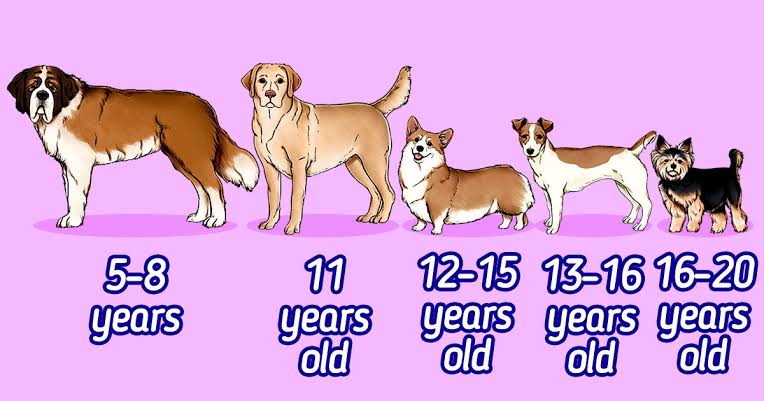
How long do dogs live? Most dogs live between 10 and 13 years, but their actual lifespan depends on breed, body size, genetics, and overall health. Some small dogs live well into their late teens, while certain giant breeds have much shorter average lifespans.
For dog owners, understanding life expectancy is about more than knowing a number. It helps you prepare for your dog’s changing needs, recognize the importance of preventive care, and make the most of the years you share together.
In this guide, we’ll explore the average dog lifespan by breed, explain why smaller dogs often live longer, and share practical ways to support your dog’s health as they age.
What Is the Average Lifespan of a Dog?

The average dog lifespan is generally around 10 to 13 years, although there are important differences between breeds.
A major 2024 study published in Scientific Reports examined 584,734 dogs in the United Kingdom and found an overall median life expectancy of 12.5 years.
The research also found that body size, breed, and facial structure were associated with differences in longevity.
As a general guide:
- Small dogs: Often live around 10–15 years, sometimes longer.
- Medium-sized dogs: Commonly live around 10–13 years.
- Large dogs: Generally live around 8–12 years.
- Giant dogs: Often have lifespans closer to 8–10 years.
These are broad estimates rather than fixed limits. Individual dogs may live shorter or longer lives depending on their health and circumstances.
A dog’s breed can provide useful information, but it cannot predict exactly how long that dog will live.
Average Dog Lifespan by Breed
Different dog breeds have different life expectancies.
The following table shows estimated median lifespans for selected breeds from the 2024 UK longevity study.
| Dog Breed | Median Lifespan |
|---|---|
| Lancashire Heeler | 15.4 years |
| Tibetan Spaniel | 15.2 years |
| Shiba Inu | 14.6 years |
| Papillon | 14.5 years |
| Miniature Dachshund | 14.0 years |
| Poodle | 14.0 years |
| Yorkshire Terrier | 13.3 years |
| Golden Retriever | 13.2 years |
| Labrador Retriever | 13.1 years |
| Border Collie | 13.1 years |
| Shih Tzu | 12.8 years |
| Beagle | 12.5 years |
| Chihuahua | 11.8 years |
| German Shepherd | 11.3 years |
| Boxer | 11.3 years |
| Great Dane | 10.6 years |
| Rottweiler | 10.6 years |
| French Bulldog | 9.8 years |
| Bulldog | 9.8 years |
| Mastiff | 9.0 years |
Source: McMillan et al., 2024, Scientific Reports. Figures represent median life expectancy in the study population, not guaranteed lifespans for individual dogs.
One interesting finding is that a breed’s reputation for longevity does not always match the results of large population studies.
For example, Chihuahuas are often described as long-lived dogs, but their estimated median lifespan in this particular dataset was 11.8 years.
This highlights why lifespan estimates should be treated as general guidance rather than promises.
Why Do Small Dogs Live Longer Than Large Dogs?
One of the most noticeable patterns in canine longevity is that smaller dogs generally outlive larger dogs.
A Chihuahua may remain active into its teenage years, while a Great Dane may be considered a senior much earlier.
Scientists are still investigating exactly why this happens.
One possible explanation involves the rapid growth of large dog breeds. Larger dogs develop much more body mass in a relatively short period, and their growth patterns may be linked to differences in aging and disease risk.
Large and giant breeds can also be more vulnerable to certain health problems, including orthopedic conditions and some cancers.
However, size is not the only factor.
Genetics, body structure, breeding practices, and access to veterinary care also influence a dog’s lifespan.
The 2024 UK study found that large breeds had a greater risk of shorter lifespans than small breeds.
This does not mean every small dog will outlive every large dog. It simply reflects a pattern observed across large groups of animals.
Which Dog Breeds Live the Longest?
Some dog breeds are particularly well known for their longevity.
In the 2024 UK research, the Lancashire Heeler had one of the highest estimated median lifespans at 15.4 years.
Other breeds with relatively long lifespans included the Tibetan Spaniel, Shiba Inu, Papillon, and Miniature Dachshund.
Many of these dogs are small or moderately sized, which is consistent with the broader relationship between body size and longevity.
Still, choosing a breed based only on life expectancy is not necessarily the best approach.
Every breed has its own exercise requirements, temperament, grooming needs, and potential inherited health conditions.
A dog that fits your lifestyle and receives appropriate care may enjoy a better quality of life than one chosen simply because its breed tends to live longer.
What Factors Affect a Dog’s Lifespan?
Although breed and size play important roles, several other factors can influence how long a dog lives.
Genetics and Inherited Health Conditions
Some breeds are predisposed to particular medical conditions.
For example, certain large breeds have increased risks of orthopedic disorders, while some flat-faced breeds experience breathing difficulties associated with their anatomy.
Responsible breeding practices and appropriate health screening can help reduce some inherited risks.
Diet and Body Weight
Maintaining a healthy weight is one of the most important aspects of long-term canine care.
Excess body weight can place additional stress on joints and contribute to health problems.
Dogs need balanced nutrition appropriate for their age, size, and medical needs.
The ideal feeding plan for a growing puppy may be very different from that of an older dog.
Exercise and Daily Activity
Regular physical activity supports muscle strength, mobility, and healthy weight management.
Exercise also provides mental stimulation and opportunities for social interaction.
However, the amount and intensity of exercise should match the dog’s age, breed, and physical condition.
A young Border Collie may require a very different activity routine from an elderly Bulldog.
Veterinary Care
Routine veterinary visits can help identify potential health problems before they become more serious.
Preventive care may include vaccinations, parasite prevention, dental examinations, and age-appropriate screening tests.
Senior dogs may benefit from more frequent health assessments, depending on their veterinarian’s recommendations.
Environment and Lifestyle
A safe and supportive home environment can also contribute to a dog’s well-being.
Access to clean water, comfortable resting areas, appropriate exercise, and protection from environmental hazards all matter.
Emotional well-being is important, too. Dogs benefit from companionship, predictable routines, and opportunities to engage in natural behaviors.
How Can You Help Your Dog Live Longer?

There is no guaranteed way to extend a dog’s lifespan, but good care can support a healthier and more comfortable life.
Here are several practical habits worth developing.
1. Maintain a healthy body weight.
Ask your veterinarian about your dog’s ideal body condition and adjust feeding portions when necessary.
2. Provide balanced nutrition.
Choose a complete and balanced diet appropriate for your dog’s life stage and health needs.
3. Make exercise part of the daily routine.
Walking, playing, and age-appropriate physical activity can help maintain fitness and mobility.
4. Schedule regular veterinary checkups.
Preventive appointments provide opportunities to discuss weight, dental health, mobility, and changes in behavior.
5. Pay attention to dental health.
Regular toothbrushing and veterinarian-recommended dental care can help prevent painful oral disease.
6. Keep your dog mentally stimulated.
Training, scent games, puzzle toys, and positive interactions can enrich your dog’s daily life.
7. Recognize changes as your dog ages.
Unexpected weight loss, changes in appetite, difficulty moving, persistent coughing, or unusual behavior should be discussed with a veterinarian.
The goal is not simply to add more years to your dog’s life, but to make those years as healthy and comfortable as possible.
When Is a Dog Considered a Senior?

Dogs do not all become seniors at the same age.
Large and giant breeds generally reach later life stages earlier than small breeds.
For example, a Great Dane may require senior-focused care at a younger chronological age than a Chihuahua.
Rather than relying on one universal age, veterinarians consider factors such as breed, size, medical history, and physical condition.
Common age-related changes may include:
- Reduced energy or stamina
- Changes in mobility
- Altered sleeping patterns
- Vision or hearing changes
- Changes in appetite or weight
- Increased need for medical monitoring
Not every change should be dismissed as normal aging.
Some symptoms may indicate treatable conditions, so veterinary evaluation remains important.
With appropriate care, many senior dogs continue to enjoy walks, playtime, affection, and meaningful daily activities.
Do Mixed-Breed Dogs Live Longer Than Purebred Dogs?
Mixed-breed dogs are sometimes assumed to live longer because of greater genetic diversity.
However, the relationship between breed ancestry and longevity is more complicated.
The 2024 UK study reported a median life expectancy of 12.7 years for purebred dogs and 12.0 years for crossbred dogs in its dataset.
These results do not prove that purebred dogs are inherently healthier.
The crossbred category included a wide variety of dogs, and differences in size, ancestry, breeding, and other characteristics may influence the findings.
A dog’s individual health history and care are more useful than making assumptions based on whether it is purebred or mixed-breed.
Leave a Reply