
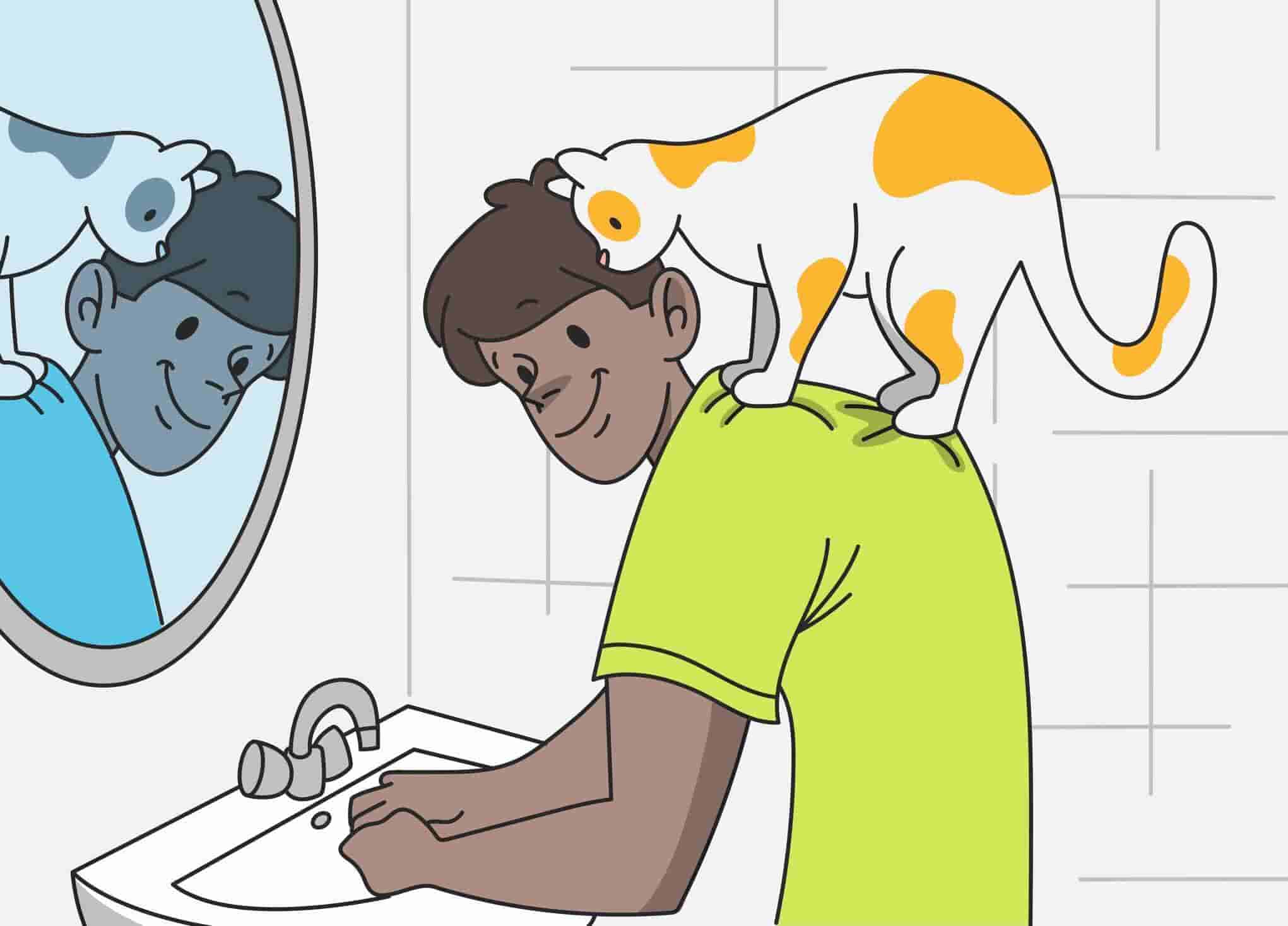
Have you ever walked into the kitchen and noticed your cat right behind you? You go to the bedroom, and your cat follows. You sit on the couch, and a few minutes later, your cat appears beside you.
For some cat owners, this behavior can be both adorable and confusing. Cats are often described as independent animals, so why would one follow its human from room to room?
The answer is not as simple as saying your cat is being clingy. Cats follow people for many different reasons, including affection, curiosity, food, attention, routine, and a desire to feel safe. Understanding the context can help you figure out what your cat is actually trying to communicate.
Why Does Your Cat Follow You Everywhere?
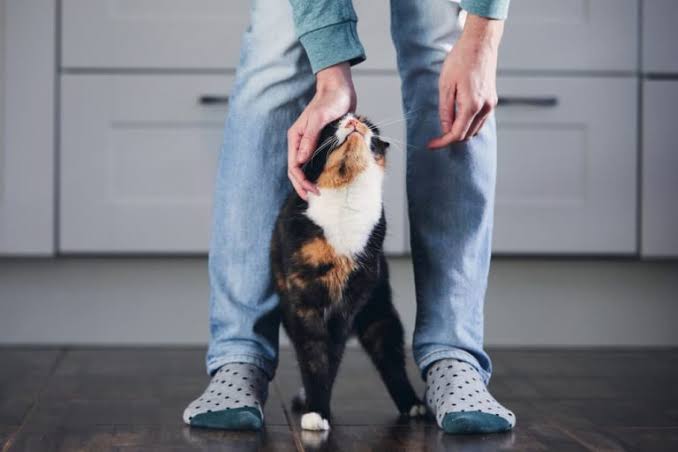
Cats are naturally curious animals. Your movements around the house create opportunities for exploration, interaction, and stimulation.
When you get up and walk somewhere, your cat may simply want to know what you are doing. A closed door, a new sound, or movement in another room can immediately attract a cat’s attention.
However, curiosity is only one possible explanation.
Your cat may also have learned that your movements often predict something interesting. Walking toward the kitchen might mean food is coming. Going toward a particular cabinet might mean treats are about to appear. Sitting in a certain chair might mean it is time for cuddles.
Over time, cats learn household routines surprisingly well.
Your Cat May Simply Enjoy Being Around You
One of the sweetest explanations is also one of the simplest: your cat likes your company.
Cats may show affection differently from dogs. Instead of constantly seeking physical contact, some cats prefer to remain close to their favorite person without necessarily demanding attention.
A cat that follows you around the house may be saying, in its own way, that it feels comfortable around you.
You may notice other affectionate behaviors at the same time, such as:
- Sitting beside you
- Sleeping near you
- Rubbing against your legs
- Purring when you are nearby
- Slowly blinking at you
- Greeting you when you come home
- Following you into another room
Not every cat displays affection in exactly the same way. Some are extremely cuddly, while others prefer simply being in the same room.
Your Cat May Be Following You Because It Wants Food
Let’s be honest: sometimes the reason is food.
Cats are excellent at recognizing patterns. If you regularly feed your cat after waking up, returning home, or entering the kitchen, your cat may quickly associate those activities with mealtime.
That can lead to some very familiar behavior.
You walk toward the kitchen.
Your cat follows.
You open a cabinet.
Your cat becomes extremely interested.
You approach the refrigerator.
Suddenly, your cat is staring directly at you.
This does not necessarily mean your cat is unusually hungry. It may simply have learned that certain human actions predict food.
If your cat follows you specifically around mealtimes, food motivation is likely playing an important role.
Your Cat May Want Your Attention
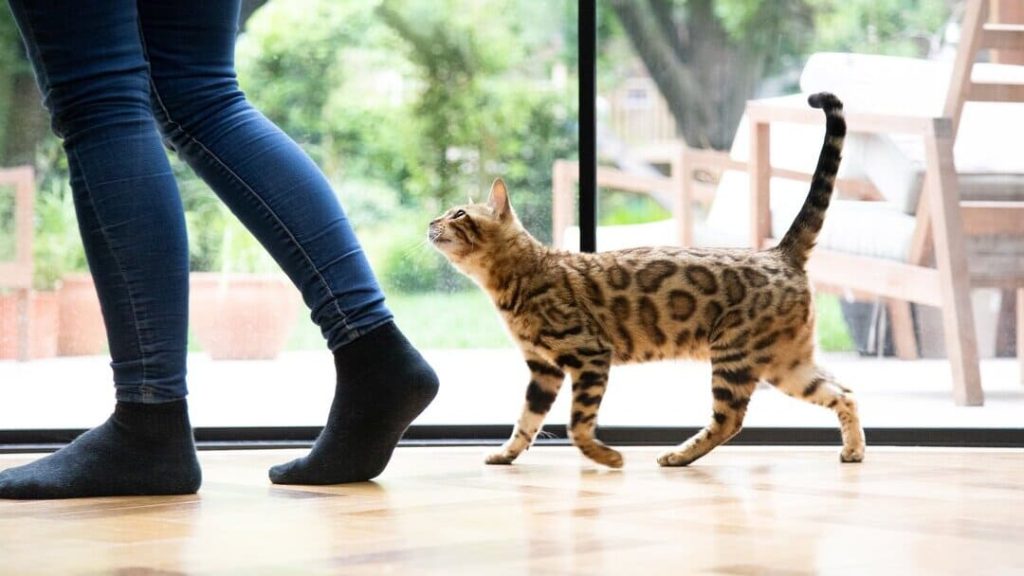
Cats can also follow people because they want interaction.
Your cat may want you to:
- Pet it
- Play with it
- Talk to it
- Open a door
- Give it access to another room
- Provide a favorite toy
- Refill its food or water
Sometimes the behavior becomes very obvious. Your cat may follow you while meowing, walk directly in front of your feet, rub against your legs, or stare at you until you respond.
These behaviors can be a cat’s way of initiating communication.
Pay attention to what happens immediately after your cat follows you. The destination can provide an important clue.
If your cat leads you toward the food bowl, it may want food. If it takes you toward a toy, it may want to play. If it leads you toward a closed door, it may simply want you to open it.
Cats Learn Your Daily Routine
Cats are creatures of habit.
They often become familiar with the daily rhythm of a household, including when people wake up, eat, leave for work, return home, and go to bed.
Your cat may therefore follow you because it has learned what usually happens next.
For example, if you normally prepare breakfast shortly after entering the kitchen, your cat may start following you there every morning.
If you usually sit on the couch after dinner and spend time with your cat, it may follow you into the living room because it expects that routine.
This is one reason a cat’s behavior can sometimes seem almost predictable.
Your cat is paying attention.
Your Cat May Feel Safer With You
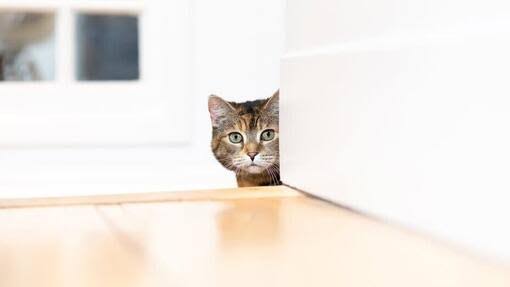
Although cats are often independent, they can still seek security from familiar people.
A cat may follow its owner when something in the environment feels unfamiliar. Loud noises, visitors, construction, unusual objects, or changes inside the home can make some cats more cautious.
Staying close to a trusted person may provide reassurance.
This can be especially noticeable in cats that are naturally nervous or have experienced major changes in their environment.
If your cat suddenly becomes much more attached to you after something unusual happens at home, consider what has changed around it.
Why Does My Cat Follow Me to the Bathroom?
This is one of the most common mysteries among cat owners.
You close the bathroom door, and suddenly your cat acts as though something extremely important is happening on the other side.
There are several possible explanations.
First, cats often dislike closed doors because they limit access to part of their territory. Your cat may simply want to know what is happening behind the door.
Second, bathrooms contain interesting smells, sounds, and objects. Cats naturally investigate new or unusual things in their environment.
Third, your cat may have learned that the bathroom is another place where it can spend time with you.
And sometimes, the simplest explanation is that your cat is curious about absolutely everything you do.
Why Does My Cat Follow Me But Not Want to Be Held?
Following you does not necessarily mean your cat wants constant physical contact.
Some cats enjoy companionship but dislike being picked up. Others like sitting beside their owners but prefer to control when physical interaction happens.
This is normal feline behavior.
A cat may follow you from room to room, sit nearby, and watch what you are doing without wanting to sit on your lap.
Respecting these preferences can actually strengthen the relationship.
Allow your cat to approach you on its own terms, especially if it shows signs that it wants space.
Why Does My Cat Follow Me and Meow?
If your cat follows you while repeatedly meowing, it may be trying to communicate a specific need.
Possible reasons include:
- Hunger
- Desire for attention
- Boredom
- Wanting to play
- Wanting access to another room
- Seeking companionship
- Stress or discomfort
The tone of the meow and the situation matter.
A short, familiar meow around dinner time is very different from persistent vocalization accompanied by restlessness or unusual behavior.
If the behavior is new or noticeably different from your cat’s normal personality, it is worth paying attention to the broader picture.
Does Your Cat Follow You Because It Loves You?
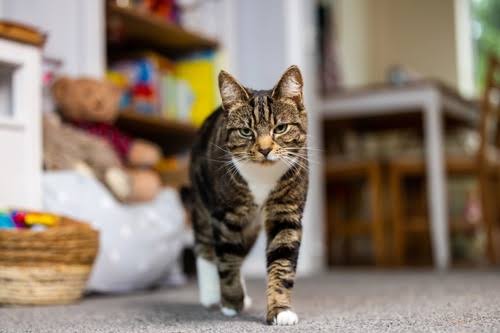
Cats do form social bonds with humans, and following behavior can be one part of that relationship.
However, it is important not to interpret every behavior as a direct human-style expression of love.
Cats communicate through a combination of body language, vocalization, scent, behavior, and physical proximity.
If your cat chooses to spend time near you, sleeps close to you, greets you, rubs against you, or calmly follows you around the home, these can all indicate that your presence is meaningful to your cat.
In other words, your cat may not be thinking, “I need to follow my human because I love them” in the way a person would describe it.
But the behavior can still reflect trust, familiarity, attachment, and social comfort.
What If Your Cat Suddenly Starts Following You Everywhere?
A sudden change in behavior deserves more attention than a long-standing habit.
If your normally independent cat suddenly becomes extremely attached, consider whether there have been changes in:
- Feeding schedule
- Household members
- Furniture
- Moving
- New pets
- Loud noises
- Daily routine
- Access to certain rooms
- General environment
Behavioral changes can sometimes be associated with stress, anxiety, or illness.
You do not need to panic every time your cat behaves differently. But if unusual clinginess is accompanied by changes in appetite, drinking, litter box habits, grooming, energy, movement, or vocalization, contacting a veterinarian is a sensible step.
Can You Feed Your Cat Human Food?
Because cats often follow their owners into the kitchen, another common question is whether they can safely share some human foods.
The answer is that certain human foods can be appropriate in small amounts, while others can be dangerous for cats. Foods should never replace a nutritionally complete cat diet, and ingredients, preparation, and portion size matter.
For a useful guide to this topic, see What Human Foods Can Cats Eat Safely?.
Understanding which foods are safe can help you avoid accidentally giving your cat something harmful simply because it seems harmless to you.
How Can You Tell What Your Cat Wants?
The key is to look at the entire situation rather than focusing on one behavior.
Ask yourself:
When does your cat follow you?
If it happens around mealtime, food may be the motivation.
Where does your cat follow you?
If it consistently leads you toward a food bowl, toy, window, or closed door, the destination may provide a clue.
What does your cat do while following you?
Meowing, rubbing against you, staring, purring, or carrying a toy can each provide additional information.
Has anything changed recently?
A sudden behavioral change can be more meaningful than a behavior your cat has displayed for years.
Learning these patterns can make it much easier to understand your individual cat.
Should You Encourage Your Cat to Follow You?
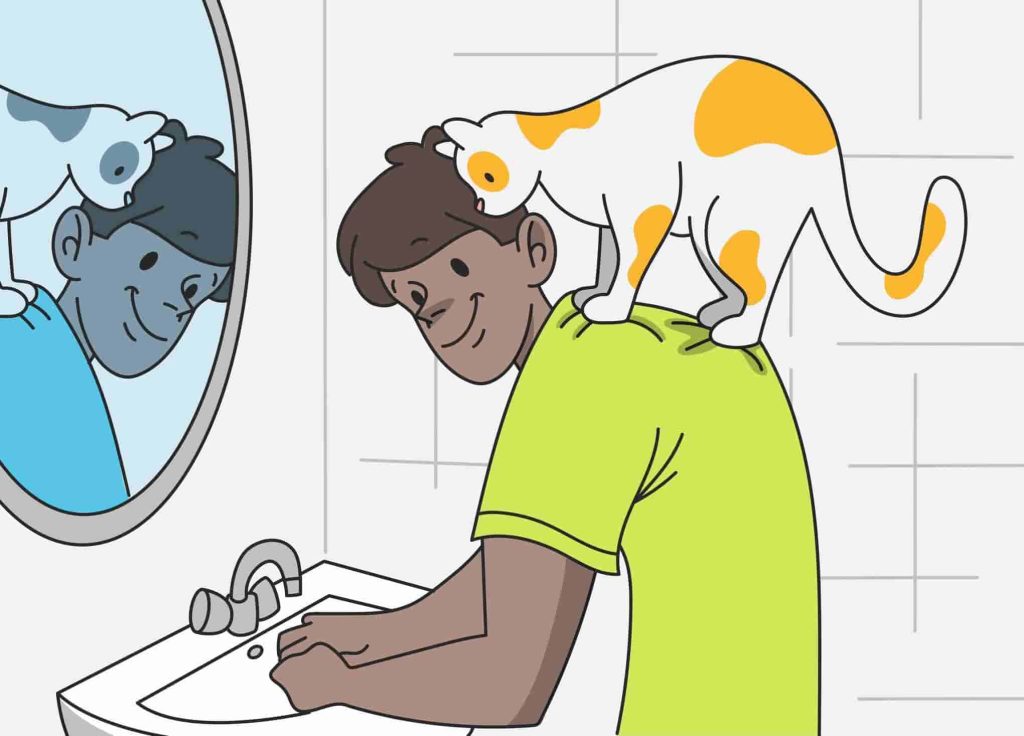
If your cat follows you because it enjoys your company, there is generally no reason to discourage the behavior.
You can use the opportunity to strengthen your relationship through appropriate play, gentle interaction, and positive routines.
However, you should also make sure your cat has opportunities to be independent.
Provide comfortable resting places, toys, scratching areas, hiding spaces, and places where your cat can observe the household without being disturbed.
A healthy relationship with a cat involves both companionship and respect for its need for personal space.
Final Thoughts
So, why does your cat follow you everywhere?
There probably isn’t one universal answer.
Your cat may be curious about what you are doing. It may expect food, want attention, enjoy your company, feel safer near you, or simply be following a familiar daily routine.
The most interesting part is that your cat’s behavior is often personalized to your relationship. The reason one cat follows its owner into every room may be completely different from the reason another cat does the same thing.
Instead of assuming that every behavior has the same meaning, watch the context, the timing, the body language, and what happens next.
Your cat may not be able to explain itself with words, but it is communicating with you all the time.
Sometimes, following you from room to room may simply be your cat’s quiet way of saying, “Where are you going, and can I come too?”
Leave a Reply