

Tulips can look harmless sitting in a vase on the kitchen table. To a curious cat, however, those colorful flowers may be something entirely different: a new object to sniff, paw at, or chew.
And that innocent nibble can become a problem.
Tulips are toxic to cats. The entire plant should be considered unsafe, although the bulb contains the highest concentration of the compounds responsible for tulip toxicity.
That means the risk isn’t limited to cats digging up bulbs in the garden. Leaves, stems, and flowers brought inside your home can also expose a curious cat.
Here’s what every cat owner should know.
Are tulips poisonous to cats?
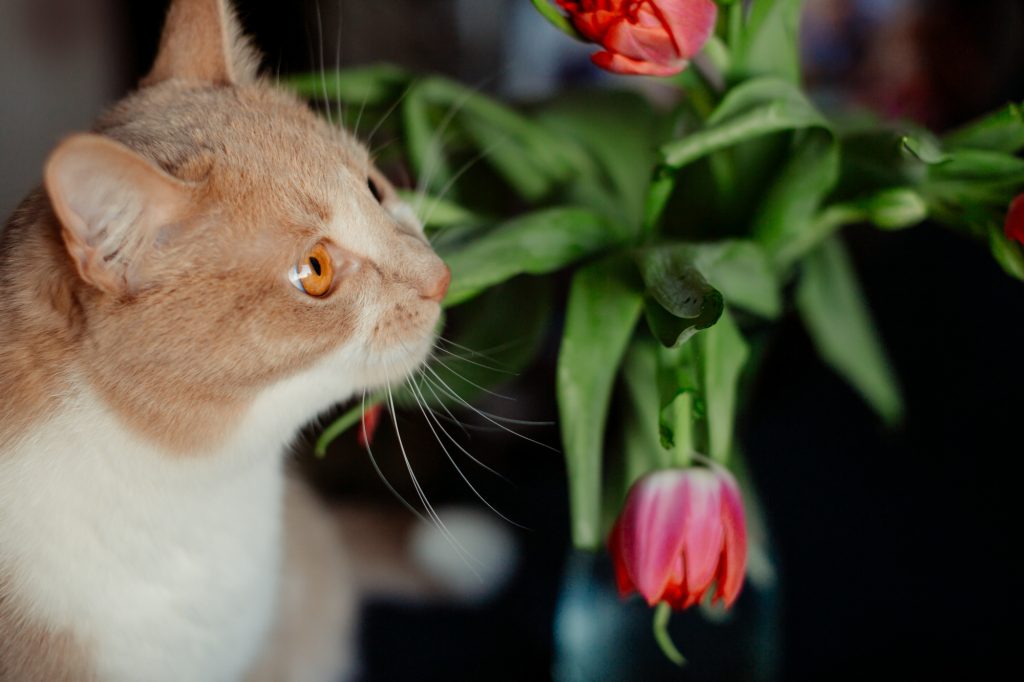
Yes. Cats should not eat tulips.
Tulips contain compounds including tulipalin A and tulipalin B. The greatest concentration is found in the bulb, which makes it particularly dangerous, but the rest of the plant should not be treated as safe either.
A cat might encounter tulips in several ways.
An outdoor cat may dig around newly planted bulbs. An indoor cat may investigate a bouquet sitting on a table. A kitten may simply decide that a dangling leaf looks like something worth biting.
That’s part of what makes toxic plants tricky around cats.
Your cat doesn’t know that the beautiful flowers you brought home can make it sick.
Which part of a tulip is most dangerous?
The bulb is the biggest concern.
Tulip bulbs contain higher concentrations of toxic compounds than the leaves, stems, and flowers. Cats that chew or swallow them can develop drooling, vomiting, diarrhea, abdominal discomfort, and other signs of poisoning.
But don’t make the mistake of assuming the flower itself is safe.
A bouquet doesn’t become cat-friendly simply because the bulbs have been removed.
The safest approach is to consider every part of a tulip off-limits to your cat.
Why would a cat eat a tulip in the first place?
Cats can be extraordinarily curious about changes in their environment.
Bring a new object into the house and some cats will investigate almost immediately.
They smell it.
Rub against it.
Paw at it.
And sometimes bite it.
That doesn’t mean your cat recognizes the tulip as food. Chewing can simply be part of exploring an unfamiliar object.
This is also why you shouldn’t rely on your cat’s instincts to protect it. Cats cannot reliably determine whether a plant is poisonous simply by smelling it.
It’s another reminder of how differently cats experience their surroundings. Even familiar human objects can become fascinating sources of scent and information to them. We’ve explored a similar idea in Why Does Your Cat Sleep on Your Clothes When You’re Not Home?.
With tulips, however, curiosity is something owners need to manage carefully.
Symptoms of tulip poisoning in cats
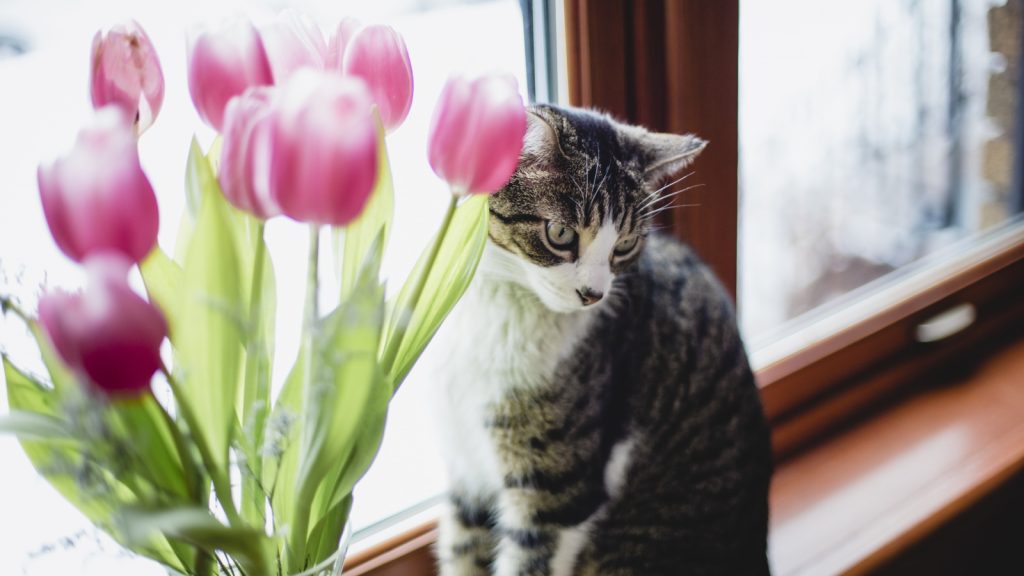
Symptoms can vary depending on which part of the plant was eaten and how much was consumed.
Early or gastrointestinal signs may include:
- Excessive drooling
- Vomiting
- Diarrhea
- Mouth irritation
- Loss of appetite
- Lethargy or weakness
- Changes in normal behavior
More serious signs can include tremors, seizures, a rapid heart rate, or difficulty breathing.
One challenge is that cats can be surprisingly subtle when they don’t feel well.
A sick cat doesn’t necessarily come to you and make the problem obvious. It may hide, become unusually quiet, stop eating, or simply behave differently.
If your cat suddenly seems withdrawn or begins behaving strangely, don’t automatically assume it’s just another feline quirk. Our article Why Does Your Cat Suddenly Sleep Next to You When It Usually Sleeps Alone? explores how changes in normal behavior can sometimes deserve closer attention.
What should you do if your cat eats a tulip?
If you know or suspect your cat has eaten part of a tulip, don’t wait for severe symptoms to develop before seeking professional advice.
First, remove your cat from the plant so it can’t eat more.
If possible, keep the plant, packaging, photograph, or a sample that can help identify exactly what your cat encountered.
Then contact your veterinarian promptly and explain:
- What plant your cat may have eaten
- Which part was eaten, if known
- Approximately how much may have been consumed
- When the exposure happened
- Whether your cat is showing any symptoms
The source material specifically advises contacting a veterinarian promptly after suspected ingestion and warns against waiting for serious symptoms before acting.
Don’t try to make your cat vomit yourself
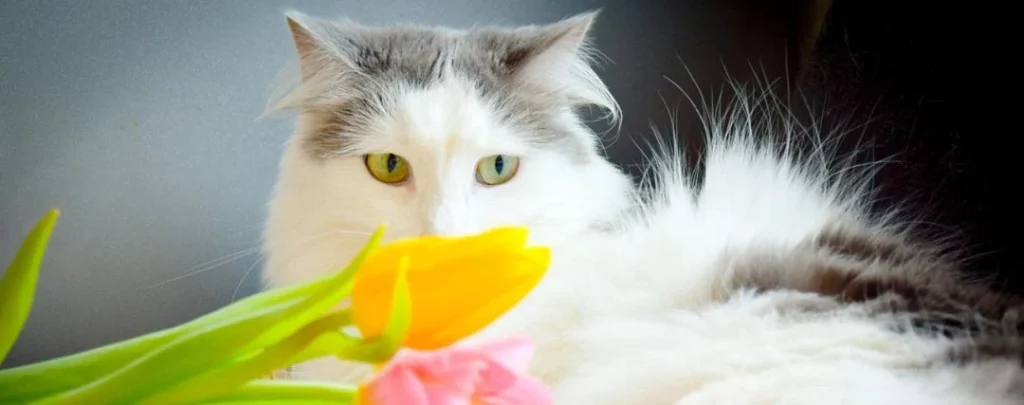
This point deserves special attention.
Do not induce vomiting unless a veterinarian specifically tells you to do so.
And don’t start experimenting with milk, oils, supplements, human medications, or internet home remedies.
Trying to induce vomiting incorrectly can introduce additional risks, including choking or aspiration. Products that seem harmless to humans can also be inappropriate or dangerous for cats.
Your best first-aid tools are much simpler:
Remove the source of exposure, identify what was eaten, keep your cat calm, and contact a veterinary professional.
How is tulip poisoning treated?
There isn’t one identical treatment for every case.
Veterinary treatment depends on factors such as the amount consumed, which part of the tulip was eaten, the time since ingestion, and the cat’s symptoms.
A veterinarian may provide supportive treatment and take measures appropriate to the individual exposure.
Cats experiencing vomiting, diarrhea, or reduced appetite may need fluid therapy, while other supportive treatments can include medication for nausea, gastrointestinal protection, pain management, and monitoring.
The important point is that early professional assessment gives your veterinarian more information and options than waiting until a cat becomes seriously ill.
Can you simply put tulips somewhere high?
It’s tempting.
You put the vase on a shelf and assume the problem is solved.
Then you remember you own a cat.
A determined cat can reach places that seemed physically impossible five minutes earlier.
If you keep tulips in a home with cats, placing them somewhere that is completely inaccessible is essential. The safer choice is to avoid bringing toxic plants into areas your cat can access at all.
Don’t forget fallen petals or leaves either.
A flower may begin on a high shelf and eventually leave plant material on the floor.
Outdoor bulbs should also be stored and planted with pet access in mind, particularly if your cat likes digging around the garden.
Are there safer flowers for homes with cats?
Fortunately, choosing a cat-friendly home doesn’t mean giving up flowers completely.
The source material identifies options such as roses, sunflowers, and snapdragons as more pet-friendly alternatives and also discusses plants such as spider plants, areca palms, Boston ferns, African violets, orchids, and cat grass.
However, it’s still worth checking a reliable veterinary or animal-poison resource before introducing a new plant.
Don’t assume that “natural” means harmless.
And don’t assume that two flowers that look similar have similar toxicity.
Tulips aren’t the only flowers cat owners should know about
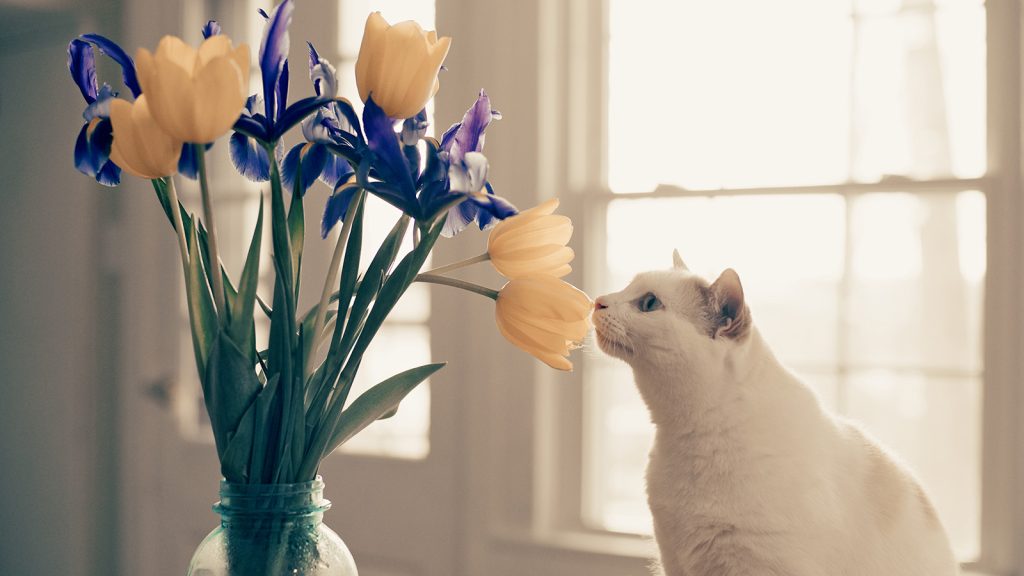
Tulips deserve caution, but lilies are an especially important danger for cat owners to recognize.
The supplied material notes that true lilies can cause severe kidney injury and potentially life-threatening kidney failure in cats, even with small exposures.
Other plants, including daffodils and hyacinths, can also be toxic, with their bulbs posing particular concern.
This is why checking a plant before bringing it home is much easier than trying to identify it after your cat has already chewed it.
Your cat’s curiosity is part of the problem
One of the wonderful things about cats is also one of the reasons owners have to think about household safety differently.
Cats investigate.
They notice small changes.
They explore objects we barely pay attention to.
The cat that appears uninterested in everything you’re doing may actually be observing far more than you realize. We’ve seen this repeatedly in behaviors such as whether cats recognize their own names and why cats follow their owners into the bathroom.
Normally, that curiosity gives us funny stories.
With a toxic plant, it can become a medical emergency.
The simplest rule for tulips and cats
Tulips are beautiful.
They’re also not worth gambling with around a curious cat.
The bulb contains the greatest concentration of toxic compounds, but the whole plant should be treated as unsafe. If your cat chews or swallows any part of a tulip, remove access to the plant and contact your veterinarian rather than waiting to see whether symptoms develop.
And the next time you’re standing in a flower shop admiring a bouquet, take five seconds before bringing it home.
Search the flowers.
Check whether they’re cat-safe.
Because your cat may investigate that bouquet long before you expect it to.
And sometimes, the prettiest thing in the room is exactly what your cat shouldn’t touch.
Leave a Reply