

You call your cat’s name.
Nothing.
You call again.
One ear moves, but your cat continues staring out the window as though you don’t exist.
Then you walk into the kitchen and open a favorite treat.
Suddenly, the same animal that appeared incapable of hearing you is standing at your feet.
It raises an interesting question: Can food actually make your cat listen to you more?
Yes, food can be a powerful training reward for many cats. But it isn’t because a particular food magically makes a cat obedient. The real mechanism is positive reinforcement: when a behavior is followed quickly and consistently by something the cat values, that behavior can become more likely to happen again. Veterinary behavior guidance specifically recommends positive reinforcement for training cats, with food often serving as an effective reward.
And once you understand that principle, your supposedly “untrainable” cat may begin to look very different.
Cats aren’t necessarily ignoring you
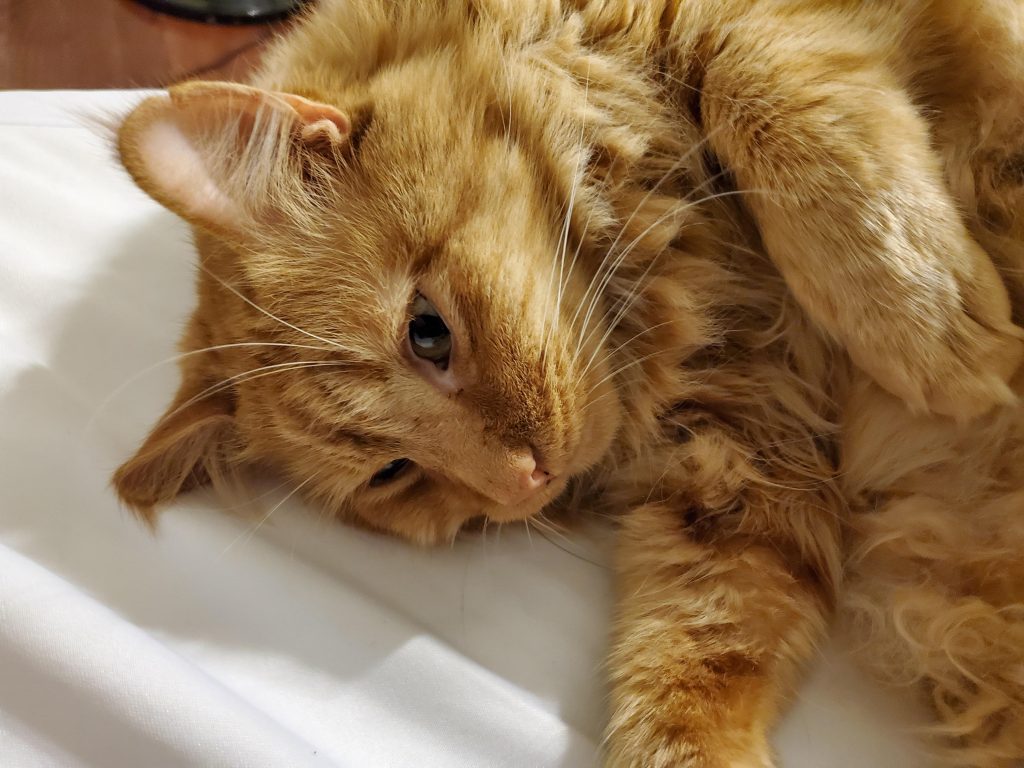
Humans sometimes compare cats with dogs and conclude that cats simply don’t listen.
But listening and obeying aren’t the same thing.
Your cat may hear your voice perfectly well without having any particular reason to respond to it.
That’s especially interesting because research suggests cats can distinguish their own names from other words. We explored this in Does Your Cat Actually Know Its Name, or Just Your Voice?.
So imagine that your cat hears its name and has learned:
Name → nothing interesting happens.
Why should it leave a comfortable sunny window?
Now imagine a different history:
Name → come to owner → tiny delicious reward.
You have changed what responding to that sound predicts.
That’s the foundation of reward-based training.
Why does food work so well?
Food has biological value, and for a food-motivated cat, a favorite treat can be an extremely effective reinforcer.
The important part isn’t simply giving your cat food.
It’s what the cat does immediately before receiving it.
Suppose your cat walks toward you and gets tuna.
If this repeatedly happens immediately after you call its name, coming to you may become more likely.
Suppose your cat enters its carrier and receives a favorite treat.
Over time, entering the carrier can begin to predict something positive.
Veterinary behavior specialists describe food rewards as useful for teaching skills, tricks and good manners, while even part of a cat’s regular daily food ration can sometimes be used for simple training.
Your cat isn’t being bribed into loving you.
It’s learning which behavior produces a desirable consequence.
Can you really teach a cat to come when called?
Yes, many cats can learn this behavior.
Start somewhere quiet with few distractions. Choose a short, consistent cue such as your cat’s name followed by “come.”
At first, stay relatively close.
Give the cue once.
When your cat comes toward you, immediately reward it with a tiny piece of something it genuinely values.
Then repeat the process in short sessions.
As the behavior becomes reliable, gradually increase the distance and eventually introduce mild distractions.
Veterinary training guidance describes the same basic process: establish the desired behavior, reward it, and then associate a consistent cue with that behavior. Cats can be taught behaviors including come, sit, fetch, and even shake a paw using appropriate food rewards.
The crucial word is gradually.
Calling your untrained cat from the other side of the house while it’s watching a bird and expecting immediate success isn’t a fair test of whether cats can be trained.
The “best” training food is different for every cat
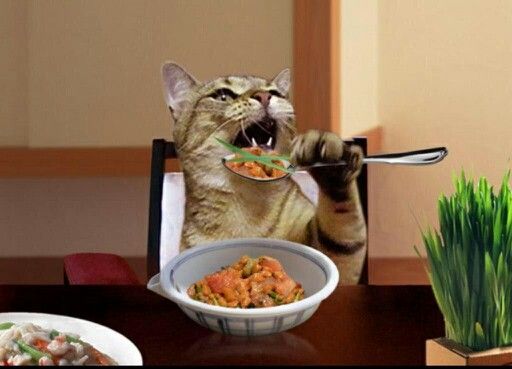
Here’s where things get interesting.
There isn’t one magical food that makes every cat listen.
For one cat, regular kibble may be enough.
Another may work for chicken.
Another becomes extremely motivated by a particular commercial cat treat.
And another may suddenly become the world’s most attentive student when tuna appears.
If your cat is one of those tuna fanatics, we’ve explored the reasons behind that attraction in Why Do Cats Go Crazy for Tuna, and Is Too Much Bad for Them?.
Veterinary guidance refers to particularly motivating rewards as high-value treats. The best reward is therefore not necessarily the most expensive one. It’s the safe reward your individual cat values enough to work for.
How do you find your cat’s “high-value” reward?
Try a simple experiment.
Offer tiny amounts of several cat-safe options separately and watch your cat’s response.
Which one gets immediate attention?
Which one makes your cat return?
Which one causes your normally indifferent feline to suddenly stare at you like you’re the most important person on Earth?
That’s probably closer to a high-value reward for that particular cat.
Flavor isn’t the only variable. Texture and aroma can matter too. PetMD’s veterinary panel notes that effective training treats should be appealing to the individual cat, while strongly aromatic protein-based treats are attractive to many cats.
Your cat gets to decide what counts as valuable.
Not you.
Timing matters almost as much as the food
Imagine your cat sits.
Five seconds later, it jumps onto the counter.
Then you give it chicken.
What exactly did you reward?
This is why good training requires precise timing.
Your cat needs a clear connection between the behavior and its consequence.
A clicker can make that connection particularly precise. In clicker training, the click marks the exact instant the desired behavior occurs and is initially paired with a food reward. Once learned, the sound tells the animal exactly which behavior earned the reward.
You don’t need a clicker to begin basic training, but the underlying principle remains the same:
Reward the behavior you want as clearly and promptly as possible.
Can food teach your cat to stop unwanted behavior?
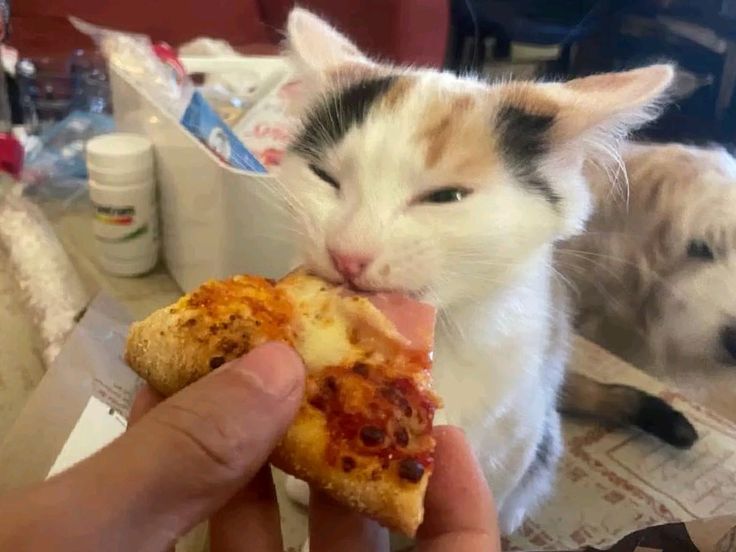
Food can help, but think in terms of teaching an alternative behavior, not paying your cat to stop being naughty.
Suppose your cat scratches the sofa.
Shouting doesn’t explain where scratching is allowed.
Instead, place an appropriate scratching post nearby and reward your cat for approaching, touching and eventually scratching it. VCA specifically describes this stepwise reward approach for redirecting cats from furniture toward scratching posts.
The same principle can be applied to other situations.
Rather than constantly saying “No,” ask:
“What would I like my cat to do instead?”
Then make that behavior easy and rewarding.
But be careful what you accidentally teach
Cats are excellent at learning patterns that humans didn’t intend to teach.
Imagine this:
Your cat meows beside the cupboard.
You give it a treat.
Tomorrow it meows again.
You give another treat.
Soon the meowing becomes louder and more persistent.
From your perspective, your cat has become demanding.
From your cat’s perspective, the system is working beautifully.
Meow → human produces food.
If food, play, or attention consistently follows a behavior, you may inadvertently reinforce it. Veterinary behavior guidance therefore recommends rewarding desirable behavior rather than consistently giving a desired resource immediately after unwanted behavior.
Your cat is always learning associations.
Training happens even when you aren’t deliberately conducting a training session.
Should you use tuna for training?
A tiny amount of plain tuna may be highly motivating for some cats, but it shouldn’t become an unlimited training snack.
Human tuna isn’t nutritionally complete cat food, and excessive tuna consumption can create nutritional and other health concerns.
That’s why the article Why Do Cats Go Crazy for Tuna? goes deeper into how tuna should fit into a cat’s diet.
For frequent training, tiny commercial training treats or even pieces of your cat’s regular kibble can sometimes be more practical.
The reward only needs to be large enough for your cat to value it.
Your cat doesn’t need a meal every time it sits.
Keep treats tiny
This is one of the easiest training mistakes to make.
Suppose you’re teaching a new behavior and perform 20 successful repetitions.
Twenty large treats can quickly become a substantial amount of food.
Veterinary nutrition guidance recommends that treats account for no more than about 10% of a cat’s daily calories, with the remaining calories coming from a complete and balanced diet.
Tiny rewards solve several problems.
Your cat consumes fewer calories, finishes each reward quickly, and remains ready for the next repetition.
If your cat is overweight or has kidney disease, heart disease, gastrointestinal disease, food allergies, or another medical condition, ask your veterinarian what rewards are appropriate before adding regular training treats.
Does your cat need to be hungry for training?
Your cat doesn’t need to be starved, and withholding necessary nutrition to force cooperation isn’t appropriate.
But motivation matters.
A cat that has just finished a large meal may care much less about your treat than one approaching its normal mealtime.
You can also use a portion of the cat’s normal food allowance during training rather than continually adding extra calories.
For a highly food-motivated cat, regular kibble may be enough.
Save the particularly exciting reward for more difficult behaviors or distracting environments.
Food isn’t the only reward
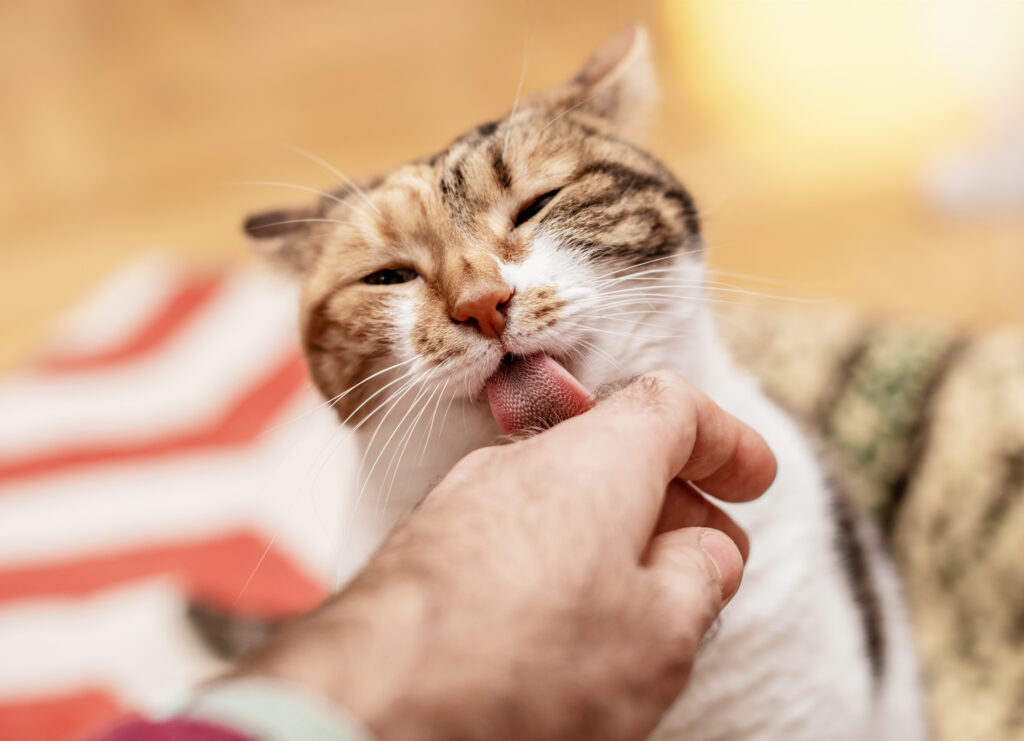
This is one of the most useful things to understand about cat training.
Some cats aren’t particularly food motivated.
But perhaps your cat loves:
A feather wand.
A chin scratch.
A favorite toy.
Catnip.
Access to a favorite location.
A short play session.
VCA notes that food isn’t the only reinforcement available: petting, brushing, toys, and play can also work when the individual cat values them.
So if treats aren’t working, don’t immediately conclude:
“My cat can’t be trained.”
You may simply be offering the wrong paycheck.
Can you eventually stop giving treats?
Yes, but don’t rush.
When your cat is learning something new, consistent reinforcement helps establish the behavior. Once the response becomes reliable, food rewards can gradually become less frequent and be mixed with other rewards such as affection or play.
The goal isn’t to carry a bag of chicken around for the rest of your cat’s life.
The goal is to create a strong history of rewarding the behavior you want.
Think about your cat’s name.
If responding to it has repeatedly led to good things, the cue itself becomes much more meaningful than it was before.
Can food make your cat more affectionate?
This is where we need to separate training from emotion.
Food can create positive associations and encourage your cat to approach you, interact with you, or participate in training.
But you shouldn’t interpret every food-motivated interaction as proof of affection.
Cats build relationships with people through many experiences: predictability, safety, play, scent, touch, routine and comfortable social interaction.
For example, a cat that curls up on your clothes while you’re gone may be responding partly to the familiar scent you leave behind. We explore that behavior in Why Does Your Cat Sleep on Your Clothes When You’re Not Home?.
Likewise, physical affection doesn’t necessarily mean exactly the same thing to cats as it does to humans. Does Your Cat Understand When You Kiss It? looks at how cats may learn associations around our affectionate routines.
Food is one part of the relationship.
It shouldn’t be the entire relationship.
The real secret isn’t food
So, can food really make your cat listen to you more?
It can help enormously.
But food isn’t magic.
The real secret is what happens around it.
Your cat performs a behavior.
You mark or recognize that behavior immediately.
Something your cat values follows.
You repeat the sequence consistently.
Eventually, your cat begins to understand what works.
That’s learning.
And suddenly the cat that supposedly “never listens” may come when called, enter a carrier, sit on cue, use the scratching post, or participate enthusiastically in a short training session.
So the next time your cat ignores you but comes sprinting when it hears the treat container, don’t assume you’ve discovered a greedy animal that only cares about food.
You may have discovered something much more useful:
exactly what motivates your cat to learn.
Leave a Reply