
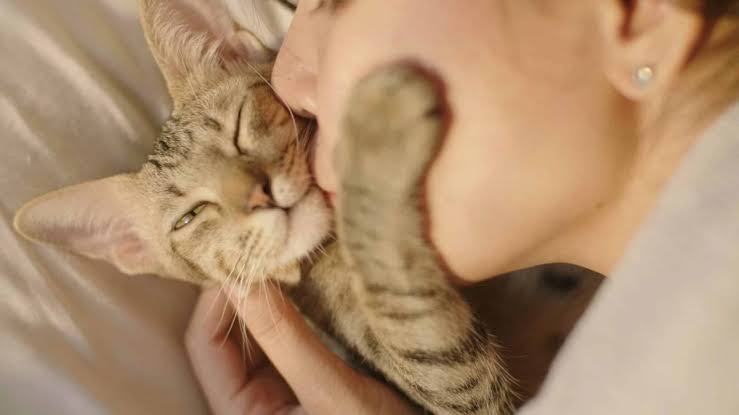
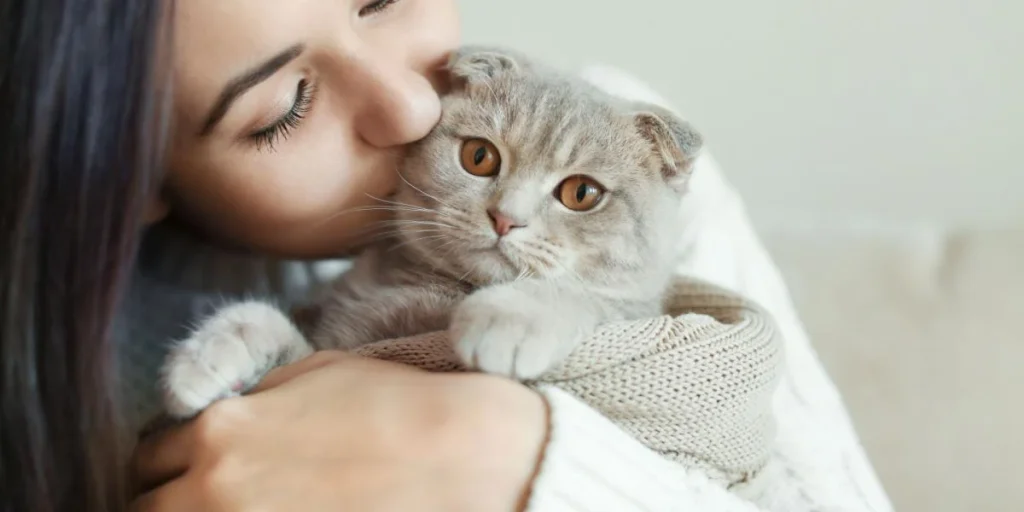
You lean down, gently kiss your cat on the forehead, and whisper, “I love you.”
Your cat looks up at you. Maybe it closes its eyes and starts purring. Maybe it rubs its little face against your cheek. Or perhaps it immediately turns away, leaving you wondering whether your affectionate gesture meant anything at all.
For humans, a kiss is one of the simplest ways to express love. But cats experience the world differently. They communicate through scent, body language, familiar sounds, and physical contact.
So, does your cat understand when you kiss it?
The surprising answer is that your cat probably doesn’t understand kisses the way humans do, but it may learn to associate them with affection, comfort, and safety.
And the way your cat responds can tell you a great deal about your relationship.
Do Cats Know That Kisses Mean Love?
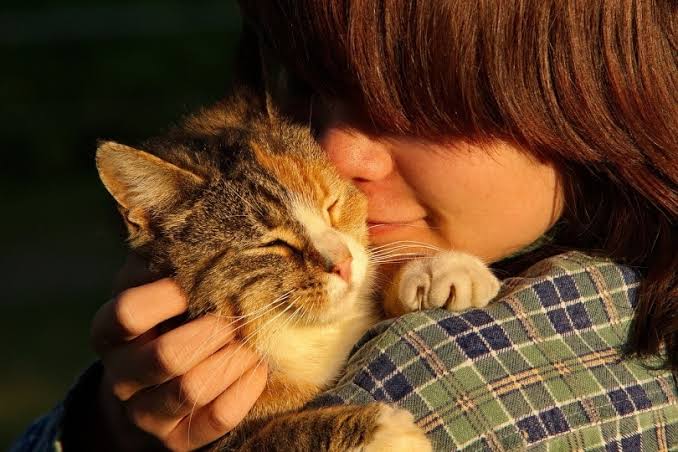
Cats don’t naturally use kisses to express affection in the same way humans do.
Instead, they communicate closeness through behaviors such as rubbing their faces together, grooming one another, resting nearby, and exchanging familiar scents.
When you kiss your cat, it doesn’t necessarily recognize the gesture as a human symbol of love.
However, cats are capable of learning through experience.
Imagine that every evening, your cat curls up beside you on the sofa. You gently stroke its head, speak softly, and give it a little kiss.
Over time, your cat may associate that familiar routine with relaxation and positive attention.
It may not understand the meaning of a kiss in human terms, but it can recognize that your presence and gentle behavior are associated with pleasant experiences.
That’s an important distinction.
Your cat doesn’t need to understand the human meaning of a kiss to develop a loving relationship with you.
Do Cats Actually Like Being Kissed?
Some cats appear to enjoy gentle kisses from people they trust. Others tolerate them, while some dislike having a person’s face so close to their own.
The difference often comes down to personality, previous experiences, and how comfortable the cat feels with physical contact.
A confident, affectionate cat may lean toward your face when you approach.
A more cautious cat may prefer to receive attention from a comfortable distance.
Neither reaction necessarily tells you how much your cat loves you.
Signs your cat may enjoy your kisses
Look for relaxed behavior such as:
- Leaning toward you voluntarily
- Rubbing its forehead or cheeks against you
- Remaining close with a loose, comfortable posture
- Slowly blinking
- Purring while showing other signs of relaxation
- Returning for more attention after you stop
These behaviors suggest your cat may feel comfortable with the interaction.
However, purring alone doesn’t always mean happiness. Cats may also purr when stressed or uncomfortable.
Always consider the entire situation.
Signs your cat doesn’t want to be kissed
Your cat may be uncomfortable if it:
- Pulls its head away
- Flattens its ears
- Flicks or lashes its tail
- Becomes stiff or freezes
- Tries to escape
- Growls or hisses
- Swats when you approach
If you notice these reactions, stop and give your cat space.
A cat that moves away isn’t rejecting your love. It may simply prefer a different kind of interaction.
Why Does Your Cat Close Its Eyes When You Kiss It?
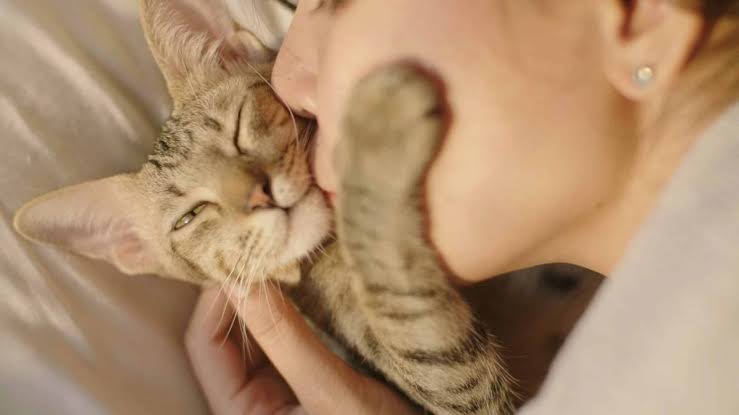
Few moments feel sweeter than kissing your cat’s forehead and watching its eyes gently close.
But what does that reaction mean?
Cats often narrow or close their eyes when they feel relaxed and secure. A cat resting comfortably beside a trusted person may show this behavior during gentle contact.
However, eye closure doesn’t always indicate enjoyment.
Some cats may close their eyes because a face or hand is approaching too closely.
The best way to understand the reaction is to observe what happens next.
Does your cat remain relaxed and lean toward you? Or does it pull away as soon as you stop?
A cat that voluntarily returns for more contact is giving you more useful information than one that simply stays still.
Why Does Your Cat Rub Its Face Against You After a Kiss?
Sometimes, you kiss your cat and it immediately presses its forehead or cheek against your face.
This behavior is commonly called head bunting.
Cats have scent glands around parts of their faces, including their cheeks and forehead.
When they rub against familiar people or objects, they deposit scent and participate in social communication.
Head bunting can occur during friendly interactions and is often associated with familiarity and social bonding.
So when your cat rubs against you after a kiss, it may be participating in a comfortable interaction using its own form of communication.
It isn’t necessarily kissing you back in the human sense.
But it may be showing that it feels safe and connected to you.
Do Cats Understand Affection Through Touch?
Cats can form meaningful social bonds with humans, but they don’t all enjoy the same kinds of physical affection.
Some love gentle strokes around their cheeks and chin.
Others prefer brief contact before moving away.
A few may happily curl up in your lap for an entire evening.
The key is allowing your cat to choose.
Why familiar touch matters
Cats learn to recognize the people and routines in their environment.
A familiar voice, gentle hand, and predictable interaction can become part of a reassuring daily experience.
This helps explain why your cat might seek you out when it wants comfort.
For example, if your cat often curls up beside you at night, that behavior may reflect warmth, security, habit, or social attachment.
You can explore these possibilities in our article about why your cat suddenly sleeps next to you.
Is a Slow Blink Really a Cat Kiss?
You’ve probably seen your cat look directly at you, slowly narrow its eyes, and blink.
Many people affectionately call this a “cat kiss.”
Although it isn’t literally the same as a human kiss, slow blinking is associated with positive cat-human interactions.
Research has found that cats can respond to slow blinking from people and may be more willing to approach someone who uses this expression.
How to slow blink at your cat
Try this simple interaction:
- Sit near your cat while it is relaxed.
- Look toward it without staring intensely.
- Slowly narrow your eyes.
- Close them briefly.
- Open them gently and look away.
Then allow your cat to respond naturally.
It may blink back, approach you, or simply continue resting.
Don’t force the interaction or expect an immediate response.
Slow blinking is especially useful because it allows you to communicate calmly without invading your cat’s personal space.
Why Does Your Cat Lick You After You Kiss It?
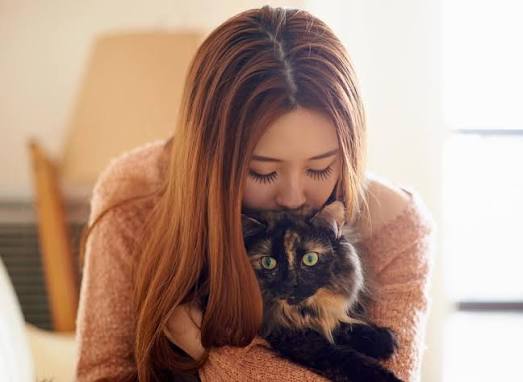
Some cats respond to a kiss by licking their owner’s hand, cheek, or forehead.
It’s tempting to interpret this as a kiss in return.
However, licking can serve several purposes.
Cats groom themselves and may groom familiar animals or people during social interactions.
Licking can also be associated with exploring scents and tastes.
A cat that gently licks you while remaining relaxed may be engaging in friendly social behavior.
But licking doesn’t always indicate affection.
Some cats lick repeatedly when overstimulated, and others may follow licking with a gentle bite.
If you’ve noticed this behavior, read our guide on why your cat licks you and then bites you.
Understanding the context can help you recognize when your cat enjoys contact and when it needs a break.
Does Your Cat Know You Love It?
We cannot know exactly how cats interpret the human concept of love.
However, research and behavioral observations support the idea that cats can form social attachments to people.
They recognize familiar individuals, learn routines, and may seek comfort or interaction from trusted caregivers.
Your cat might demonstrate that connection by:
- Approaching you voluntarily
- Rubbing against your legs
- Resting nearby
- Following you through the house
- Greeting you when you return
- Engaging in relaxed play
- Seeking gentle contact
These behaviors can have multiple explanations, but together they may reveal a comfortable, positive relationship.
One particularly interesting behavior is following an owner from room to room.
If your cat seems determined to accompany you everywhere, our article on why cats follow their owners into the bathroom explores the possible reasons.
Can Cats Miss Your Affection When You’re Away?
Cats can become attached to familiar people and may react when their routines change.
Some cats greet their owners enthusiastically after an absence.
Others become more vocal or seek additional attention.
However, not every cat responds to separation in the same way.
A quiet cat that spends much of the day sleeping may still have a strong bond with its owner.
Likewise, a cat that becomes distressed when left alone may need additional support.
If you’re curious about how cats respond to separation, read Does Your Cat Miss You When You Leave?.
Is It Safe to Kiss Your Cat?
Kissing a healthy cat gently on the top of its head may carry relatively little risk for many healthy adults, but close contact with animals is never completely risk-free.
Cats can carry microorganisms that may cause illness in humans.
The risk is particularly important for young children, pregnant people, older adults, and individuals with weakened immune systems.
Tips for safer affection
- Avoid kissing your cat directly on the mouth or nose.
- Avoid contact with saliva, wounds, or irritated skin.
- Wash your hands after cleaning litter boxes or handling waste.
- Keep your cat’s veterinary care and parasite prevention up to date.
- Don’t kiss unfamiliar, frightened, or aggressive cats.
- Avoid close facial contact if your cat is sick.
If you have a weakened immune system or another condition that increases infection risk, ask your healthcare professional about appropriate precautions.
Most importantly, never restrain a cat to kiss it.
Even a normally affectionate cat may scratch or bite when frightened.
5 Better Ways to Tell Your Cat “I Love You”
If your cat doesn’t enjoy kisses, don’t worry.
There are many other ways to strengthen your relationship.
1. Try slow blinking
A relaxed slow blink can be a gentle way to communicate without physical contact.
2. Let your cat approach first
Offer your hand and allow your cat to decide whether it wants to interact.
3. Pet your cat where it enjoys being touched
Many cats prefer gentle contact around the cheeks, chin, or forehead.
Watch its response and stop when it shows signs of discomfort.
4. Spend time playing together
Interactive play provides exercise, mental stimulation, and opportunities for positive interaction.
Use suitable toys rather than encouraging your cat to attack your hands.
5. Respect your cat’s boundaries
One of the most valuable things you can do is allow your cat to say no.
A cat that knows it can move away without being chased or restrained may feel more secure during future interactions.
Frequently Asked Questions
Do cats understand human kisses?
Cats probably don’t understand kisses as a human symbol of love. However, they may learn to associate gentle kisses with familiar, positive interactions.
Do cats like kisses on the forehead?
Some cats appear comfortable with forehead kisses, while others dislike them. Observe your cat’s body language and respect its preferences.
Why does my cat purr when I kiss it?
Purring may accompany relaxation and contentment, but it can also occur during stress or discomfort. Look for other signs of a relaxed body.
Does my cat know I’m showing affection?
Your cat may recognize that your gentle behavior is associated with comfort, safety, and positive attention, even if it doesn’t understand the human meaning of kissing.
Why does my cat move away when I kiss it?
Your cat may dislike close facial contact, feel overstimulated, or simply want personal space. Moving away doesn’t necessarily mean it dislikes you.
Do cats kiss their owners back?
Cats don’t kiss in the human sense, but they may show friendly behavior through head bunting, rubbing, grooming, or slow blinking.
Is it okay to kiss a sleeping cat?
It’s generally better not to disturb a sleeping cat with unexpected facial contact. Startling a cat can lead to defensive reactions.
What’s the best way to show a cat love?
Provide consistent care, appropriate play, gentle interaction, and a safe environment. Let your cat choose when it wants physical affection.
Final Thoughts: Your Cat May Understand More Than You Think
Every time you kiss your cat, you’re expressing something that feels completely natural to you.
Love. Comfort. Gratitude for the little creature that has become part of your everyday life.
Your cat may never understand the human meaning behind that gesture.
But it can learn to recognize your voice, your touch, your routines, and the feeling of safety that comes from being around someone familiar.
And sometimes, the answer to whether your cat enjoys your affection is right there in its behavior.
A gentle head rub. A relaxed body beside yours. A slow blink from across the room.
Perhaps your cat doesn’t need to understand what a kiss means.
Perhaps what matters most is that, through countless small interactions, it has learned something even more important.
You are someone it can trust.
Leave a Reply