
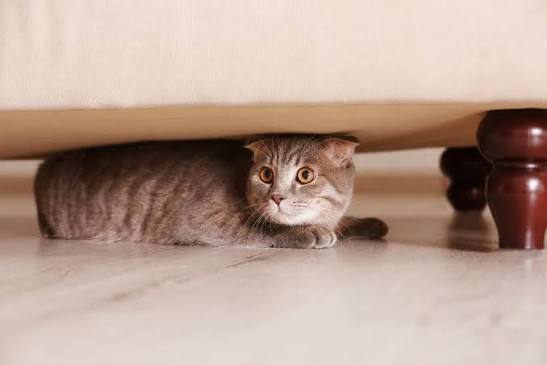
Your cat used to greet you at the door, follow you into the kitchen, and curl up beside you every evening. But suddenly, something has changed.
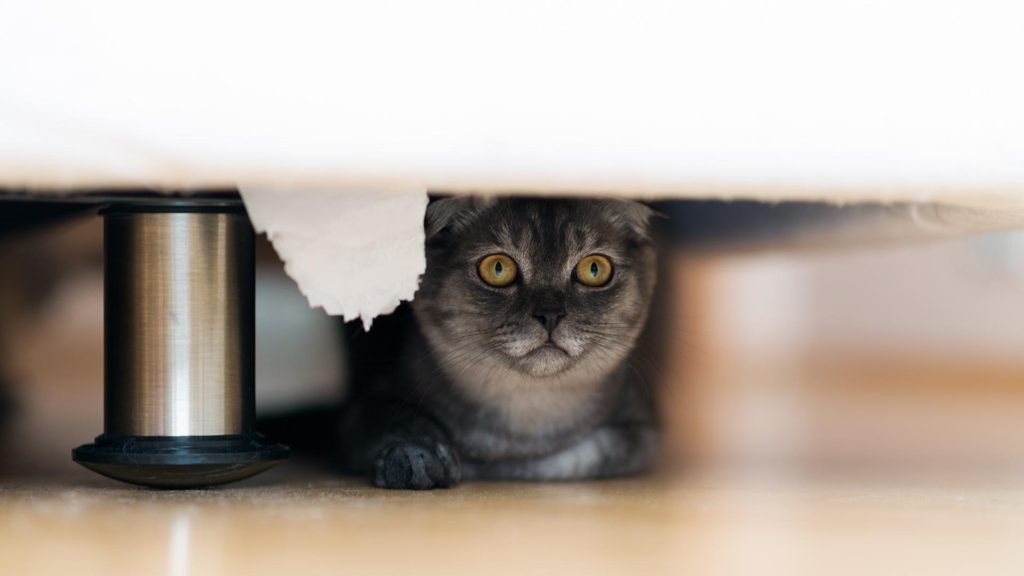
Now, instead of sleeping on the couch or watching birds through the window, your cat spends hours hiding under the bed.
You call its name. You offer its favorite treats. You even bring out the toy it normally cannot resist.
Still, your cat refuses to come out.
At first, you might think it simply wants some quiet time. After all, cats love cozy, hidden spaces. But when a normally social cat suddenly begins hiding, there may be something more important behind the behavior.
A cat hiding under the bed isn’t always a cause for concern. However, a sudden change in hiding behavior can be an early sign of stress, fear, pain, or illness.
Understanding the difference can help you protect your cat’s health and make it feel safe again.
Is It Normal for Cats to Hide Under the Bed?
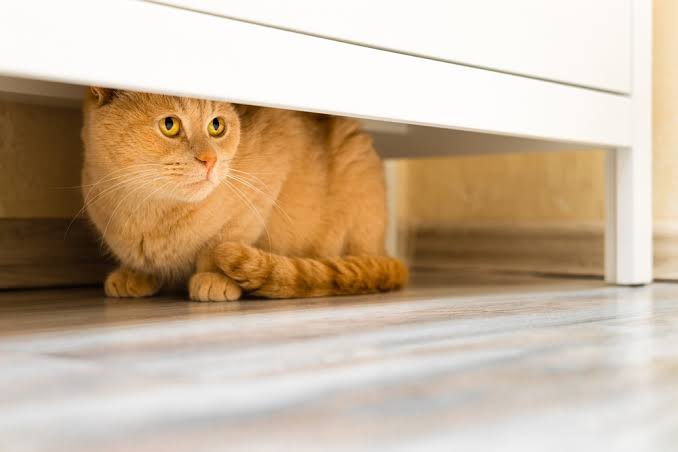
Yes. Hiding is a natural behavior for cats.
Even well-adjusted indoor cats sometimes seek quiet, enclosed spaces where they can rest without being disturbed.
In the wild, small felines benefit from places that provide shelter and protection. Domestic cats retain many of these instincts.
Underneath a bed, your cat may feel protected because the space is dark, quiet, and partially enclosed.
However, there is an important difference between a cat that occasionally hides to relax and one that suddenly spends most of its time out of sight.
If your cat has always enjoyed sleeping beneath your bed, the behavior may simply be part of its routine.
But if a friendly, active cat suddenly stops interacting with the family, the change deserves attention.
Let’s explore seven possible explanations.
1. Your Cat Is Frightened by Something in Its Environment
Cats are sensitive to changes in their surroundings.
Something that seems insignificant to you may feel threatening to your cat.
For example, a loud construction project outside your home might cause your cat to retreat beneath the bed.
A visiting dog, an unfamiliar person, or even a new piece of furniture can also make some cats uncomfortable.
Common triggers include:
- Thunderstorms and fireworks
- Loud household appliances
- Visitors or unfamiliar animals
- Construction noise
- Moving to a new home
- Changes in furniture or room layout
- Sudden disturbances during sleep
When frightened, a cat may look for the nearest secure hiding place.
The space beneath your bed can become a temporary refuge.
What should you do?
Avoid pulling your cat out of hiding.
Instead, reduce noise and activity around the room. Give your cat time to feel comfortable enough to emerge voluntarily.
If possible, identify and remove the source of stress.
You can also provide a covered cat bed or cardboard box in a quiet location.
The goal is to give your cat safe choices rather than force interaction.
2. Your Cat May Be Feeling Sick
One of the most important reasons to investigate sudden hiding is the possibility of illness.
Cats often show subtle signs when they are unwell.
Unlike humans, they cannot explain that they have a stomachache, fever, or painful tooth.
Instead, their behavior may change.
A sick cat might become quieter, sleep more than usual, or retreat to an isolated location.
Warning signs to watch for
Pay attention if hiding occurs alongside:
- Loss of appetite
- Reduced water intake
- Vomiting or diarrhea
- Unusual tiredness
- Weight loss
- Changes in litter box habits
- Difficulty walking or jumping
- Unusual vocalization
- Poor grooming
These symptoms can have many causes, ranging from mild discomfort to serious medical conditions.
For example, dental disease can make eating painful, while gastrointestinal problems may cause nausea and withdrawal.
Some cats also hide when experiencing urinary tract problems.
Important: If your cat repeatedly enters the litter box but produces little or no urine, especially if it is a male cat, seek emergency veterinary care. A urinary blockage can become life-threatening.
When should you contact a veterinarian?
Contact your veterinarian promptly if your cat suddenly hides and appears unwell.
If an adult cat has not eaten for approximately 24 hours, it needs prompt veterinary assessment. Kittens and cats with existing medical conditions may need help much sooner.
Don’t wait for your cat to cry or show obvious pain.
Sometimes, hiding is one of the earliest clues that something is wrong.
3. Your Cat Is Experiencing Stress or Anxiety
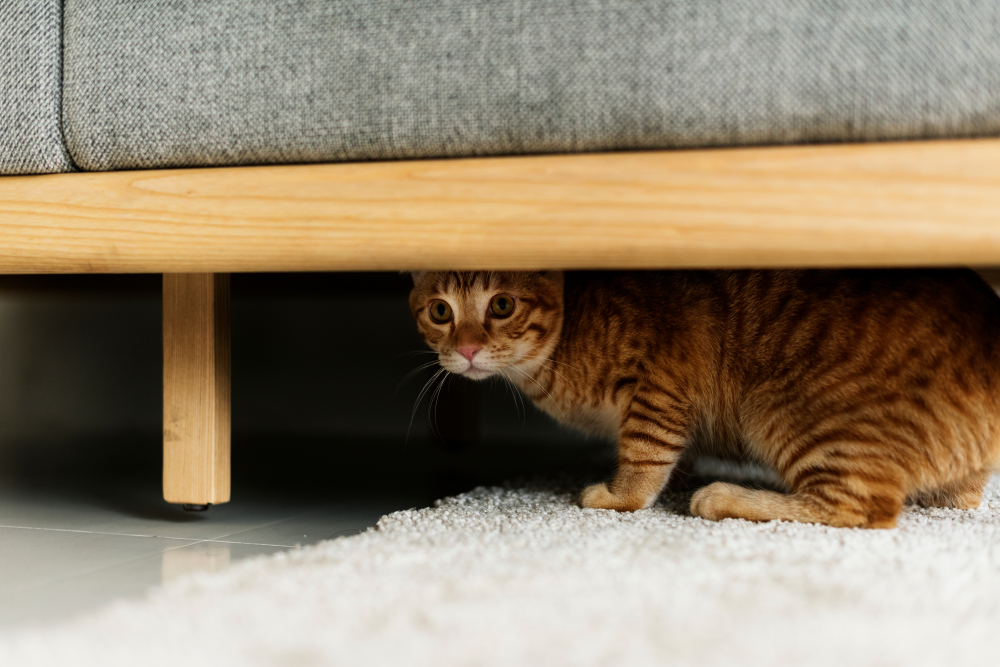
Cats are creatures of habit.
They often feel most comfortable when their daily environment is familiar and predictable.
A sudden change can disrupt that sense of security.
Perhaps you’ve recently moved to a different apartment. Maybe someone new has joined your household.
Even a change in your work schedule can affect a cat that has become accustomed to your routine.
Signs of stress in cats
A stressed cat may:
- Hide more frequently
- Groom excessively
- Eat less than usual
- Avoid social interaction
- Become unusually vocal
- Show changes in litter box behavior
- Appear more alert or easily startled
However, these behaviors can also indicate medical problems. Stress should not be assumed to be the cause without considering your cat’s physical health.
How to help a stressed cat
Maintain a predictable feeding schedule and provide quiet resting areas.
Offer vertical spaces, scratching posts, and familiar bedding.
If your cat shares its home with other animals, make sure each pet has access to essential resources without being blocked or intimidated.
This includes food, water, litter boxes, and comfortable resting places.
Your cat’s sleeping preferences can also reveal how it responds to its surroundings.
For example, some cats seek comfort in familiar scents. Our article on why cats sleep on your clothes explores how scent and familiarity may influence where cats choose to rest.
A calm, familiar environment can help your cat regain confidence.
4. Your Cat Is Trying to Avoid Another Pet
If you have multiple pets, sudden hiding may be related to tension between animals.
Cats don’t always show conflict through obvious fighting.
Sometimes, one cat quietly intimidates another by blocking doorways, staring, chasing, or preventing access to food and litter boxes.
The affected cat may respond by spending more time under the bed.
Dogs can also unintentionally frighten cats, especially when they chase, bark, or approach too enthusiastically.
What should you look for?
Watch how your pets interact.
Does another animal follow your cat whenever it leaves the bedroom?
Does your cat hesitate before entering shared spaces?
Has one pet begun guarding food bowls, resting areas, or litter boxes?
These behaviors may indicate that your cat doesn’t feel safe moving freely through the home.
How to reduce tension
Provide separate feeding stations and multiple resting areas.
For households with several cats, a commonly recommended starting point is one litter box per cat, plus one extra, placed in different accessible locations.
Give cats escape routes and elevated spaces where they can avoid unwanted interactions.
If conflict continues, consult your veterinarian or a qualified feline behavior professional.
Never force frightened animals to interact.
Successful relationships between pets develop through gradual introductions and positive experiences.
5. Your Cat Is in Pain but Isn’t Showing It Clearly
Cats don’t always express pain by crying or limping.
Sometimes, discomfort appears as a change in everyday behavior.
A cat with arthritis may stop jumping onto its favorite chair.
A cat with abdominal pain may avoid being picked up.
Another cat may retreat under the bed because it no longer feels comfortable interacting with people.
Subtle signs of pain in cats
Look for:
- Reluctance to jump
- Stiffness after resting
- Reduced grooming
- Irritability when touched
- Changes in posture
- Difficulty entering the litter box
- Less interest in playing
- Sleeping in unusual locations
Older cats are particularly vulnerable to painful joint conditions, but cats of any age can experience injuries or illness.
If your cat suddenly hides and resists being touched, avoid forcing physical contact.
A veterinary examination can help identify whether pain is contributing to the behavior.
Never give your cat human pain medication unless specifically directed by a veterinarian.
Common medications such as acetaminophen and ibuprofen can be extremely dangerous for cats.
6. Your Cat Needs a Quiet Place to Rest
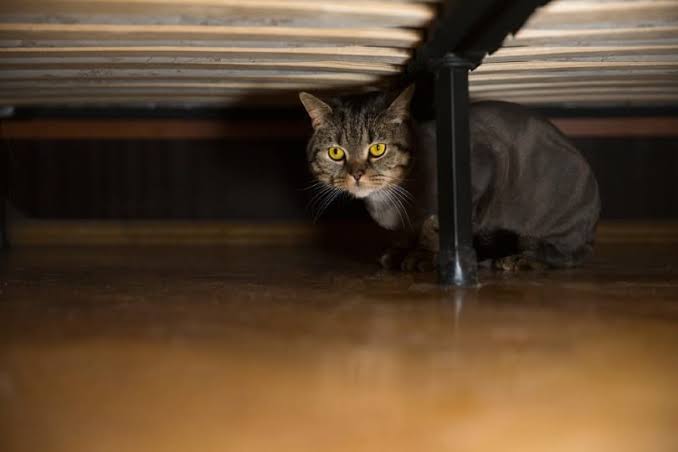
Not every hiding episode indicates a problem.
Sometimes, your cat simply wants to be left alone.
Cats spend a substantial portion of their day sleeping or resting, and many prefer secluded locations.
Your bed may provide a convenient shelter from household noise and activity.
If your cat comes out normally to eat, drink, use the litter box, groom, and interact with you, occasional hiding may be perfectly normal.
How can you tell the difference?
Consider your cat’s usual behavior.
A cat that has always slept beneath the bed for a few hours each afternoon may simply enjoy the location.
However, a cat that suddenly begins hiding all day, avoids food, or stops engaging in familiar activities deserves closer attention.
Changes in sleeping habits can also reflect changes in comfort or routine.
For related information, read Why Does Your Cat Suddenly Sleep Next to You?.
Although that article explores the opposite behavior, both situations show how a cat’s choice of sleeping location can reflect its needs and preferences.
7. Your Cat Is Adjusting to a Major Life Change
Have you recently moved, welcomed a baby, adopted another pet, or changed your household routine?
Major transitions can be overwhelming for cats.
Even positive changes may temporarily make an animal feel insecure.
A newly adopted cat, for example, may hide beneath the bed for several days while becoming familiar with its new home.
Some cats adjust quickly, while others need considerably more time.
How to help your cat adjust
Start by creating a quiet, comfortable area with everything your cat needs.
Include:
- Fresh water
- Appropriate food
- A clean litter box
- Comfortable bedding
- A scratching surface
- Safe hiding places
- Familiar toys
Keep food, water, and the litter box in separate, suitable locations within the safe area.
Allow your cat to explore gradually.
Sit quietly nearby without demanding attention.
You can offer treats or engage in gentle play if your cat seems interested.
Most importantly, let your cat decide when it feels ready to approach.
Trust grows more easily when your cat has control over its surroundings.
How to Tell Whether Your Cat’s Hiding Is Normal or Concerning
The most useful clue is whether hiding represents a sudden change and whether other symptoms are present.
| Behavior | What it may mean |
|---|---|
| Hides occasionally but eats and plays normally | Often normal resting behavior |
| Hides after a loud noise | Possible fear or temporary stress |
| Hides after moving to a new home | Adjustment to an unfamiliar environment |
| Hides and refuses food | Possible illness, pain, or significant stress |
| Hides and stops using the litter box normally | Possible medical or environmental problem |
| Hides and becomes aggressive when touched | Possible pain, fear, or distress |
| Hides and struggles to urinate | Potential medical emergency |
This table is a general guide, not a diagnostic tool.
If your cat’s behavior changes suddenly or you notice physical symptoms, veterinary advice is the safest next step.
Should You Pull Your Cat Out From Under the Bed?
Usually, no.
If your cat is frightened, pulling it from its hiding place may increase stress and damage its sense of security.
A scared cat may scratch or bite while trying to escape.
Instead, try to make the surrounding environment feel safe.
Speak softly, reduce noise, and allow your cat to come out voluntarily.
You can place a familiar blanket or a comfortable covered bed nearby.
If your cat is healthy and simply nervous, patience may be more effective than repeated attempts to coax it out.
However, there are exceptions.
If your cat is experiencing a medical emergency, immediate veterinary care takes priority. Contact your veterinarian for guidance on safely handling and transporting a frightened or painful cat.
5 Ways to Help a Cat Feel Safe Again
Once you’ve considered possible medical problems, you can take practical steps to make your home more comfortable.
1. Create a safe hiding space
Offer a covered cat bed, cardboard box, or quiet corner where your cat can rest without being disturbed.
A designated safe space may encourage your cat to spend less time beneath furniture.
2. Keep daily routines consistent
Try to feed your cat at regular times.
Maintain familiar play sessions and avoid unnecessary disruptions.
Predictable routines can reduce uncertainty.
3. Use gentle, positive interactions
Let your cat approach you.
Offer treats, toys, or gentle attention when it shows interest.
Avoid chasing, grabbing, or forcing contact.
4. Check for environmental hazards
Cats sometimes hide because they have encountered something frightening or harmful.
Household chemicals, toxic plants, and certain human medications can also pose serious risks.
Review our guide to household items that are toxic to cats to identify potential dangers around your home.
5. Seek veterinary help when behavior changes persist
If your cat continues hiding or develops additional symptoms, schedule a veterinary appointment.
Early assessment can help identify health problems and prevent unnecessary suffering.
When Is a Cat Hiding Under the Bed an Emergency?
Hiding alone is not usually an emergency.
However, hiding combined with certain symptoms can indicate a serious medical problem.
Seek immediate veterinary care if your cat experiences:
- Difficulty breathing or open-mouth breathing
- Repeated attempts to urinate with little or no urine
- Collapse or inability to stand
- Seizures
- Severe pain or distress
- Suspected poisoning
- Serious injury or trauma
- Repeated vomiting with marked weakness or a painful abdomen
If your cat is hiding and has stopped eating, contact a veterinarian promptly rather than waiting several days.
Cats can develop serious complications when they don’t eat adequately, especially if they are overweight or already ill.
The sooner a problem is identified, the better the opportunity for appropriate treatment.
Frequently Asked Questions
Why is my cat suddenly hiding under the bed all day?
Sudden, prolonged hiding may be associated with fear, stress, pain, or illness. If your cat normally spends time with you but now hides continuously, monitor its appetite, litter box habits, and activity level. Contact your veterinarian if the change is unexplained or persistent.
Why is my cat hiding but still eating normally?
Your cat may be seeking privacy or responding to an environmental change. However, normal eating doesn’t completely rule out illness or discomfort. Watch for additional behavior changes.
Why is my cat hiding and not eating?
Hiding combined with loss of appetite can indicate illness, pain, nausea, or significant stress. Contact your veterinarian promptly, especially if your cat has missed its usual meals or appears unwell.
How long will a scared cat hide?
Some cats emerge within minutes or hours, while others may need days to adjust to major changes. The duration depends on the individual cat and the situation. Make sure the cat can safely access food, water, and a litter box, and seek veterinary advice if it is not eating or seems unwell.
Should I block access to the space under my bed?
Not necessarily. Removing your cat’s only safe hiding place may increase stress. If the space is dangerous or inaccessible in an emergency, provide alternative hiding spots before gradually restricting access.
Can cats hide because they are depressed?
Cats may withdraw because of stress or changes in their environment, but hiding alone cannot establish depression. Medical conditions should be considered, particularly when the behavior begins suddenly.
Why does my cat hide from me but come out at night?
Your cat may feel safer when the household is quiet. Some cats become more active during low-activity periods. However, if this is a new pattern, check for stressors and other symptoms.
Final Thoughts: Sometimes Hiding Is Your Cat’s Way of Saying Something Has Changed
There is something heartbreaking about calling your cat’s name and receiving no familiar response.
You remember the little face waiting at the kitchen door, the soft footsteps following you down the hallway, and the comforting weight of your cat sleeping beside you.
Now, all you see is a pair of eyes watching from beneath the bed.
It’s natural to wonder whether you’ve done something wrong.
But your cat isn’t necessarily rejecting you.
It may be frightened by a sound you barely noticed, overwhelmed by a change in its surroundings, or simply looking for a quiet place to rest.
Sometimes, though, it may be feeling unwell and unable to communicate that discomfort in an obvious way.
That’s why the most loving response is to pay attention without making assumptions.
Give your cat space when it needs space. Offer comfort when it seeks comfort. And when its behavior suggests something may be wrong, don’t hesitate to ask a veterinarian for help.
Your cat may not be able to tell you why it’s hiding.
But by noticing the change, you can take the first step toward helping it feel safe again.
Leave a Reply